The Five-Second Rule, According to the Research
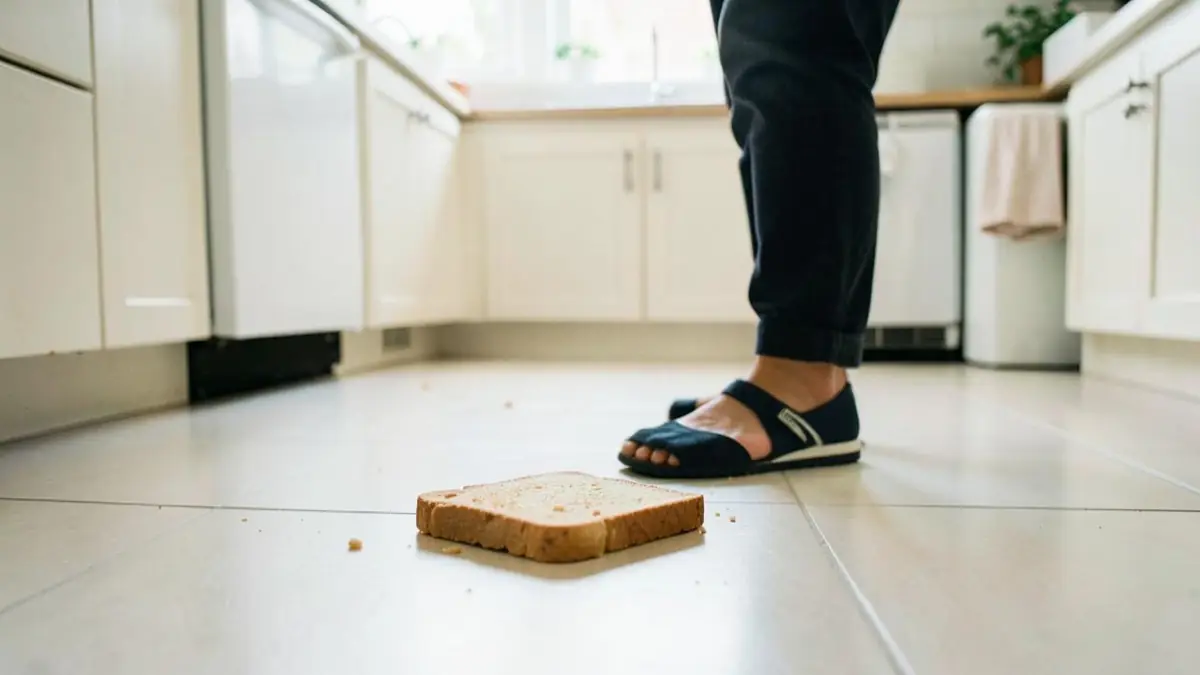
The five-second rule survives because it is convenient and because most of the time nothing happens. Food falls, it is retrieved, it is eaten, and nobody gets ill. That is not evidence the rule works; it is evidence that most kitchen floors, most of the time, are not carrying enough of the wrong organism to cause an infection.
Laboratory work on the question has been fairly consistent for two decades. Bacterial transfer begins on contact, not after a delay, and the variables that matter are moisture, surface texture, and contamination level — not the stopwatch.
Transfer is immediate
Studies that deliberately contaminate surfaces and then drop food onto them find measurable bacterial transfer within the first second. Longer contact does increase the amount transferred, so five seconds is worse than one, but the meaningful contamination happens at the moment of contact.
That makes the rule directionally wrong rather than harmlessly imprecise. Picking food up quickly reduces the dose somewhat; it does not create a safe window.
Moisture is the dominant variable
Wet foods pick up dramatically more bacteria than dry ones. A slice of watermelon or a piece of buttered bread landing face down transfers many times what a dry cracker or a hard sweet does in the same contact time.
This is why the rule feels reliable in practice. Most dropped items in a home are dry, and dry contact transfers relatively little from a relatively clean surface.
Surface texture cuts both ways
Smooth, hard surfaces such as tile and sealed wood transfer more bacteria than carpet, because carpet fibres hold organisms in place and present less contact area to the food.
That is not an argument for eating food dropped on a carpet. Carpets accumulate a far more varied load of soil, skin, and organic matter, and the transfer that does occur brings more of it along.
What actually causes illness
The organisms that cause food poisoning — salmonella, campylobacter, listeria, certain strains of E. coli — need to be present in the first place. A floor becomes genuinely risky when raw meat juices, pet waste, or an unwashed shoe sole have introduced them.
Salmonella in particular has been shown to survive on dry surfaces for weeks. A floor that looks clean can carry a viable population long after the spill that deposited it was wiped up.
Who should not take the chance
For a healthy adult, the practical risk from a dry item on a clean domestic floor is low. For people who are pregnant, very young, elderly, or immunosuppressed, the same dose can produce a serious infection.
In those households the sensible policy is simply to discard dropped food, because the cost of doing so is trivial compared with the consequence of an avoidable infection.
A more useful rule
Replace the five-second rule with three questions: was the food wet, what was the surface, and is there any reason to think that surface has had raw meat, animals, or outdoor shoes on it recently?
If the answers are dry, clean, and no, the risk is small. If any answer goes the other way, the food is not worth the argument. Regular floor cleaning, and keeping outdoor shoes away from kitchens, does more for household food safety than any timing rule.
This article is general information and not medical advice. If you are concerned about a foodborne illness, contact a healthcare professional.
AI Assistance Used — AI assistance was used in researching and drafting this article. It was reviewed, edited, and fact-checked by Leah Fornier before publication.