Making Extra Auto Loan Payments: How to Get Them Applied to Principal
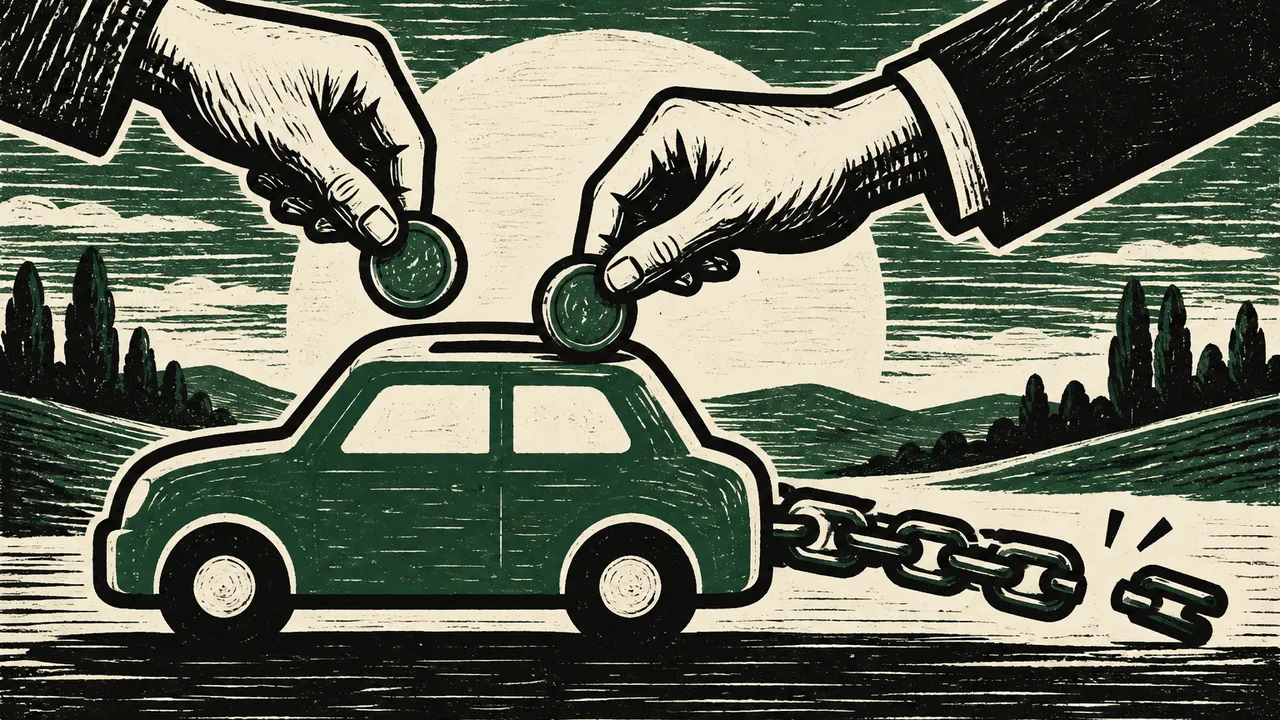
Paying extra on an auto loan can cut interest costs and bring the final payment closer. But sending more than the amount due does not automatically produce the result you expect. Your contract determines how interest works, while your loan servicer controls the payment options and posting process. A small test payment can help you confirm the process before committing a larger lump sum.
The key is to distinguish reducing principal from satisfying future installments. Those outcomes can overlap, but they are not interchangeable. Before sending extra money, learn how your account handles it, provide the required instructions and check the posted transaction—not just the next bill.
1. Identify how your loan calculates interest
Many auto loans use simple interest, often calculated daily on the unpaid principal. Reducing that balance sooner generally reduces later interest charges. Payment timing matters: more days between payments can mean more accrued interest must be covered before money reaches principal.
Precomputed-interest loans work differently: interest is calculated upfront, and extra installments may not reduce interest the way they would on a simple-interest loan. Early payoff may trigger an unearned-interest refund, depending on the contract and applicable law. Ask the servicer to identify your loan type and explain the payoff calculation.
For example, reducing principal by $1,000 on a loan with an 8% annual interest rate saves roughly 22 cents daily using a 365-day calculation. Over 30 days, that is about $6.58 less interest, assuming the balance difference persists.
- Find the interest-calculation method in your signed contract.
- Review the payment-allocation order, including fees and accrued interest.
- Ask whether extra payments reduce principal immediately or require instructions.
- Use the Consumer Financial Protection Bureau website for explanations of loan types.
2. Give instructions through the servicer’s approved channel
Ask how to make an additional principal payment after meeting the current installment. Some servicers offer a principal-only option online; others require a separate transaction, telephone request or mailing address. A note in a bank’s bill-pay memo may not reach the system that allocates payments.
A useful request is: “Apply this additional amount to principal, not as a substitute for my scheduled payments. Tell me whether my due date will advance.” Instructions cannot override your contract. If the account has unpaid interest, fees or overdue installments, the servicer may need to address those amounts first.
If arranging recurring extras, ask whether the allocation instruction carries forward or must accompany every transaction. Save a screenshot of the selected payment option and the submitted amount. After a servicing transfer, reconfirm the procedure rather than assuming your previous settings survived.
- Confirm whether the regular installment must post before the extra payment.
- Ask whether extra funds are applied immediately or temporarily held.
- Save the confirmation number and written allocation instructions.
- Check whether the extra transaction changes automatic withdrawals.
3. Understand what advancing the due date means
A servicer may advance your next due date when you pay more than required. This is sometimes called paid-ahead status. It does not necessarily mean the extra money failed to reduce principal: a payment can lower principal and also satisfy a future billing requirement.
The risk is treating that later due date as a reason to stop paying. On a daily simple-interest loan, interest generally keeps accruing while payments pause, eroding potential savings. If faster payoff is the goal, maintain your usual payment rhythm and verify that autopay will continue despite paid-ahead status.
Suppose your normal payment is $400, but the next statement shows nothing due after an extra payment. Budget the same $400 for that month. If autopay skips zero-due bills, arrange a manual payment through the approved channel, checking first to avoid duplicate withdrawals.
| Account display | What to verify |
|---|---|
| Later due date | Did principal also decrease? |
| Zero currently due | Will autopay still withdraw? |
| Payment pending | When will allocation appear? |
| Unapplied funds | What must happen before posting? |
4. Check penalties before committing extra cash
Whether an auto loan can carry a prepayment penalty depends on the contract, applicable law and lender type. Do not assume a charge applies only when you pay off the entire loan. Read the provision and ask whether it covers partial prepayments, full payoff or both.
There is no single penalty figure that reliably applies across US auto loans. Request the exact contractual calculation and a written estimate for your intended payment. For questions about legality, consult your state financial regulator or attorney general; the National Credit Union Administration provides rules for federal credit unions.
For a precomputed-interest loan, request an itemized payoff quote separating any penalty from the unearned-interest refund. A smaller-than-expected refund is not necessarily a penalty. Ask which refund method applies and compare the payoff total with the remaining scheduled payments before deciding.
- Locate the prepayment language in your contract and disclosures.
- Ask when any penalty restriction expires.
- Compare the charge with expected interest savings before paying.
5. Confirm the principal reduction in posted records
Save your unpaid principal balance before submitting the payment, then check transaction details after posting. Look for the amounts allocated to principal, interest and fees. With no other adjustments, the old principal minus the principal portion should equal the new balance. Do not compare only payment amounts or due dates.
If the numbers do not reconcile, request a written allocation breakdown and correction, keeping statements and messages. If unresolved, consider a complaint through the Consumer Financial Protection Bureau. Near payoff, request a dated payoff quote: the displayed principal balance may exclude accrued interest or charges. Confirm a zero balance and the lien-release process afterward.
For example, if principal was $12,000 and a $500 payment covered $35 of accrued interest with no fees, principal should become $11,535. Record the effective payment date too; if posting was delayed, ask whether interest was calculated using the correct crediting date.
General information as of October 2026; verify your contract and servicer procedures with official sources, and seek individualized advice when needed.
AI Assistance Used — AI assistance was used in researching and drafting this article. It was reviewed, edited, and fact-checked by Nadia Clarkson before publication.