Simple, Evidence-Backed Ways to Relieve Constipation
Constipation is common, rarely discussed, and frequently mismanaged in both directions: ignored for months, or attacked with strong laxatives that make the underlying pattern worse. Most cases have no sinister cause and improve substantially with changes that cost almost nothing.
The catch is that the effective changes work slowly. Bowel habit responds over weeks, not days, which is precisely why people abandon useful measures in favour of quick ones.
Not all fibre does the same job
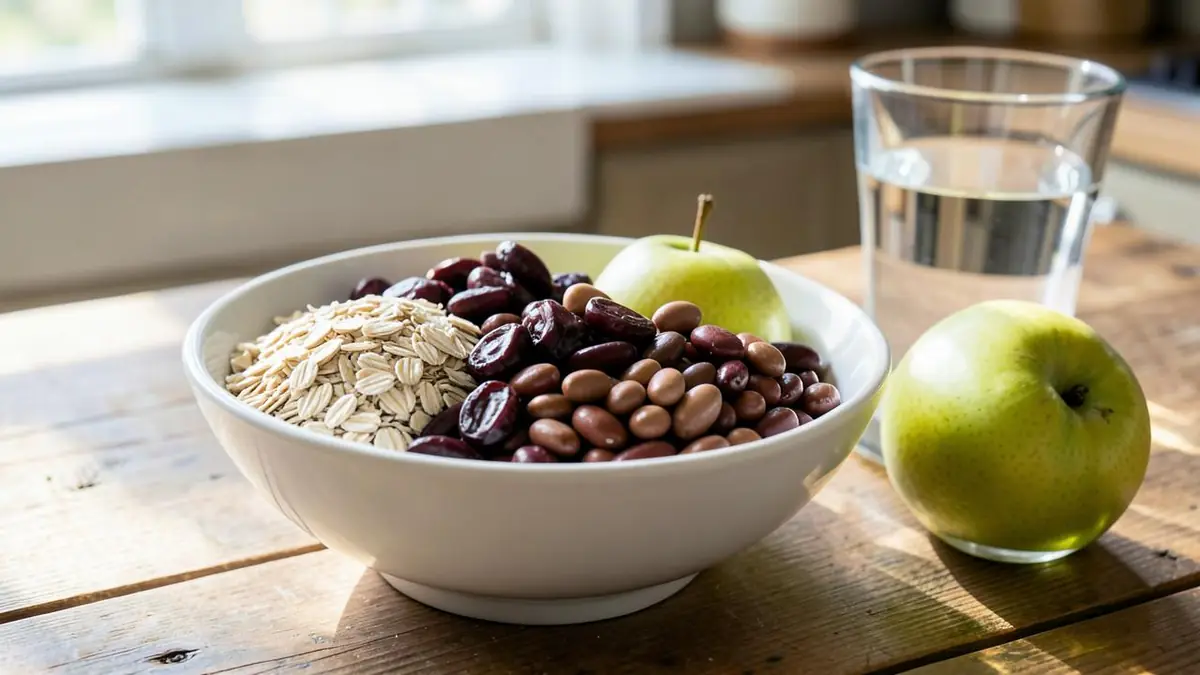
Soluble fibre — oats, psyllium, beans, apples, and pears — absorbs water and forms a gel that softens stool. It has the strongest trial evidence of the dietary approaches, particularly psyllium husk.
Insoluble fibre from wheat bran and vegetable skins adds bulk and speeds transit, which helps some people and worsens bloating in others, especially those with irritable bowel syndrome. Increase either gradually over two or three weeks to limit gas.
Fluid matters, but only alongside fibre
Drinking more water on its own does little for constipation in someone who is already adequately hydrated. Drinking more water while increasing fibre matters a great deal, because fibre needs fluid to soften stool rather than harden it.
Dehydration from illness, hot weather, or diuretic medication is a genuine and reversible cause. Warm drinks in the morning also stimulate the natural reflex that follows waking.
Movement and timing
Physical activity shortens transit time, and even a daily walk has measurable effect. Prolonged bed rest or immobility after surgery is one of the most reliable triggers of constipation there is.
The colon is most active in the half hour after waking and after meals. Setting aside unhurried time then, rather than responding to the urge whenever it is convenient, retrains a pattern that has often been suppressed for years.
Posture on the toilet
Raising the knees above the hips with a small footstool straightens the angle between rectum and anal canal and reduces the straining required. Small studies show reduced effort and shorter time on the toilet.
Straining hard is worth avoiding for its own sake, given its association with haemorrhoids and anal fissures. If nothing happens within about ten minutes, standing up and trying later is better than persisting.
Where laxatives fit
Bulk-forming agents such as psyllium are the usual first choice. Osmotic laxatives, notably macrogol, have good evidence and are suitable for longer use under guidance. Stimulant laxatives work quickly and are best kept for short courses.
Long-term daily stimulant use should be discussed with a clinician. Many prescribed medications, including opioids, iron, some antidepressants, and certain blood pressure drugs, cause constipation directly and may be adjustable.
Symptoms that need a doctor
Blood in the stool, unexplained weight loss, a persistent change in bowel habit lasting more than a few weeks, ongoing abdominal pain, or constipation beginning for the first time after the age of about fifty all warrant prompt assessment.
So does constipation with vomiting or an inability to pass wind, which can indicate an obstruction. These are uncommon, but they are the reason not to treat a persistent change as a purely dietary matter.
This article is general information and not medical advice. Speak to a doctor or pharmacist before starting laxatives or if symptoms persist.
AI Assistance Used — AI assistance was used in researching and drafting this article. It was reviewed, edited, and fact-checked by Leah Fornier before publication.