Dry-Eye Drops Versus Redness Relievers: Know the Difference
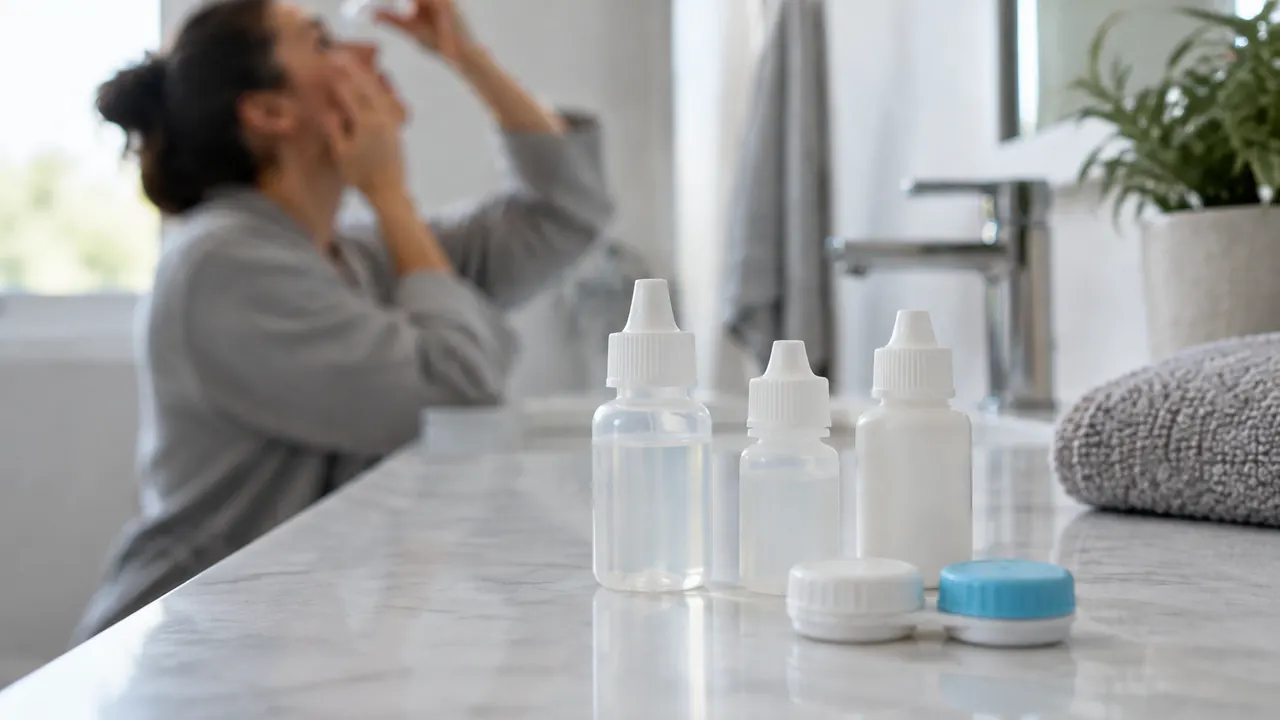
The eye-drop aisle can make very different products look interchangeable. One bottle promises moisture, another offers longer-lasting comfort, and a third says it will clear redness. But a whiter eye is not necessarily a healthier or better-lubricated eye. Choosing by the front label alone can leave the underlying problem untreated or, with some redness relievers, set up a cycle of recurring redness.
For shoppers in 2026, the useful distinction is still purpose: Artificial tears supplement lubrication, gels and ointments stay on the eye longer, and redness-relieving drugs change the appearance of blood vessels. Preservative-free describes a formulation, not a separate treatment. None of these categories can reliably explain why an eye hurts, stays red or sees poorly. Here is how to compare them, use them safely and recognize when another bottle is not the answer. Start with the symptom you are trying to relieve, then check the active ingredients and directions rather than assuming every product labeled for irritated eyes does the same job.
1. Match the product to the problem
Dryness often feels gritty, burning or tired, and it can cause fluctuating blur or even excessive watering. Wind, heated rooms and long stretches of screen use may make symptoms more noticeable. Yet allergy, infection, eyelid inflammation and other eye conditions can overlap with those complaints. Both eyes feeling mildly dry after a screen-heavy afternoon is a different situation from one suddenly becoming painful and red.
Read the Drug Facts label, including the purpose, active ingredients and warnings. Lubricants may contain ingredients such as carboxymethylcellulose, glycerin or polyethylene glycol. Redness products may contain blood-vessel-constricting drugs. Combination bottles can include both, so a moisturizing claim does not establish that a product is simply an artificial tear. Allergy drops target a different problem, usually itching associated with an allergic response.
The comparison below is a starting point, not a diagnosis. If you cannot tell whether a bottle is a lubricant, an allergy medicine or a redness reliever, ask a pharmacist before using it. Someone who repeatedly needs drops to get through ordinary activities should have the cause assessed, even if the drops provide temporary relief.
| Product type | Main purpose | Main limitation |
|---|---|---|
| Liquid artificial tears | Lubricate the eye surface | Relief may be brief; formulas differ |
| Gel drops or ointments | Provide longer-lasting lubrication | Can blur vision, especially ointments |
| Preservative-free lubricants | Lubricate without added preservatives | Still require careful handling |
| Redness-relieving drops | Temporarily reduce visible redness | Do not treat the cause of dry eye |
| Allergy drops | Relieve allergy symptoms such as itching | Not a substitute for dry-eye evaluation |
2. Liquid artificial tears are usually the practical starting point
For occasional, mild dryness without warning signs, a plain lubricating drop is generally a reasonable first option. Artificial tears help wet the eye surface and reduce friction with blinking. They do not permanently replace natural tears or cure every form of dry eye. Products differ in thickness and ingredients, and a formula that feels comfortable to one person may sting or feel sticky to another.
Some drops emphasize watery lubrication; others include lipids intended to support the tear film's oily layer and limit evaporation. That distinction can matter when eyelid oil glands are not working well, but packaging alone cannot tell you which mechanism is causing your symptoms. Try a product according to its label rather than layering several new formulas at once. Persistent stinging, worsening redness or a new reaction is a reason to stop and seek advice.
- Choose a product labeled as a lubricant or artificial tears, and check for additional medicated ingredients.
- Use the labeled amount; extra drops may overflow rather than add useful relief.
- Pair drops with regular blinking breaks and less direct exposure to fans or vents.
- Arrange an eye exam if relief is consistently short-lived or symptoms keep returning.
3. Gels and ointments trade convenience for staying power
A thicker lubricant can be helpful when thin drops wear off quickly. Gel drops generally remain on the eye longer, although products vary substantially in consistency. Ointments are thicker still and commonly contain oily ingredients such as mineral oil or petrolatum. They can reduce overnight discomfort, but they are not automatically the best choice for every person with morning dryness.
The main trade-off is blurred vision. Ointments are often most practical at bedtime, while some gel drops may fit into daytime use if temporary blur is manageable. Do not drive, operate equipment or put in contact lenses while vision is blurred or while the product's instructions prohibit it. Follow the package directions for application, and keep a tube tip from touching your lashes, eyelids or eye.
If you use prescription eye medicine, ask your pharmacist or eye clinician about order and spacing before adding a gel or ointment. Thicker products are generally used after thinner drops, but the appropriate interval depends on the medicines involved. Repeatedly waking with marked pain, difficulty opening an eye or significant light sensitivity should not be managed by simply increasing nighttime lubrication.
| Texture | Possible fit | What to plan around |
|---|---|---|
| Thin liquid | Quick daytime lubrication | May need repeat use as directed |
| Gel drop | Longer relief when liquids fade quickly | Possible temporary blur |
| Ointment | Bedtime lubrication when appropriate | More pronounced blur; lens restrictions |
4. Preservative-free can matter when drops become frequent
Preservatives help protect many multidose bottles against microbial growth after opening. However, some can irritate the eye surface, particularly with frequent or prolonged exposure. Preservative-free lubricants may be preferable for people with sensitive eyes, more substantial dry-eye disease or a need for repeated dosing. Needing artificial tears more than about four times daily is a common reason to discuss that option, not a universal safety cutoff.
Preservative-free products come in single-use vials and specially designed multidose bottles. Neither format is contamination-proof. A single-use vial should generally be discarded after use, even when liquid remains; follow its specific labeling rather than assuming a replaced cap makes it safe to save. Multidose preservative-free systems use specialized dispensing designs, and their opening, handling and discard instructions vary.
Price per package is not the whole comparison. Consider how often you will use the drops, whether you can comfortably squeeze the container and how much product must be discarded. Do not stretch a vial's use to save money. If your eyes require frequent treatment, an exam may identify an eyelid problem or another condition that calls for more than additional lubricant.
5. Redness relievers change appearance, not tear quality
Redness-relieving drops temporarily narrow blood vessels on the eye surface. Older vasoconstrictor ingredients, including tetrahydrozoline and naphazoline, can cause rebound redness with repeated or prolonged use: The eyes become red again as the effect fades, encouraging more dosing. They are not a good substitute for artificial tears when the problem is dryness, and cosmetic improvement can delay attention to an underlying disorder.
Low-dose brimonidine redness drops work differently and appear less prone to rebound redness than older agents, but they are still not dry-eye treatment or an all-purpose answer to a red eye. Follow the specific label's frequency, age restrictions and duration warnings. Stop and seek advice if irritation develops or redness persists. Do not assume a product is appropriate for children simply because it is sold without a prescription.
- Check the active ingredient, including in products advertised for both moisture and redness.
- Avoid escalating the dose when redness returns; that pattern deserves an evaluation.
- Ask a clinician or pharmacist before use if you have glaucoma or other relevant medical conditions.
- Keep drops away from children. Swallowing some redness relievers can cause serious poisoning; contact Poison Control promptly at 1-800-222-1222 for suspected ingestion.
6. Contact lenses and clean technique change the rules
Use drops over contact lenses only when the product specifically permits it for your lens type. A contact-lens rewetting drop is not automatically interchangeable with every dry-eye lubricant. Some products require lens removal and a waiting period before reinsertion; follow that label rather than applying one standard interval to all drops. Never use eye drops as lens-cleaning or storage solution.
If lenses feel uncomfortable, remove them rather than trying to medicate through the discomfort. Contact-lens wearers with redness, pain, light sensitivity or reduced vision need prompt assessment because corneal infections can progress quickly. Do not reinsert lenses while awaiting advice. Daily disposable lenses do not eliminate this risk, and sleeping or swimming in lenses adds avoidable hazards.
- Wash and dry your hands before handling drops or lenses.
- Keep the dispensing tip away from fingers, eyes, lashes and counters; recap promptly.
- Never share drops, transfer them into another container or add water.
- Observe expiration dates and after-opening discard instructions; mark the opening date when useful.
- Do not use damaged, discolored or unexpectedly cloudy products. Check FDA recall notices against the exact product and lot, not just the brand.
7. Know when drops are the wrong next step
Seek urgent eye care for significant pain, new or persistent vision changes, pronounced light sensitivity, a very red eye or symptoms after an injury. Sudden vision loss is an emergency. Severe eye pain with headache, nausea or halos around lights also needs immediate assessment. Do not use temporary improvement after drops as proof that the condition is harmless.
For a chemical splash, begin flushing immediately with plenty of lukewarm running water and obtain emergency guidance; do not delay rinsing while searching for drops. For less dramatic symptoms, schedule an exam when irritation persists, keeps recurring, produces discharge or requires increasingly frequent treatment. An eye clinician can check the cornea, eyelids and tear film, review medications and determine whether prescription treatment is appropriate. The goal is comfortable, healthy vision, not merely eyes that look less red.
Consult an eye-care professional for persistent symptoms, and check current product labeling and FDA recall information before use.
AI Assistance Used — AI assistance was used in researching and drafting this article. It was reviewed, edited, and fact-checked by Lisa Barber before publication.