Driver Assistance in 2026: Helpful Features Are Not Self-Driving
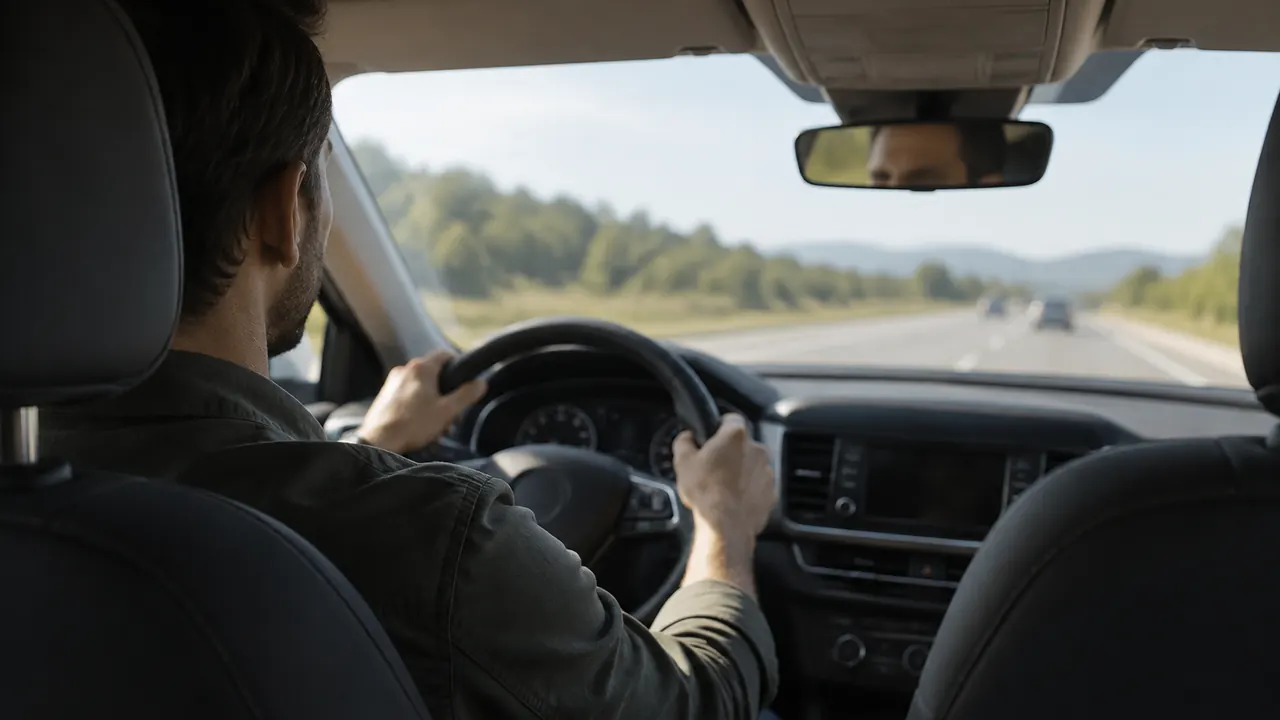
A car that adjusts its speed, steers between lane lines and warns about nearby traffic can feel remarkably capable. In a 2026 showroom, those abilities may be bundled under a reassuring package name or demonstrated on an easy stretch of road. Neither tells you whether the vehicle will recognize a stopped truck, follow a lane through construction or keep working when freezing rain covers a sensor. Convenience and crash protection are valuable, but neither turns ordinary driver assistance into self-driving.
For buyers, the useful question is not simply whether a car has a feature. It is what that feature does, when it operates, how it communicates trouble and what you must do when it reaches a limit. Start by separating four common tools: adaptive cruise control, lane centering, blind-spot alerts and automatic emergency braking. They serve different purposes, can have different operating restrictions and may not all be included on the same trim.
1. Know who is responsible for driving
The features covered here assist a driver rather than replace one. When adaptive cruise control and lane centering work together, they commonly form what is called Level 2 driver assistance: the system can control speed and steering within its limits, while you continuously supervise the road and remain responsible for driving. The package name does not change that obligation.
Hands-free is not the same as attention-free. Some systems permit hands off the wheel on eligible roads while a camera checks driver attention. Others require hands on the wheel and may look for steering input. Neither arrangement lets you read messages, watch a video or stop tracking traffic. A driver-monitoring alert is a backstop, not permission to look away until the car complains.
Limited systems classified as Level 3 have a different responsibility structure while properly engaged within their approved conditions, including requirements for responding to takeover requests. Do not assume those rules apply to a vehicle advertised as having highway assist. For a 2026 purchase, ask the seller to identify the exact system and show its instructions in the manual for that model year. If a demonstration sounds broader than the written limits, use the limits.
2. Adaptive cruise control manages a gap, not every hazard
Adaptive cruise control, often shortened to ACC, adjusts vehicle speed to maintain a selected following gap behind detected traffic, up to your set speed. Depending on the vehicle, it may slow to a stop and resume, or it may work only above a minimum speed. After a longer stop, some systems require a button press or accelerator input to move again.
That is useful in steady traffic, but ACC is not a guarantee against a collision. A vehicle cutting sharply into your lane may leave less space than the system can comfortably restore. A stationary vehicle, an object in the road or traffic exposed when the vehicle ahead changes lanes can be difficult for some systems to handle. Curves and hills can also affect what the sensors track.
Choose a following setting that gives you room to respond, and increase your margin when conditions deteriorate. A selectable short gap is not necessarily appropriate for rain, towing or heavy traffic. Keep watching farther ahead than the vehicle immediately in front of you.
- Check the minimum activation speed and whether stop-and-go operation is included.
- Verify when automatic restarting ends and driver confirmation becomes necessary.
- Read warnings about stopped objects, curves, slippery roads and trailer use.
3. Lane centering is different from lane-departure protection
Lane-related names are easy to confuse. A departure warning tells you that the car is drifting toward or across a detected boundary. Lane-keeping assistance may briefly nudge the steering or apply selective braking. Lane centering provides more continuous steering assistance to help keep the car near the middle of a detected lane. A car can offer one without offering the others.
These systems do not necessarily understand the best path through a work zone, an awkward merge or a sharp curve. Faded stripes, temporary tape, old markings and pavement seams can create ambiguity. Even when steering assistance feels smooth, watch for lane splits and be ready to steer. Do not fight the wheel blindly; learn from the manual how driver input overrides or disengages assistance.
| Feature | Typical role | Important limit |
|---|---|---|
| Lane-departure warning | Warns about unintentional lane departure | May depend on detectable boundaries and minimum speed |
| Lane-keeping assistance | Makes a corrective steering or braking intervention | Does not necessarily keep the car centered |
| Lane centering | Provides ongoing steering assistance within a lane | Can lose guidance or reach steering limits |
| Blind-spot alert | Warns about detected traffic alongside or behind | Does not establish that a lane change is safe |
4. Blind-spot alerts supplement your eyes and mirrors
Blind-spot alerts typically use sensors to monitor areas beside and behind the vehicle. An indicator may appear in a mirror or nearby trim, with an additional sound or steering-wheel vibration if you signal toward detected traffic. Some vehicles also offer active intervention, but a warning-only feature does not steer you away from another car.
Coverage is limited by the sensor arrangement and software. A fast-approaching vehicle may enter the monitored area late, and motorcycles or other smaller road users may be harder to detect in some situations. Barriers, curves and adjacent-lane geometry can affect alerts. An unlit indicator means the system is not warning you; it does not certify an empty lane.
Keep using mirrors, signals and a direct shoulder check when appropriate. Ask specifically about towing: a trailer may obstruct sensors, disable the feature or require a compatible trailer-aware system and setup. Rear cross-traffic alert is another separate function, intended to warn about approaching traffic while backing out. It should not be mistaken for a complete view behind the car, especially between tall parked vehicles. Check whether it only warns or also includes automatic braking.
5. Automatic emergency braking is a last line of defense
Automatic emergency braking, or AEB, can apply the brakes when the system detects an impending collision under supported conditions. It may prevent a crash in some circumstances or reduce impact speed in others. Forward-collision warning is related but different: a warning alone does not mean the vehicle will brake for you.
Read beyond the phrase automatic braking. Detection of vehicles, pedestrians, bicyclists and crossing traffic can vary, as can performance after dark. Forward AEB and rear automatic braking are separate capabilities. Speed ranges matter, too: a feature may operate across one range while offering its strongest collision-avoidance capability in a narrower set of conditions.
Safety ratings can help compare vehicles, but look at the specific model year, equipment and test scenario. A strong result in a controlled test does not promise the same outcome on every road. Do not stage your own demonstration with a person, cardboard obstacle or another vehicle. Instead, ask for the manufacturer's documentation and review independent evaluations that describe what was actually tested.
- Confirm which road users the system is designed to detect.
- Check stated limits for darkness, turning, intersections and reverse travel.
- Learn the warning sequence and whether settings reset after restarting the car.
6. Weather and sensor condition can change the picture
Driver assistance depends on usable information. Cameras need a sufficiently clear view; radar also has limits and can be affected by obstruction or adverse conditions. Heavy rain, snow, fog, glare and road spray can reduce performance. Snow-covered lane markings can deprive lane centering of guidance even when the road itself remains passable.
Sensors may sit behind the windshield, in the grille, in bumpers or near mirrors. Dirt, ice, stickers, accessories or damage in those areas can interfere with operation. Follow the cleaning instructions rather than scraping or applying chemicals indiscriminately. A clear windshield matters both for you and for a camera viewing the road through it.
Windshield replacement, collision repairs, alignment work or changes to vehicle ride height may require inspection or calibration under manufacturer procedures. Ask the repairer what your vehicle requires and keep the documentation. Also remember that accurate detection cannot overcome tire grip: braking distances can grow on slick pavement even if a system sees a hazard correctly. If visibility or traction is poor, slow down, create more space and disable assistance when the manual directs.
7. Make the test drive a limits check
Before signing, get the equipment list for the exact vehicle, not a brochure describing the best-equipped version. Availability can depend on trim, options, software, region or subscription status. In 2026, connected assistance may also depend on eligible-road coverage or an active service plan. Ask what remains functional if a trial ends and what future software changes are actually promised in writing.
On a safe test drive, focus on communication rather than dramatic capability. Can you distinguish a feature that is available from one that is actively controlling the car? Can you quickly recognize that steering help has stopped? Have the salesperson explain the controls while parked, then try ordinary engagement and cancellation without manufacturing a hazardous situation.
- Read the limitations and malfunction sections of the current owner's manual.
- Check the vehicle identification number for open recalls and ask about applicable software updates.
- Try adjusting following distance and locating warning settings while parked.
- Confirm repair, calibration and any subscription costs before comparing ownership budgets.
- Choose features you understand and will use correctly, not the most ambitious package name.
Verify current equipment, software requirements, service terms and prices for the specific vehicle, and consult a qualified repair professional about sensor damage or calibration.
AI Assistance Used — AI assistance was used in researching and drafting this article. It was reviewed, edited, and fact-checked by Nadia Clarkson before publication.