Drip Irrigation or Soaker Hose: Which Suits Your Garden?
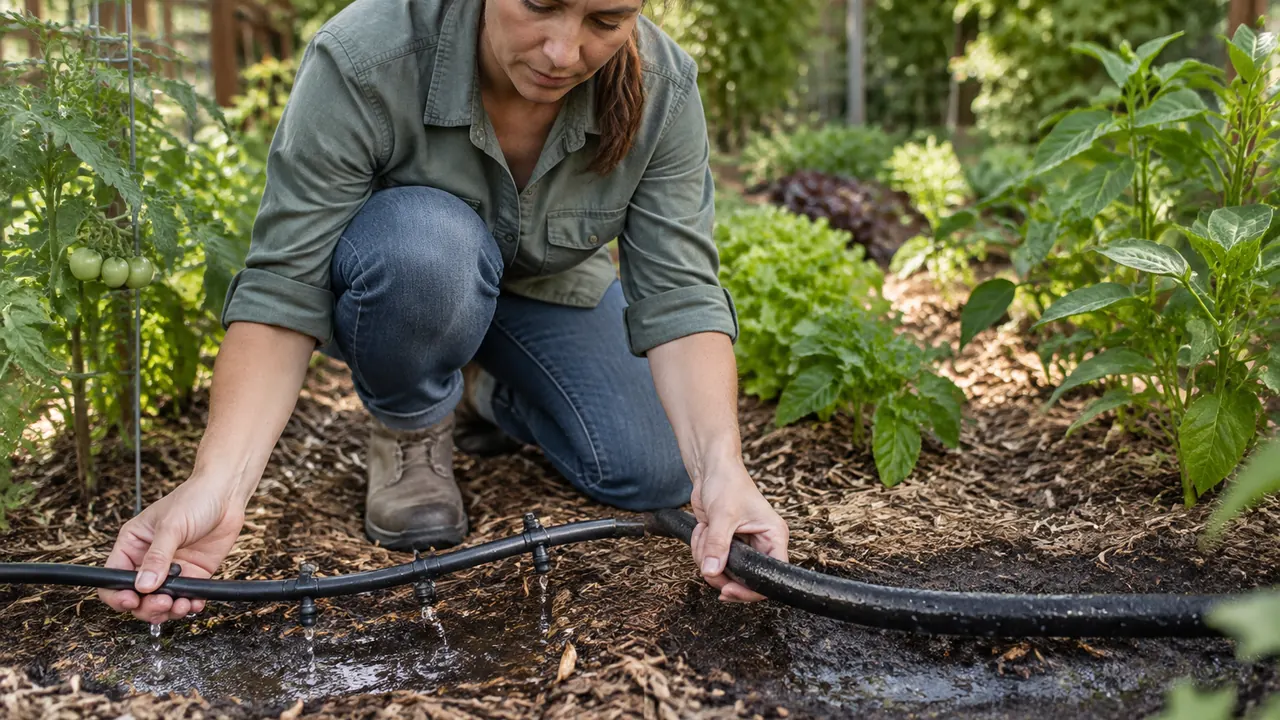
A soaker hose looks like the easy answer: Lay it beside your plants, connect it to a faucet and let water seep into the soil. Drip irrigation takes more planning, with tubing, fittings and outlets positioned to deliver water where roots can reach it. Either can reduce overspray and keep leaves drier than an overhead sprinkler, but neither automatically guarantees even watering or lower water use. Layout, pressure and run time still matter.
For gardeners shopping in 2026, the useful comparison is not simply basic hose versus smart irrigation. Both systems can work with a compatible hose timer, and both need hands-on checks. Choose according to your beds, planting spacing and tolerance for repairs. Then judge performance by the soil beneath the mulch, not by how sophisticated the controller looks or whether the surface appears damp.
1. Start with how each system delivers water
A soaker hose releases water through its porous wall along much of its length. It suits closely spaced plants sharing a continuous root zone, provided the hose follows the planting and stays within its recommended run length. Output can vary with pressure, slope, hose construction and distance from the faucet. A long run may leave its far end noticeably drier. Extra faucet pressure is not a reliable fix and can damage a hose designed for low-pressure operation.
Drip irrigation is a family of products rather than one design. Solid tubing can carry water to individual emitters, while dripline has emitters built in at regular intervals. Drip tape, often used for vegetable rows, has its own pressure and handling requirements. Pressure-compensating emitters can improve consistency on modest slopes or longer runs within their rated operating range; ordinary emitters do not offer that same control. Read the product specifications before combining parts. Neither option waters only downward: Water spreads through soil, with the wetting pattern depending heavily on texture. Sandy soil generally needs closer watering points than soil that moves water farther sideways. That is why a hose that works in one bed may disappoint in another.
| Feature | Drip irrigation | Soaker hose |
|---|---|---|
| Delivery | Individual or regularly spaced outlets | Seepage along porous hose |
| Best layout | Targeted plants or planned rows | Simple, closely planted beds |
| Consistency | Good with suitable design and pressure | More sensitive to length and slope |
| Changes | Add or relocate compatible components | Reposition or replace hose lengths |
2. Compare the complete setup cost
For a small bed, a soaker hose usually has the lower entry cost and requires fewer decisions. Think in broad shopping ranges rather than a single national price: A short hose commonly costs tens of dollars, while a small drip kit may run from a few tens to more than $100. These are planning estimates, not verified offers. Length, material, included accessories and retailer pricing can change the comparison substantially. Check current 2026 listings and what each package actually contains before buying.
The less obvious expense is the connection hardware. Either system may need pressure regulation, filtration and a backflow device appropriate to your water supply and local requirements. Drip systems commonly specify a filter and regulator; soaker hoses also need clean water and pressure suited to their design. A timer, splitter and supply hose add costs to either setup. Drip becomes more attractive when targeted watering avoids running hose through unplanted spaces, though that does not guarantee savings on your bill. Sketch the whole route before comparing carts, and include spare fittings rather than assuming a starter kit covers every corner.
- Measure planting runs separately from the distance to the faucet.
- Check whether the kit includes its required filter and regulator.
- Budget for end closures, hold-down stakes and compatible repair parts.
- Confirm backflow requirements with your water utility or local authority.
3. Match the system to rows, pots and irregular beds
For straight vegetable rows, either approach can work. A soaker hose is convenient when plants are close together and the bed is fairly level. Dripline offers defined outlet spacing and makes repeated rows easier to organize. One line down the middle of a wide bed may not wet both edges adequately, especially in sandy soil. Test the wetting width before deciding how many parallel lines to install. Place lines near developing roots without pressing them against stems, and reposition them if planting patterns change.
Containers usually favor individual drip emitters because each pot can receive its own outlet, or several outlets for a larger root mass. Keep emitters secured so they cannot fall outside the pot. Group containers by watering needs; a small hanging basket and a large shaded planter should not automatically share one schedule. Irregular beds also favor solid supply tubing with outlets directed toward planted areas. Remember that a mature shrub may need several watering points spread across its root zone, not one emitter at the trunk. For an informal annual bed that gets rearranged often, however, moving a soaker hose can be simpler than rebuilding branches.
| Garden layout | Likely starting choice | What to verify |
|---|---|---|
| Closely planted, level rows | Soaker hose or dripline | Wetting width and far-end moisture |
| Spaced vegetable plants | Individual emitters or dripline | Outlet placement near roots |
| Containers | Individual drip emitters | Pot size, drainage and separate needs |
| Irregular mixed beds | Targeted drip outlets | Root spread and differing water needs |
| Sloping beds | Suitable pressure-compensating drip | Pressure range and elevation limits |
4. Build for consistent watering, not maximum pressure
Both systems work best when designed around the available flow and the manufacturer's limits. Long lines, too many outlets and uphill sections can reduce delivery. Follow the specified maximum lengths and emitter counts rather than connecting every leftover piece into one sprawling circuit. Split a large garden into zones when necessary. Keep plants with similar water needs together, and avoid combining components that require substantially different operating pressures on the same regulated zone.
Before covering anything with mulch, run the system and inspect every connection, outlet and hose section. Look for leaks, kinks, jets and places that stay dry. For individual drip emitters, collect water in small containers for the same timed interval to compare delivery where practical. With soaker hose, compare soil moisture near the beginning, middle and end after a test run. Mulch helps reduce evaporation, but it can conceal problems. Place lines on the soil beneath loose mulch unless the product calls for another arrangement; do not assume ordinary hose or tubing is approved for burial. Check again after mulching because a stake, bend or shifted connection can change the result.
5. Check moisture where roots are growing
A dark patch on the surface is not proof that the root zone has enough water. Conversely, dry-looking mulch does not mean the soil beneath it needs irrigation. Before watering, move mulch aside and use a finger, narrow trowel or soil probe to check several inches down, adjusting the depth to the crop and its rooting stage. Seedlings need moisture near their shallow roots; established vegetables need you to investigate farther down. Check more than one location, including a spot between outlets and the far end of a hose.
Soil that feels cool and moist may not need more water yet. Sticky, saturated soil or persistent standing water calls for less irrigation and possibly investigation of drainage. Texture matters: Sandy soil will not form the same cohesive ball as clay, so learn what your own soil feels like as it dries. In containers, combine a finger check with lifting a manageable pot to judge its weight. An inexpensive moisture meter can help track changes, but do not trust a single reading without checking the soil directly.
- Check before watering to decide whether irrigation is needed.
- After a test run, allow infiltration, then inspect wetting depth and width.
- Compare several plants rather than using the easiest spot alone.
- Record run time and conditions to build a useful starting point.
6. Adjust watering instead of repeating a daily timer
Use your first few watering cycles as tests, not permanent settings. If water reaches only a shallow layer, increase run time gradually and check again. If soil remains wet before the next planned cycle, delay watering or reduce frequency. Sandy beds and small containers often need shorter intervals than moisture-retentive beds, but weather, plant size and drainage can reverse assumptions. Newly sown seeds may need separate gentle surface watering until roots reach the system's wetted zone.
Revisit the schedule after rain, a heat wave, transplanting or a major growth spurt. A timer is useful for stopping a cycle you might forget, not for deciding that every day requires water. Weather-connected controls can help, but they still need appropriate settings and local verification. Rain may wet open beds while barely reaching pots beneath an overhang. If water pools or runs off before soaking in, try shorter cycles with pauses and assess whether compacted soil or poor drainage needs attention.
- During hot weather, check moisture more often before extending irrigation.
- After substantial rain, inspect the root zone and skip unnecessary cycles.
- Follow local watering restrictions, including those covering drip and soaker systems.
7. Choose the maintenance you can realistically do
Drip systems need filter cleaning, occasional flushing as directed and checks for blocked, displaced or damaged emitters. Soaker hoses need inspections for splits, clogged areas and uneven seepage; some deterioration means replacing a section rather than cleaning it back to normal. Protect both from tools, chewing animals and accidental pulling. Follow manufacturer instructions for draining and winter storage where freezing is a concern.
Choose soaker hose for a modest, fairly level, closely planted garden when quick installation matters most. Choose drip for containers, scattered plants, complex layouts or greater control over delivery. A combination can work well when separated into appropriate zones. Whichever you buy, leave connections accessible and keep a few compatible repair parts nearby. The most dependable system is the one you inspect, adjust and repair before a hidden problem leaves roots too dry or too wet.
Prices and product requirements vary; check current listings, manufacturer instructions and local backflow rules before purchasing or connecting irrigation equipment.
AI Assistance Used — AI assistance was used in researching and drafting this article. It was reviewed, edited, and fact-checked by Jordan Singh before publication.