Dishwasher vs. Handwashing: Which Uses Less Water and Energy?
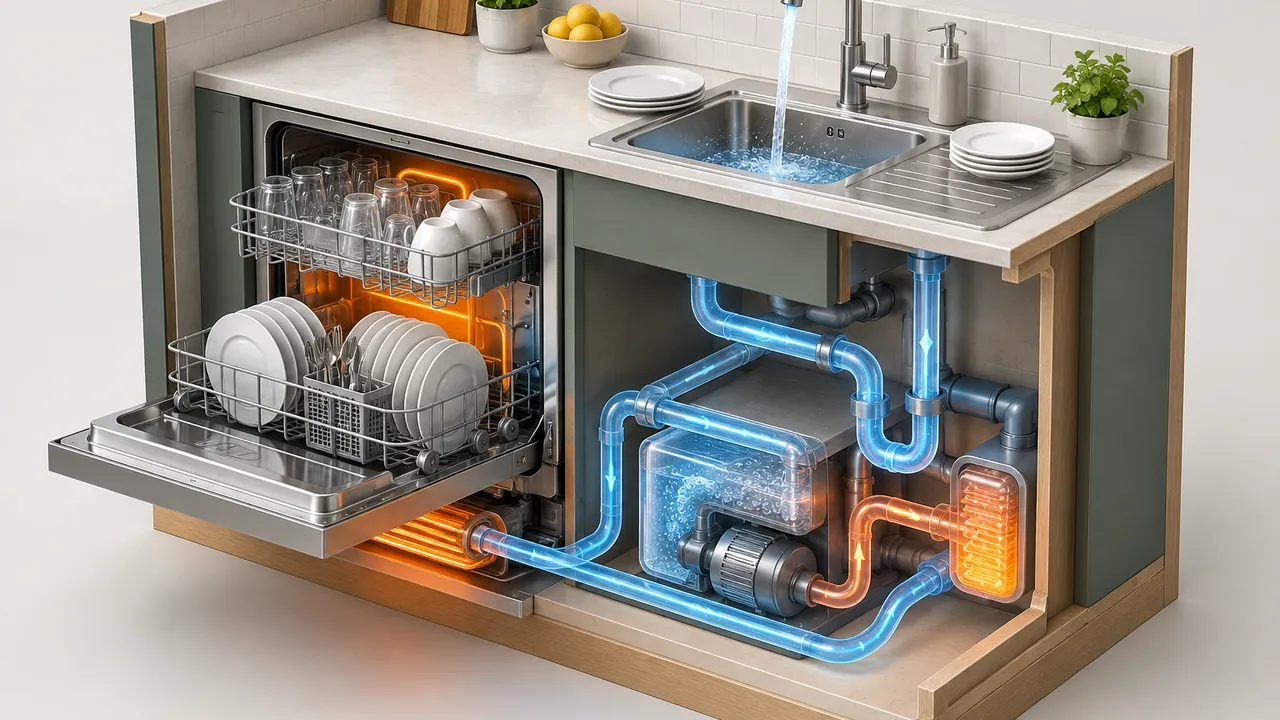
For most US households, a reasonably efficient dishwasher run with a full, properly loaded rack uses less water than washing the same dishes under a running faucet. It often uses less energy, too, because heating water is a major part of the job. The fairest comparison covers an equivalent batch of dishes, cleaned adequately and ready to use again.
But the comparison changes with the routine. A half-empty machine, unnecessary pre-rinsing and heated drying can erode savings. Careful basin washing can beat a wasteful machine cycle for a few items. As of October 2026, the useful question remains: How much water and heat does the entire cleanup require?
1. Compare the whole wash, not just the appliance
Many newer efficient dishwashers use roughly 3–5 gallons per cycle, although model, cycle and soil level matter. A kitchen faucet flowing at 1.5–2.2 gallons per minute delivers about 15–22 gallons in 10 minutes. Those are illustrative ranges, not promises about your equipment.
Dishwashers recirculate wash water rather than drawing fresh water continuously. Count any sink rinsing alongside the machine’s consumption. For handwashing, count washing, rinsing and water run while waiting for it to warm. The table shows why behavior can outweigh the choice of method.
At a measured faucet flow of 2 gallons per minute, just two minutes of pre-rinsing adds 4 gallons. Paired with a 4-gallon dishwasher cycle, that habit doubles the total water used for cleanup.
| Routine | Illustrative water use | Main consideration |
|---|---|---|
| Full newer efficient dishwasher | About 3–5 gallons | Verify the selected cycle |
| Same dishwasher, half full | Often similar to a full load | Higher use per item |
| Tap running for 10 minutes | About 15–22 gallons | Depends on actual faucet flow |
| Filled basin with controlled rinsing | Depends on fills and rinses | Measure rather than assume |
2. Load well and skip routine pre-rinsing
Scrape leftovers into the trash or compost where accepted, then load dishes according to the manual. Most modern dishwashers are designed to handle ordinary food residue without a faucet rinse. Heavy, dried-on deposits may need targeted soaking, but polishing every plate first duplicates the machine’s work.
Aim for full, not overcrowded. Bowls nested together or utensils blocking spray can force another wash, wiping out savings. A partial load still consumes water and electricity; even a half-load setting does not necessarily halve either. For a few items needed immediately, controlled handwashing may be more economical.
Match detergent dosing to the product instructions and your water hardness. Too little can leave residue; excess detergent can contribute to filming, especially in soft water. Correct dosing helps avoid unnecessary rinsing or rewashing.
- Wait for a fuller load when practical.
- Keep spray arms clear and dirty surfaces exposed.
- Check the manual before relying on half-load settings.
- Clean filters as directed to avoid repeat washing.
3. Make handwashing a controlled-water task
Handwashing becomes competitive when water stays in a basin instead of flowing down the drain. Use a stopped sink or dishpan with enough warm, soapy water for the job. Wash lightly soiled items first, then greasier cookware, changing water when it becomes dirty or loses cleaning effectiveness.
Rinse with short bursts or a separate basin of clean water, refreshing it as needed. Do not treat low water use as permission to leave detergent or food residue behind. Follow care instructions for wood, delicate glassware, knives and other items that may not belong in the dishwasher.
Calibrate your dishpan once with a measured pitcher and mark the usual fill level. Two 2-gallon fills already total 4 gallons before any tap rinsing, making basin size and water changes important.
- Turn the tap off while scrubbing.
- Soak stubborn spots locally, not under running water.
- Choose a smaller dishpan for a small batch.
- Avoid washing individual items repeatedly throughout the day.
4. Separate cleaning needs from drying preferences
Energy use includes the dishwasher’s electricity and the energy your water heater supplies. Handwashing also draws on that heater, even though no appliance meter records the wash. Long hot-water rinses can therefore cost more than expected, especially when the tap runs well before useful washing begins.
Turning off heated drying, when available, can reduce dishwasher electricity use. Air drying may leave plastics wet, but that is not a reason to repeat the cycle. Cycle names vary: a quick cycle is not automatically the lowest-energy option, and a longer economy cycle may use less energy.
Check the specified inlet-water temperature before changing water-heater settings to save energy. Requirements differ by machine, and household hot-water safety also matters. A dishwasher’s internal heater does not automatically make every supply temperature suitable.
- Use normal or economy settings for routine loads.
- Reserve sanitizing cycles for situations that warrant them.
- Disable extra-dry options when their results are unnecessary.
- Open the door for drying only as the manual permits.
5. Check your costs before changing equipment
Start with your model number and manufacturer’s manual, which may list cycle water use. Check ENERGY STAR’s official product listings and federal EnergyGuide information for standardized comparisons, not predictions of your exact bill. Older machines vary substantially; measure before assuming replacement is necessary. To check faucet flow, time how long it takes to fill a known-volume container, then convert that result to gallons per minute.
Multiply gallons saved per wash by washes per month and your utility’s combined water and sewer usage rate, converting billing units first. Fixed charges generally will not fall. Use local electricity or gas rates to assess energy costs separately. For most homes, the sensible first experiment is simple: stop pre-rinsing, consolidate loads, reduce drying heat and stop leaving the faucet running.
Keep a one-week cleanup log recording machine cycles, approximate fullness, handwashing basin fills and faucet-running time. Repeat after changing habits, noting differences in meals served so reduced dish volume does not masquerade as improved efficiency.
Figures are illustrative; verify model specifications, cycle instructions and current utility rates through manufacturers, official federal resources and your local water and energy providers.
AI Assistance Used — AI assistance was used in researching and drafting this article. It was reviewed, edited, and fact-checked by Nadia Clarkson before publication.