Your First Cordless Tool Kit: Choose the Battery System Before the Bundle
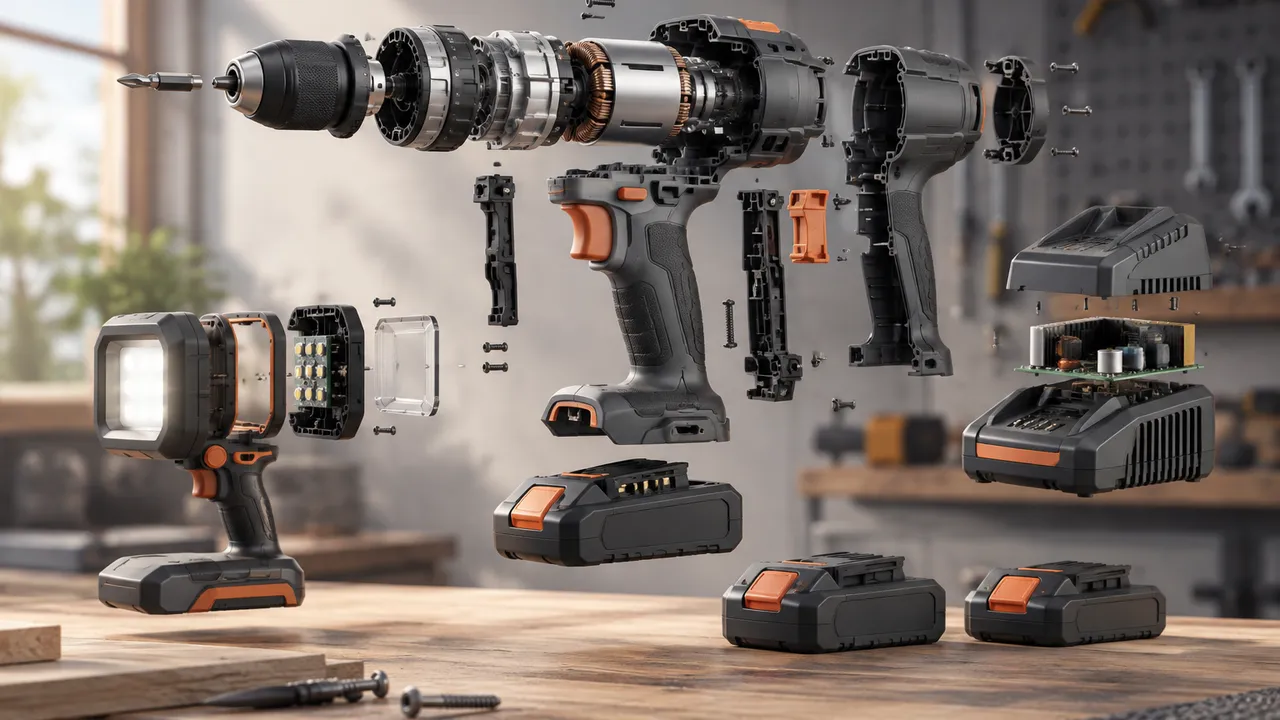
A cordless starter kit can look like a bargain until the next purchase: a replacement battery, a sander or a saw that needs a larger pack. The decision is not simply which drill costs less. It is which battery system makes sense for the jobs, storage space and spending likely to follow. Include where you will charge batteries and whether projects involve brief repairs or several hours of continuous work.
For occasional DIYers shopping in October 2026, the strongest starting point is a short project list—not a bundle’s advertised savings. Compare the tool with its battery installed, confirm exactly what shares that battery, and price the additions before committing. A smaller kit can be the better purchase.
1. Judge the weight you will actually hold
Published tool weights can exclude the battery. That matters when assembling furniture, hanging blinds or working overhead: a bulky pack can turn a manageable drill into a tiring one. Compare ready-to-use weight with the specific battery supplied, not a lighter pack pictured elsewhere. Also check length, grip size and whether the battery makes the tool awkward in narrow spaces.
Compact tools are often sufficient for household drilling and fastening, but voltage alone does not determine weight or capability. Try display models with permission, ideally with the intended pack attached. An impact driver is useful for repeated screw-driving, yet a drill/driver alone may cover infrequent tasks.
Test battery removal, too. Stiff release tabs or a wide pack can be difficult for smaller hands. Make sure you can detach it securely without balancing the tool against your body.
- Hold the tool overhead briefly; notice wrist strain.
- Check balance with both compact and larger compatible packs.
- Confirm that the trigger and direction switch are easy to reach.
2. Read compatibility as a technical requirement
A shared brand name does not guarantee a shared battery. Manufacturers may sell several incompatible cordless families, including older systems still appearing in clearance listings. Match the platform name and battery model numbers against the manufacturer’s compatibility charts and tool manuals. A charger that accepts several battery families does not make their tools interchangeable.
Voltage labels also need context. Some systems advertised as 20-volt maximum operate at 18 volts nominal; that label alone does not establish superiority over an 18-volt competitor. Within a platform, certain demanding tools may require or perform best with particular packs. Check those exceptions, including physical clearance and charger support. Avoid assuming that adapters preserve manufacturer-approved operation, protective functions or warranty coverage.
Some larger tools use two platform batteries simultaneously. If one is on your shortlist, verify the required pair: a single spare may not keep it running while other packs charge.
3. Price the second battery before the first kit
Treat replacement batteries as part of the purchase price. For budgeting, genuine compact packs commonly fall roughly in the $40–$100 range, while larger or premium packs can run about $80–$200 or more. These are broad planning ranges, not October sale quotes. Compare the same model number through the manufacturer and authorized US retailers; multipacks and promotions can change the calculation.
Amp-hours describe capacity, not an across-the-board measure of power. Within the same voltage family, a higher-capacity pack generally offers longer runtime, but also adds weight. Across different voltages, watt-hours provide a better energy comparison. For short tasks, two modest packs may be more useful than one heavy pack, provided both suit the tools.
Check charging times for your exact pack-and-charger combination. A basic bundled charger may take much longer than the fast charger featured in advertising, making battery rotation less practical during sustained work.
- Price one replacement matching the included battery.
- Check charger cost, charging time and included quantity.
- Read battery warranty terms separately from tool coverage.
4. Map the next purchases, not every possible tool
A huge catalog has little value if it lacks the two tools likely to come next. List plausible purchases over the next few years, then check their bare-tool prices and recommended batteries. Bare tools normally omit batteries and chargers, so inspect the listing rather than assuming the package contents.
Budget for supporting equipment alongside each future tool. A sander may need a suitable dust extractor and hose adapter; battery sharing does not eliminate those costs or guarantee compatible dust connections.
The useful question is whether sharing batteries saves money without forcing awkward compromises. This shortlist can expose those trade-offs:
| Likely next purchase | What to verify | Platform implication |
|---|---|---|
| Sander or oscillating tool | Weight and expected runtime | Compact packs may need frequent swaps |
| Circular saw | Recommended pack and cutting capacity | A larger battery may enter the budget |
| String trimmer | Shared platform and required pack | Garden tools may use another system |
| Specialty tool used once | Rental or corded alternatives | Ownership may not justify platform expansion |
5. Audit the bundle and buy only useful capacity
Count useful components, not advertised pieces. A bag, light and accessory assortment can inflate a kit’s apparent value without replacing anything on the shopping list. Record exact tool and battery model numbers, battery capacities, charger model and seller identity. Similar-looking kits can contain different generations or different battery combinations.
Compare the bundle with a simpler drill kit plus the one addition genuinely needed. For infrequent work near an outlet, a corded tool may avoid another battery purchase. Buy traceable batteries from reputable sellers, follow charging and storage instructions, and check the US Consumer Product Safety Commission’s recall database before using clearance or secondhand equipment.
For promotional kits with a free battery or tool, read partial-return rules before checkout. Returning one component can change the refund calculation; keep all packaging until you have checked everything.
- Keep receipts and record serial numbers.
- Confirm return deadlines and battery coverage.
- Skip extras that do not serve a planned job.
Verify current prices, compatibility, warranty terms and recalls with manufacturers, authorized retailers and official safety sources before purchasing.
AI Assistance Used — AI assistance was used in researching and drafting this article. It was reviewed, edited, and fact-checked by Lisa Barber before publication.