Heat Pumps in Cold Climates: When Does Backup Heat Make Sense?
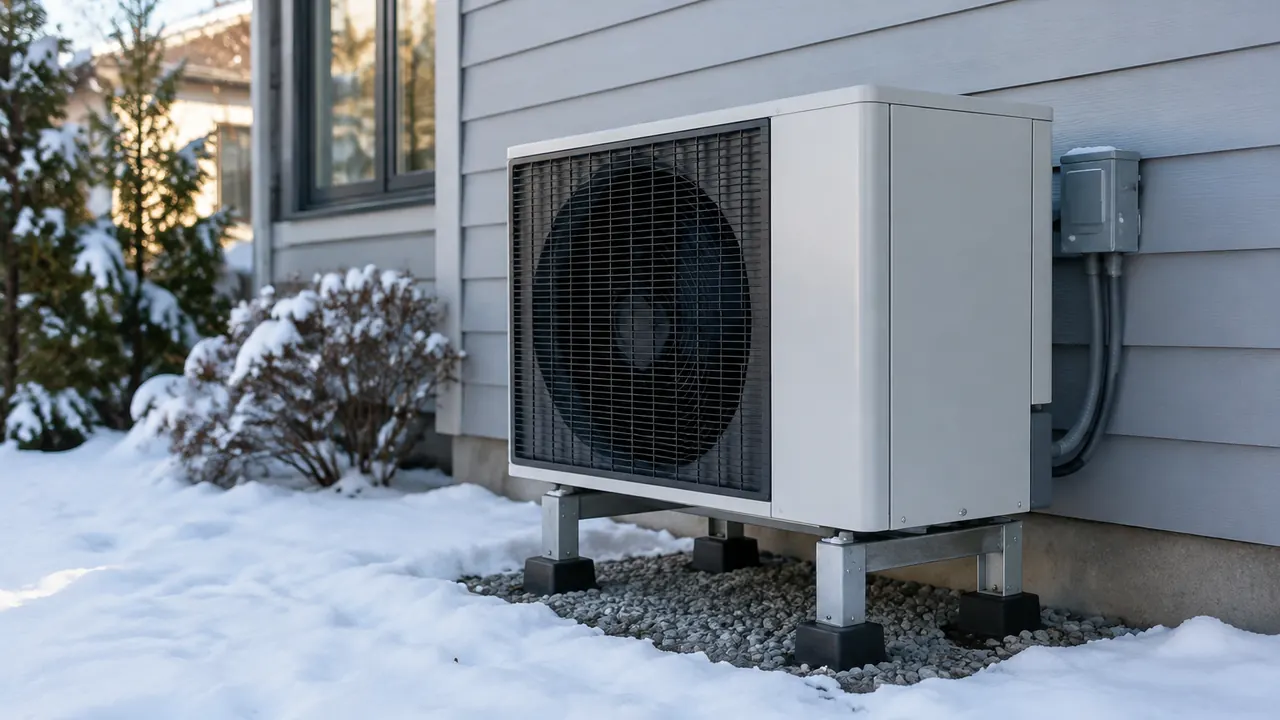
A heat pump does not automatically need a furnace because your winters are cold. Nor does a cold-climate label guarantee that a particular unit can heat your entire house through its worst weather. The useful question is narrower: How much heat can this system deliver at your local winter temperatures, what will that heat cost, and what happens when demand exceeds its output?
For homeowners comparing bids in July 2026, backup heat should be a design decision, not a default add-on or something dismissed by a sales pitch. The right answer depends on the house’s heat loss, the selected equipment, electricity and fuel prices, and the controls connecting everything. A well-planned system might use no dedicated backup, electric resistance heat for occasional shortfalls, or a furnace that takes over under specified conditions.
1. Start with local temperatures, not a blanket cutoff
Heat pumps move heat rather than generate it by burning fuel. As outdoor temperatures fall, a house generally needs more heat while a heat pump’s efficiency declines. Available heating capacity may decline too, although some variable-speed cold-climate models maintain substantial output far below freezing. There is no universal temperature at which every heat pump stops working or becomes the wrong choice.
Ask the contractor to use your location’s winter design temperature, commonly the outdoor temperature exceeded during roughly 99% of annual hours, with colder conditions occurring during the remaining hours. That is a sizing benchmark, not the lowest temperature ever recorded. A hilltop, windy exposure or nearby weather station with different elevation can justify closer attention to local conditions.
- Request heating capacity and efficiency at 47°F, 17°F and 5°F, plus data near your local design temperature.
- If your design temperature is below 5°F, ask for documented performance there rather than an extrapolated promise.
- Separate the minimum operating temperature from usable capacity: A running compressor may still leave a heating shortfall.
- Ask how the design handles unusually cold hours and whether maintaining the normal indoor setpoint is expected.
2. Match delivered capacity to the house’s heat loss
A room-by-room load calculation, typically using ACCA Manual J, estimates how much heating the house needs under design conditions. It should reflect insulation, air leakage, windows, exposed surfaces and the intended indoor temperature. Sizing from square footage alone, or simply matching the old furnace’s rating, can produce a poor fit. Existing furnaces are often larger than the home’s actual heating requirement.
Compare that load with manufacturer performance data for the exact indoor and outdoor equipment combination. Nominal tonnage and headline efficiency ratings do not establish cold-weather output. Seasonal HSPF2 ratings help compare products, but they do not tell you the capacity or coefficient of performance, or COP, on a specific January night. Duct airflow and distribution losses also affect what reaches occupied rooms.
Suppose a house needs 36,000 Btu per hour at its design temperature and the proposed heat pump supplies 28,000 under the corresponding conditions. The nominal shortfall is 8,000 Btu per hour; the installer must size and stage supplemental heat appropriately. Air sealing could reduce that gap. Choosing a bigger compressor could also help, but its minimum output, shoulder-season cycling and summer humidity performance deserve scrutiny before upsizing.
3. Compare the cost of useful heat, not fuel units
Electricity, natural gas, propane and heating oil are sold in different units. Compare their cost per unit of delivered heat, accounting for heat-pump COP and combustion efficiency. A COP of 3 means three units of heat delivered per unit of electricity consumed. Resistance heat has a COP near 1 at the equipment, so it generally costs substantially more to operate than the compressor.
For an illustrative comparison, assume electricity costs $0.20 per kilowatt-hour and natural gas costs $1.50 per therm, including applicable usage-based delivery charges. A gas furnace operating at 95% efficiency delivers 100,000 Btu for about $1.58. The table shows why heat-pump efficiency at the actual outdoor temperature matters; these are examples, not 2026 national prices.
Use current utility tariffs and recent delivered-fuel quotes. Include time-of-use periods, winter rate changes and applicable riders. Fixed gas charges matter if you can eliminate gas service entirely, but usually do not change the hourly heating choice if you retain gas for other appliances. For propane and oil, use their energy content and a realistic equipment efficiency; do not compare gallon prices directly with electricity prices.
| Heating source | Assumed efficiency | Cost per 100,000 Btu delivered |
|---|---|---|
| Heat pump | COP 4 | $1.47 |
| Heat pump | COP 3 | $1.95 |
| Heat pump | COP 2 | $2.93 |
| Electric resistance | COP 1 | $5.86 |
| Natural gas furnace | 95% | $1.58 |
4. Choose backup hardware for the problem you have
Backup arrangements differ in installation expense, operating cost and resilience. Electric strips inside a compatible air handler can supply a modest shortfall without another fuel connection. They may be sensible when needed only briefly, even where electricity is expensive. Frequent strip operation, however, can undermine anticipated savings and may require significant electrical capacity.
Dual fuel pairs a heat pump with a gas or propane furnace, usually switching between them rather than operating both simultaneously. Existing oil or hydronic heating can sometimes remain as a separate backup system, but controls and distribution need deliberate coordination. Keeping aging equipment also preserves its maintenance, safety inspection and eventual replacement obligations.
- Ask whether backup capacity covers only the calculated shortfall or can heat the home with the compressor unavailable.
- Confirm any panel, circuit or service upgrades before comparing installation totals.
- Do not treat portable space heaters as an equivalent whole-house backup design.
- Account for annual servicing and fixed fuel charges when deciding whether retained equipment is truly inexpensive.
| Configuration | When it can fit | Main check |
|---|---|---|
| Heat pump without dedicated backup | Documented capacity covers the planned load | Extreme-cold and equipment-failure plan |
| Heat pump plus electric strips | Occasional supplemental capacity needed | Circuit capacity and strip staging |
| Heat pump plus furnace | Fuel offers useful capacity or cost advantages | Approved pairing and changeover controls |
| Heat pump plus retained boiler | Existing hydronic system remains useful | Separate-system control coordination |
5. Set separate capacity and cost balance points
The thermal balance point is the outdoor temperature where heat-pump output matches the home’s heating load. Below it, supplemental capacity may be needed. The economic balance point is where another heating source becomes cheaper to operate. They are different thresholds, and either may govern a dual-fuel system depending on the homeowner’s priorities.
Using the example rates above, the heat pump roughly matches the gas furnace’s operating cost at a COP of 3.7. That does not establish a universal switchover temperature: The installer must map the equipment’s performance to outdoor conditions. Different rates, furnace efficiency or time-of-use pricing change the answer. A temperature setting copied from another house is not an adequate calculation.
- Request written compressor and auxiliary-heat lockout settings, with an explanation of each.
- Ask how long the thermostat waits before calling for supplemental heat and how stages are enabled.
- Check whether large thermostat setbacks trigger resistance heat during recovery; modest adjustments may work better.
- Understand emergency heat: On many systems, it disables the compressor and relies on backup rather than improving normal operation.
- Confirm that furnace and heat-pump operation follows the equipment manufacturer’s approved control sequence.
6. Plan for frost, snow and outages
Frost on an outdoor coil is normal under some winter conditions. The unit periodically defrosts, temporarily diverting energy to clear the coil. Depending on the system, auxiliary heat may temper indoor air during that process. Ask whether quoted low-temperature performance accounts for defrost and how the installer expects it to affect comfort and energy use.
Installation details matter as much as the brochure. The outdoor unit needs manufacturer-specified clearances, protection from roof runoff and placement above expected snow accumulation. Meltwater needs somewhere to drain without building an ice problem beneath the coil or across a walkway. Indoor airflow, filter condition and duct leakage can also turn adequate equipment into an uncomfortable installation.
Backup heat is not automatically outage protection. Electric strips need electricity, and most furnaces and boilers need it for controls, fans or pumps. A generator must be evaluated for starting requirements, sustained loads, electrical connections and safe operation; resistance heat can be especially demanding. Ask separately about a compressor failure, a utility outage and a fuel interruption. Those are different emergencies, and one backup arrangement may not cover all three.
7. Require a bid you can verify
A useful proposal should make its assumptions visible. Ask for the load calculation, exact model numbers, expanded heating-performance tables, planned airflow, backup size and control settings. Manufacturer engineering data and applicable third-party cold-climate product listings are more useful than a claim that a unit works at an impressively low temperature. A listing still does not prove the proposed system fits your house.
Request an annual operating-cost estimate using local weather and your actual rate structure, with compressor and backup electricity shown separately. The estimate should identify the assumed indoor temperature and fuel efficiency. Treat it as a comparison tool, not a bill guarantee: Weather, occupancy, thermostat habits and future prices can all change the result.
Finally, compare complete ownership costs, including electrical work, duct improvements, maintenance and any retained fuel account. Verify current incentive eligibility before counting a discount. Backup makes sense when it closes a documented capacity gap, lowers total costs or provides a clearly defined layer of reliability. It makes less sense when it merely compensates for missing performance data or an installer’s unwillingness to calculate the home’s needs.
Confirm current utility rates, incentive terms and equipment specifications, and have a qualified HVAC professional verify sizing, electrical requirements and backup controls before installation.
AI Assistance Used — AI assistance was used in researching and drafting this article. It was reviewed, edited, and fact-checked by Lisa Barber before publication.