How to Clean Countertops Without Damaging the Finish
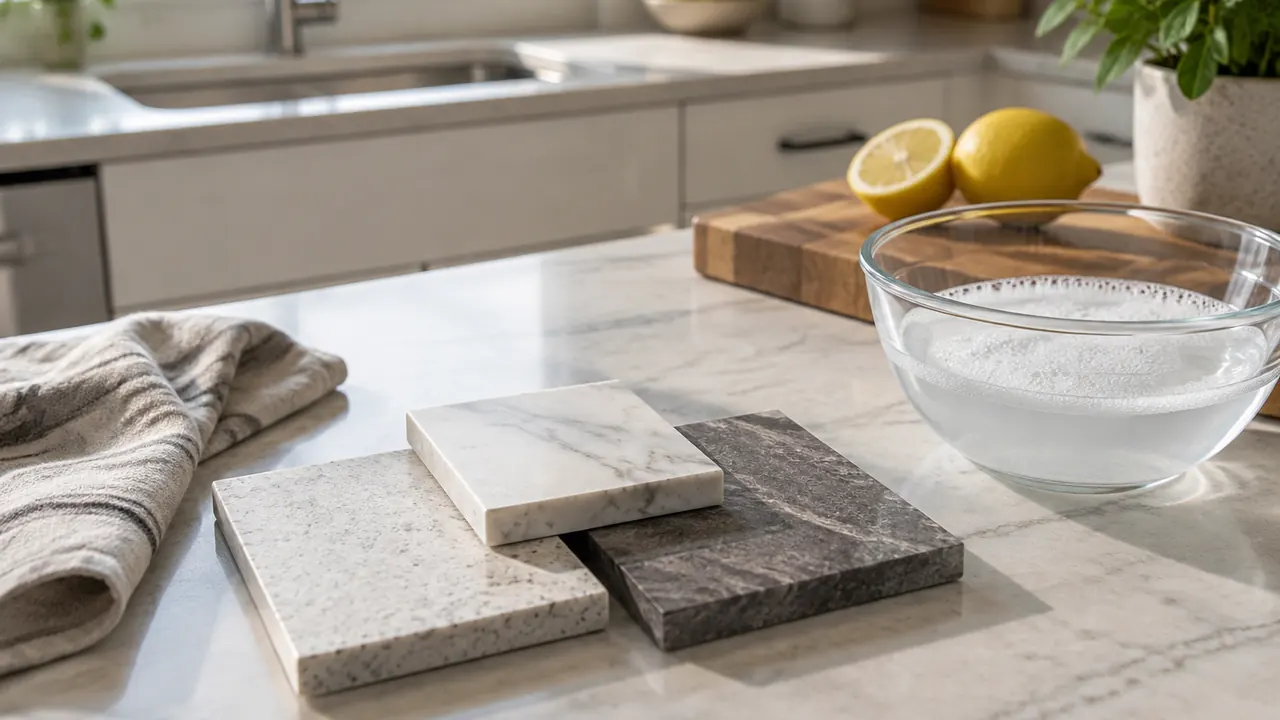
The cleaner that leaves one countertop spotless can leave another with a permanent dull patch. Vinegar can etch marble, an abrasive pad can scratch laminate, and standing water can damage butcher block or seep into a laminate seam. Even surfaces sold as durable need protection from the wrong chemistry, excessive scrubbing and prolonged moisture. The safest starting point is usually a soft cloth, a little mild dish soap and water, followed by a clean-water wipe and drying.
For a kitchen in 2026, the most useful cleaning upgrade is not necessarily a new spray: it is knowing your countertop’s material and finish. Quartz, granite, marble, laminate and butcher block have different vulnerabilities, and manufacturer instructions can vary within each category. Before treating a stubborn stain or disinfecting after food preparation, identify the surface, check its care guidance and distinguish removable dirt from damage that a cleaner cannot fix.
1. Identify an unfamiliar countertop before experimenting
Start with records rather than a chemical test. Look for a remodeling invoice, product label underneath an overhang, leftover sample or information from the installer, landlord or previous owner. A brand and product name are more useful than a guess based on color. Modern laminate can resemble stone, and engineered quartz can convincingly imitate marble veining. Photos alone may not settle the question.
Examine an exposed edge, an accessible underside or the area around a sink without removing fixtures. Laminate often shows a thin decorative surface over a wood-based core; butcher block shows joined wood strips and grain. Stone and quartz are thicker mineral-based slabs, although built-up edges and backing complicate identification. Also establish whether the surface is polished, honed, coated or refinished: a coating may need different care from the material beneath it.
- Ask whether “quartz” means engineered quartz or natural quartzite. They are different materials, despite the similar names.
- Do not use vinegar, lemon juice, a knife or a scratch test to identify stone; the test itself can leave damage.
- Until identification is reliable, use minimal mild soapy water, wipe it off promptly and dry. Ask a stone fabricator or countertop specialist before tackling marks.
2. Build a gentle everyday routine
Remove crumbs first so they do not act like grit under your cloth. Wipe with a clean, soft microfiber cloth or nonabrasive sponge lightly dampened with warm water and a small amount of mild dish soap. Wipe again with clean water to remove detergent, then dry with a soft towel. Use less water near seams, sink openings and wood surfaces. Too much soap can leave streaks that look like a failing finish.
Read both the countertop instructions and the cleaner label. “Natural,” “plant-based” and “all-purpose” do not establish compatibility. Even a neutral-pH product can contain ingredients unsuitable for a particular coating. The comparison below is a starting point, not permission to use every product marketed for that material. Test an approved cleaner in an inconspicuous spot before treating a visible area, especially on a dark or matte finish.
- Use cutting boards and trivets on every material; cleaning cannot reverse knife marks or heat damage.
- Skip steel wool, gritty powders and abrasive pads unless the countertop maker expressly permits a specific method.
| Material | Routine cleaning | Main vulnerability | Sealing or conditioning |
|---|---|---|---|
| Engineered quartz | Mild soap or manufacturer-approved cleaner | Harsh chemicals, abrasives and heat | Generally does not need sealing |
| Granite | Mild soap or suitable pH-neutral stone cleaner | Stains, damaged sealers and harsh chemicals | Depends on the stone and existing treatment |
| Marble | Mild soap or marble-safe pH-neutral cleaner | Acid etching, scratches and stains | Sealer can reduce absorption, not prevent etching |
| Laminate | Mild soap and a damp soft cloth | Scratches and moisture entering joints | Generally no routine sealing |
| Butcher block | Mild soap, limited water and prompt drying | Water damage and finish-incompatible chemicals | Depends on whether it is oiled or film-finished |
3. Quartz: protect the resin as well as the stone
Engineered quartz combines mineral particles with binders and pigments. Its low absorption makes routine care straightforward, but the resin-containing surface is not chemically indestructible. Strong solvents, oven cleaners, drain cleaners and some highly alkaline products can discolor or damage it. Heat can also harm the surface, so keep hot cookware and heat-producing appliances from direct contact according to the manufacturer’s guidance.
For dried food, try a brief application of a damp cloth, then gentle wiping. If the maker permits a plastic scraper, use it carefully rather than reaching for a razor blade. Greasy residue may need a specifically approved degreaser. Do not assume a melamine foam eraser is harmless: it is mildly abrasive and can change the sheen, particularly on finishes that show rubbing.
Quartz generally does not need a penetrating stone sealer; applying one can leave unwanted residue. Bleach and other disinfectants require product-specific checking rather than a universal yes or no. Some manufacturers allow particular formulations and exposure times, while others restrict them. Follow the current care sheet for your exact product, including any rinse instructions.
4. Granite and marble: separate staining from etching
Granite and marble are both natural stone, but their chemistry differs. Marble contains acid-sensitive carbonate minerals. Vinegar, lemon juice, wine and many bathroom cleaners can react with the surface, leaving a dull or rough mark called an etch. It may look like a water spot, but the stone itself has changed. A penetrating sealer does not make marble acid-proof, and more cleaning will not restore dissolved polish.
Granite is generally more acid-resistant than marble, but that does not make every granite slab or treatment safe for acidic cleaners. Mineral composition, resins, sealers and coatings vary. Use a suitable pH-neutral stone cleaner or mild soapy water for both materials. Blot spills promptly rather than spreading them; remove oily and strongly colored residues before they have time to soak in.
Sealing needs depend on the stone’s absorbency, existing treatment and use, not a universal annual schedule. A water-drop check may reveal darkening from absorption, but follow the installer’s testing advice and do not treat it as a complete diagnosis. If resealing is needed, use a compatible product and follow its preparation and curing instructions. For stains, get advice on a stone-compatible poultice; for etching, consult a stone restoration specialist rather than scrubbing harder.
- A darker area may indicate absorbed moisture or a stain; let the surface dry before assessing it.
- A pale, dull patch visible at an angle may be etching, especially on marble after an acidic spill.
- Do not apply polishing compounds indiscriminately: they can create a glossy patch on a honed finish.
5. Laminate: keep moisture out of the joints
Laminate’s decorative wear surface is bonded to a substrate, commonly a wood-based core. The face tolerates ordinary damp wiping, but water entering a seam, loose edge or sink cutout can swell the material underneath. That swelling is not a stain and will not disappear with a stronger cleaner. Wipe spills promptly, especially around faucets and appliances where slow leaks may go unnoticed.
Use a soft cloth and mild detergent, then remove residue and dry. Avoid flooding the counter or laying a soaking towel across a joint. For sticky material, follow the laminate maker’s directions before trying any solvent. Abrasive powders and scouring pads can scratch or dull the decorative surface, and concentrated chemicals can cause discoloration. Once the wear layer is damaged, an everyday polish cannot rebuild it.
Protect laminate from hot pans and direct cutting. If an edge is lifting or caulk around the sink has failed, address the entry point rather than simply cleaning more often. A repair professional can assess whether rebonding, renewed sealant or replacement is appropriate. Do not add a generic stone sealer to laminate.
6. Butcher block: identify the finish before adding oil
Butcher block is not one cleaning category. Some counters have a penetrating oil or oil-and-wax treatment; others have a cured film finish, such as polyurethane. Those finishes handle moisture and maintenance differently. Ask the installer which system was used and whether the counter is intended for direct food preparation or cutting. A finish suitable for incidental food contact is not automatically meant to withstand chopping.
For routine cleaning, remove food debris, wipe with mild soapy water using a well-wrung cloth, remove soap with a clean damp cloth and dry promptly. Do not soak the wood or leave wet dishcloths, plant pots or puddles on it. Pay particular attention to end grain, joints and the sink area. Repeated wetting and drying can contribute to raised grain, movement and cracking.
- For an oiled counter, replenish only with a manufacturer-recommended food-contact conditioning product, often food-grade mineral oil or a specified blend.
- Do not substitute cooking oils that can become rancid, or oil a film-finished counter unless its maker instructs you to.
- Skip routine lemon-and-salt scrubbing: acidity and abrasion may affect the finish, and the method is not a validated disinfecting procedure.
- Ask about refinishing persistent stains or rough areas; sanding a coated surface can create a repair larger than the original mark.
7. Disinfect selectively and know when to stop
Cleaning removes food, grease and dirt; disinfecting uses a labeled product to kill specified germs. Routine cleaning is often sufficient for everyday household upkeep. After raw meat contamination or during household illness, additional treatment may be appropriate. First clean the area, then choose a product whose label covers the intended use and whose formulation is compatible with the countertop. A hard, nonporous-surface claim does not automatically cover unfinished wood.
As of March 2026, the practical rule remains to follow the current EPA-registered disinfectant label, not a social-media dilution recipe. Observe the required wet contact time and any potable-water rinse for food-contact surfaces. If the countertop cannot tolerate that product or wet exposure, choose another compatible, labeled option; shortening contact time undermines the directions. Never mix cleaning products, particularly bleach with acids or ammonia.
- Use a separate cutting board for raw meat, poultry and seafood, and clean and sanitize it as appropriate for its material.
- Stop if treatment produces fading, tackiness, roughness or a changing sheen. Remove the product according to its directions and seek advice.
- Photograph persistent marks and record the product used. Give that information to the manufacturer, installer or restoration professional before attempting another treatment.
Care caveat: Check current manufacturer instructions for your exact countertop and finish, and consult a qualified professional when the material or damage is uncertain.
AI Assistance Used — AI assistance was used in researching and drafting this article. It was reviewed, edited, and fact-checked by Lisa Barber before publication.