Concert Earplugs: How to Choose Protection You Will Actually Wear
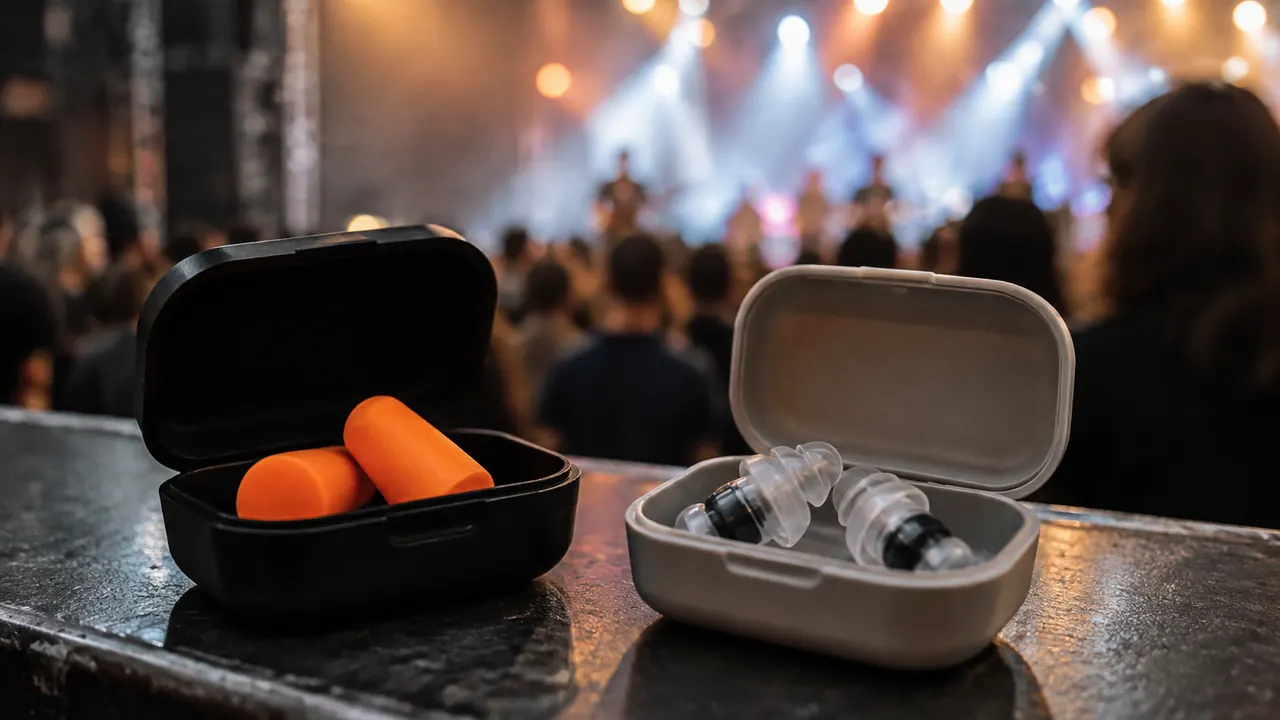
A concert earplug can look impressive online and still fail you halfway through the opener. Maybe the stem presses against your ear, the foam never seals, or the music sounds different enough that you keep pulling it out. For concertgoers shopping in 2026, the useful question is not which product promises perfectly unchanged sound. It is which protection you can fit correctly, tolerate comfortably and leave in throughout the loud parts of the night.
Foam, filtered reusable and custom earplugs each solve a different problem. Foam is inexpensive and can provide substantial protection when inserted properly. Filtered plugs aim for a more balanced listening experience. Custom plugs prioritize an individualized fit, usually at a much higher price. None makes unlimited exposure safe, and none works as advertised without a reliable seal. Start with fit and wear time, then decide how much convenience and sound quality are worth to you.
1. Choose a category, not a promise
Earplugs reduce sound before it reaches your eardrum, but they do not all reduce every frequency equally. Foam often makes music seem darker because it reduces higher frequencies more strongly. Filtered designs aim to reduce sound more evenly, although the result depends on the filter, your ear canal and insertion. Even a well-designed plug changes the listening experience. Marketing language such as transparent or high fidelity describes a goal, not proof that the sound will be untouched.
Think of the categories as starting points rather than a ranking. A properly fitted foam plug is a better choice than an expensive filtered plug that leaks. A comfortable reusable pair may be more useful than stronger protection you repeatedly remove. Custom options make the most sense when you attend often, have persistent fit problems or want an audiologist involved in selection. For any category, look for identifiable attenuation testing and clear fitting instructions rather than relying on reviews about bass or vocals. Keep backup plugs available even after finding a favorite pair.
| Type | Fit and comfort | Music trade-off | Cost pattern |
|---|---|---|---|
| Foam | Expands to seal; technique matters | Often sounds more muffled | Lowest upfront cost; recurring replacements |
| Filtered reusable | Stock tips; may require size trials | Often more balanced than foam | Moderate upfront cost; replaceable parts vary |
| Custom | Made from impressions or scans | Depends on chosen filter and seal | Highest upfront cost; service and refit costs vary |
2. Foam: Affordable protection that rewards careful fitting
Foam plugs are a practical first purchase and an excellent backup. They are easy to carry and inexpensive enough to share as individually wrapped, unused pairs. Their weakness is not necessarily comfort or sound; it is how often they are inserted too shallowly. A plug perched at the canal entrance may feel secure while leaving a poor acoustic seal. Different foam diameters, lengths and firmness levels can also feel surprisingly different, so one uncomfortable pair does not rule out the entire category.
Follow the package instructions. Typically, you roll the plug into a narrow, smooth cylinder, reach over your head to pull the outer ear gently up and back, then insert and hold it while it expands. Use clean hands and never force a plug into a painful position. Allow time before the set starts rather than trying your first fitting in a dark crowd. Once seated, both ears should sound noticeably quieter, although that observation cannot measure your actual protection.
- Try a smaller foam size if expansion causes pressure or soreness.
- Replace disposable plugs as directed, especially when dirty, damaged or no longer expanding properly.
- Carry a sealed spare pair so a dropped plug does not end your protection.
3. Filtered reusable plugs: Better balance, if the tips seal
Filtered reusable plugs usually combine a silicone or similar tip with a sound-reducing filter. Many listeners find them less muffling than foam, which can make it easier to keep them in during a show. That benefit is real only if the tips fit. A package with several sizes gives you more chances to get a seal; your left and right ears may need different sizes. A larger tip is not automatically safer if it folds, hurts or will not seat correctly.
Look at the whole design, not just the filter description. Long stems can interfere with hats or get bumped in a dense crowd. Very small bodies may be difficult to remove. Vented or filtered plugs can also make your own voice sound different, and no universal-fit design suits every ear. If a model offers interchangeable filters or settings, verify the attenuation for each configuration. A conversation setting may provide less protection than you want beside a loud stage.
- Check whether replacement tips and filters are available separately.
- Read the cleaning instructions; some filters must stay dry.
- Check return rules before opening, since hygiene exclusions may apply.
- Practice changing settings at home, not while standing in loud sound.
4. Custom plugs: Pay for fit, not invincibility
Custom earplugs are made from impressions or scans of your ears, commonly through an audiologist or hearing-protection provider. For frequent concertgoers, musicians or people who cannot tolerate stock tips, that personalized shape can improve comfort and consistency. Many custom music plugs use replaceable filters, allowing different attenuation choices. They are not necessarily more protective than foam, however. Protection depends on the selected filter, the finished fit and whether the plug maintains its seal while you move, talk or sing.
Ask what the quoted price includes: the ear assessment, impressions or scans, filters, fitting appointment and any remake period. Also ask how the provider checks the seal and whether individual attenuation testing is available. Custom products can need adjustments, and ear shape can change over time. Budget for maintenance, possible filter replacements and eventual replacement of the plugs themselves. An existing custom pair that has become loose or uncomfortable deserves a fit review, not blind trust because it was expensive. Never keep wearing a painful fit just to justify the purchase price.
5. Read ratings carefully and keep watching the clock
In the United States, you will often see a Noise Reduction Rating, or NRR, on hearing-protection packaging. It comes from standardized laboratory testing, not a measurement of protection in your ears at a particular show. Actual attenuation can be much lower with a poor fit. Some listings show an SNR, used in other markets, or frequency-specific attenuation figures. These are not interchangeable numbers. Do not simply subtract the advertised rating from a phone's sound reading and assume the result proves your exposure is safe.
Time matters because sound exposure accumulates. As a reference, the National Institute for Occupational Safety and Health recommends an occupational exposure limit of 85 dBA over eight hours, with allowable time halving for each 3-decibel increase. Under that framework, 100 dBA corresponds to about 15 minutes without protection. This is a workplace risk-management benchmark, not a personal concert safety guarantee. Your actual dose depends on changing levels, duration and achieved protection, plus other loud activities that day. Short unprotected intervals can contribute disproportionately to the total exposure.
- Treat phone sound apps as warning tools; accuracy depends on the device, app and calibration.
- Choose a quieter position farther from loudspeakers rather than trusting earplugs alone.
- Take breaks somewhere genuinely quieter; a loud concourse may offer little relief.
- Leave plugs in during loud applause, transitions and the trip out past speakers.
6. Test comfort before the headliner, then keep them in
Do a rehearsal at home, following the manufacturer's fitting directions. Wear the plugs long enough to notice pressure, itching or difficulty removing them. Talk, chew and move your jaw to check whether they loosen. Your own voice may sound boomy because plugging the ear canal changes how internally generated sound is perceived. Getting used to that sensation in advance can reduce the temptation to remove the plugs at the venue. Do not test them by deliberately turning music up to hazardous levels.
At the concert, insert them before entering loud areas and check that each side feels seated. If one ear suddenly sounds much louder or brighter, move somewhere quieter and refit rather than accepting the imbalance. A subjective check cannot tell you your exact attenuation; professional fit testing can provide more useful information when available. Avoid taking one plug out to talk or repeatedly comparing protected and unprotected sound. Instead, step away from the noise with your companion. If you cannot achieve a comfortable seal, use your backup and reduce your exposure.
7. Build a small kit and know when to get help
The easiest protection to wear is protection you remembered to bring. Keep your main pair in a clean case attached to something you routinely carry, plus a spare pair of foam plugs. Clean reusable products exactly as directed and let approved washable parts dry before storing them. Do not share inserted plugs. Before buying, compare the total cost of tips, filters, shipping and replacements, not just the initial price. Check current specifications for the exact model and configuration; similar-looking products may have different ratings.
After a show, ringing, muffled hearing or a sense of fullness should prompt a rethink of your exposure and protection, even if symptoms fade. Their absence does not prove that an exposure was harmless. Persistent or recurring symptoms warrant evaluation by a qualified clinician or audiologist. Sudden hearing loss, especially in one ear, needs urgent medical assessment rather than waiting to see whether it clears. The buying goal is straightforward: a dependable seal, manageable comfort and enough sound quality that you will keep the plugs in, supported by shorter exposure and quieter choices.
Before purchasing, verify current specifications, prices and return terms, and consult an audiologist about persistent fit problems or hearing concerns.
AI Assistance Used — AI assistance was used in researching and drafting this article. It was reviewed, edited, and fact-checked by Lisa Barber before publication.