Choosing a Cruise Cabin: Noise, Motion and Walking Distance
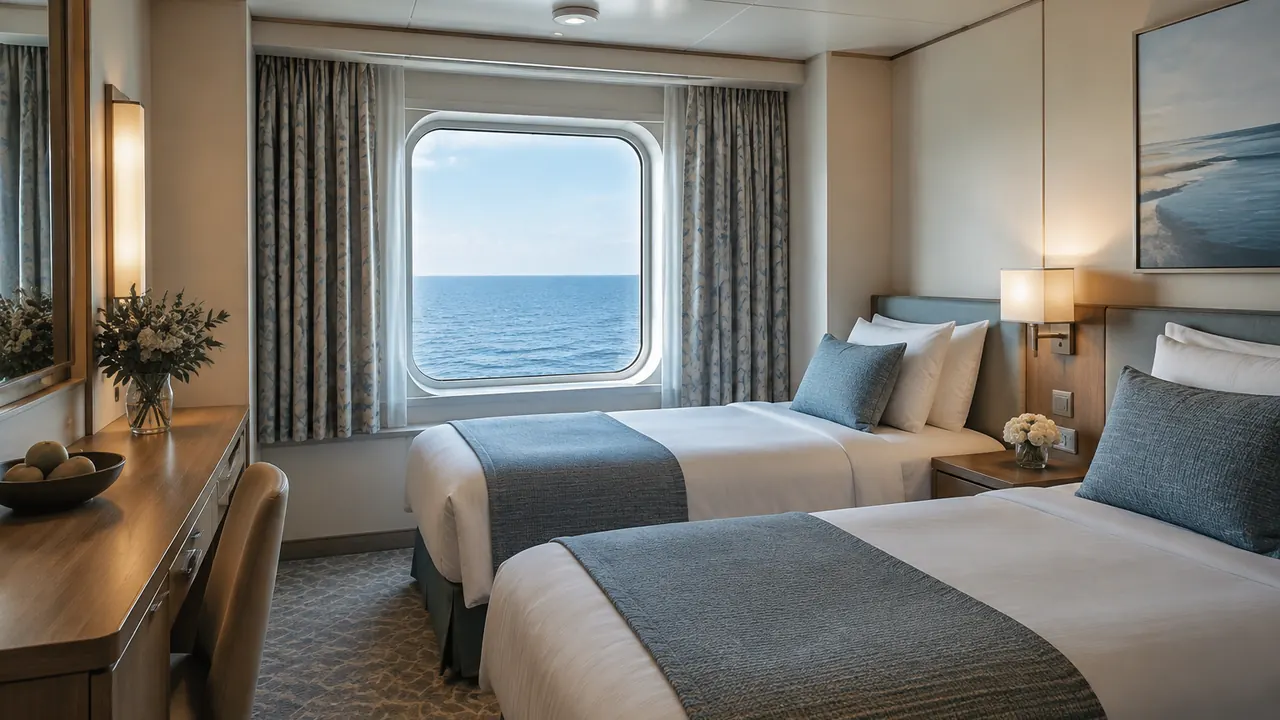
Choosing your first cruise cabin can feel like booking a hotel room from a maze. The price and photographs tell only part of the story: a balcony might face a lifeboat, a convenient location might share a wall with a busy passageway, and a room described as central might still be far from your favorite restaurant. For a 2026 sailing, start with the deck plan for your specific ship and departure date, not a generic illustration of the fleet.
Your goal is not to find a universally perfect cabin. It is to choose sensible trade-offs among sleep, comfort, views, access and cost. Read the plan sideways, looking at neighboring spaces, and vertically, checking what sits directly above and below. Then confirm anything the drawing cannot establish. No location guarantees silence or prevents seasickness, but a careful review can help you avoid surprises that matter to your particular routine.
1. Make sure you are reading the right deck plan
Open the cruise line’s official deck plan and check whether it lists an effective date or different versions for different sailings. Ships can change during refurbishment, and vessels in the same class do not necessarily have identical layouts. A plan attached to an older review may show a lounge where a newer plan shows cabins. Save the relevant plan with your booking notes, along with the cabin number, category and written description, so you can compare those details before paying.
Locate the bow, or front, and stern, or rear, before interpreting the page. Deck numbers do not always form a continuous sequence, so identify the actual deck immediately above and below yours. Use the legend rather than guessing what a small symbol means: it may indicate a connecting door, extra sleeping berth, accessible layout or restricted view. On a phone, enlarge the plan enough to read those marks. If the booking screen and plan disagree, ask the line or travel adviser to resolve the difference in writing.
- Confirm the exact ship, sailing date, cabin number and cabin category.
- Check neighboring cabins, the opposite side of the corridor, and both adjacent decks.
- Treat unlabeled spaces as questions to investigate, not proof of a quiet location.
2. Trace potential noise beyond the nearest bar
A cabin between decks of other cabins is a useful starting point for travelers who prioritize sleep, although neighbors and ship operations can still be audible. Look for theaters, nightclubs, live-music lounges and casinos beside, above or below the room. Sound can travel through a ship’s structure, so being one corridor away does not necessarily eliminate bass or vibration. Also check the outdoor deck overhead: chairs being moved, cleaning and early setup can matter as much as late-night entertainment.
Match possible noise to your own schedule. A room near a children’s activity area may bother an afternoon napper more than someone who spends daylight hours ashore. Fitness centers, jogging tracks, galleys and service areas deserve attention too. Near the bow, anchor or thruster operations may be noticeable during some arrivals; aft, propulsion-related vibration varies by ship and operating conditions. Ask about the precise cabin rather than accepting a blanket claim that an entire deck is quiet.
- Check venue hours, while remembering rehearsals, setup and cleaning can happen outside them.
- Look for crew service doors or housekeeping areas near the room.
- Read recent cabin-specific reports for patterns, not a single traveler’s verdict.
- Ask whether the room sits beneath furniture, exercise equipment or a public walkway.
3. Balance motion concerns with the cabin you will enjoy
A lower cabin near the ship’s middle is generally a reasonable starting point if motion concerns you. Locations toward the ends can experience more of the up-and-down movement associated with pitching, while higher decks can make rolling more noticeable. Those are tendencies, not guarantees: ship design, sea conditions, heading and speed all affect what you feel. Even two voyages on the same ship can be very different. Paying more for a particular cabin is not a reliable substitute for a seasickness plan.
Think about how you would use the room if you felt unwell. Some people value an outside view that lets them look toward the horizon; others prioritize a central location or a lower price. An ocean view is not a treatment, and a balcony may be unusable in rough weather. If you have a history of motion sickness, consult a clinician or pharmacist before departure about suitable prevention and medication precautions, including drowsiness and interactions. Do not assume a large ship makes that preparation unnecessary.
| Location | Potential advantage | Trade-off to check |
|---|---|---|
| Lower, midship | Often a useful starting point for motion concerns | May be farther from upper-deck amenities |
| Higher decks | Closer to pools on many ships | Rolling may feel more noticeable |
| Forward | Convenient for some theaters or observation areas | Pitching and arrival operations may be noticeable |
| Aft | Some cabins offer wake-facing views | Pitching, vibration and walking distance vary |
4. Check connecting doors and the cabin’s usable layout
A connecting cabin has an internal door to the neighboring room, distinct from two rooms simply being next to each other. It can be valuable for families, but the doorway may provide a path for voices or television sound. The effect depends on the door assembly and the occupants; it is not proof that the room will be noisy. If you do not need the connection and sleep lightly, compare nonconnecting alternatives at the same price before choosing. Confirm how the connecting doorway is secured when booked separately.
Check more than bed count. Ask whether twin beds can be joined or separated in that exact cabin, where additional berths deploy, and whether an open sofa bed limits the path to the bathroom or balcony. A symbol for an upper berth does not show how spacious the room feels at bedtime. Accessible cabins have specific features that vary by ship, and booking eligibility or documentation requirements may apply. Travelers who need those features should discuss measurements and equipment with the line’s accessibility team, not rely on photographs.
5. Read obstructed-view descriptions literally
An outside cabin does not automatically deliver a broad ocean panorama. Depending on the ship, a window or balcony may face lifeboats, tenders, support structures or equipment. Some balconies overlook interior public spaces rather than open water. A solid balcony front can limit the view while seated, even when standing views are clear. Labels such as partially obstructed do not provide a universal measurement, and an obstruction described as minor by one traveler could defeat another traveler’s main reason for booking.
Request a description or photograph of the specific cabin’s sightline, distinguishing the view from inside, from a chair and from the balcony rail. Confirm that any photo is recent and identifies the correct room. Also examine privacy: a public promenade or neighboring overlook can affect whether you keep curtains open. For a discounted obstructed-view room, decide whether daylight alone would satisfy you. If seeing the sea from bed is important, make that the question you ask rather than simply asking whether the cabin has a view.
| Plan or listing clue | What to verify |
|---|---|
| Obstructed or partial view | What blocks the sightline and from which positions |
| Lifeboats beside the deck | Whether the cabin faces a boat, equipment or a gap |
| Solid balcony front | Whether seated ocean views are limited |
| Interior-facing balcony | What public space it overlooks and its privacy |
6. Measure the walks you will actually make
Near an elevator can be a practical advantage, especially with limited stamina, a stroller or frequent trips back to the cabin. It does not automatically mean constant elevator noise. The more relevant concern may be conversation and foot traffic around the lobby, particularly if a nearby venue funnels people past your door. A cabin a short corridor away can offer a useful compromise. Check the actual route rather than judging straight-line distance on the drawing.
Pick the places you expect to visit daily and trace each journey. On some ships, a restaurant, theater or crew-only area blocks passage across a deck, requiring an elevator or stair detour. Separate elevator banks may serve different decks. Consider busy periods after shows and around meals, when waiting can add effort even to a short route. For wheelchair or scooter users, verify step-free paths, cabin-door clearance and relevant equipment policies directly; a location marked near elevators does not answer those accessibility questions.
- Trace routes to dining, the pool, children’s facilities and your likely evening venues.
- Check which decks each nearby elevator bank actually serves.
- Ask about accessible routes to gangways; the exit location can vary by port.
7. Protect your priorities when you book
Write down your two nonnegotiables before comparing prices. These might be avoiding connecting doors and shortening the dinner walk, rather than securing the largest balcony. A guarantee fare typically lets the line assign the cabin within the booked category or according to its stated guarantee terms. It may save money, but it reduces control over location. Read the current conditions rather than assuming you can reject an assignment because it is inconvenient.
Review upgrade offers with the same care. A higher-priced category can move you under a busy deck or farther from elevators. Ask whether you can decline or reverse an upgrade and what cabin changes would cost. Before finalizing, keep a record of any feature essential to your booking. Recheck the assignment after changes: the right cabin is the one whose compromises you understand.
Verify current deck plans, cabin details, fares and booking terms with your cruise line, and consult a qualified health professional for personalized motion-sickness advice.
AI Assistance Used — AI assistance was used in researching and drafting this article. It was reviewed, edited, and fact-checked by Leah Fornier before publication.