Choosing a Family Movie: What Age Ratings Leave Out
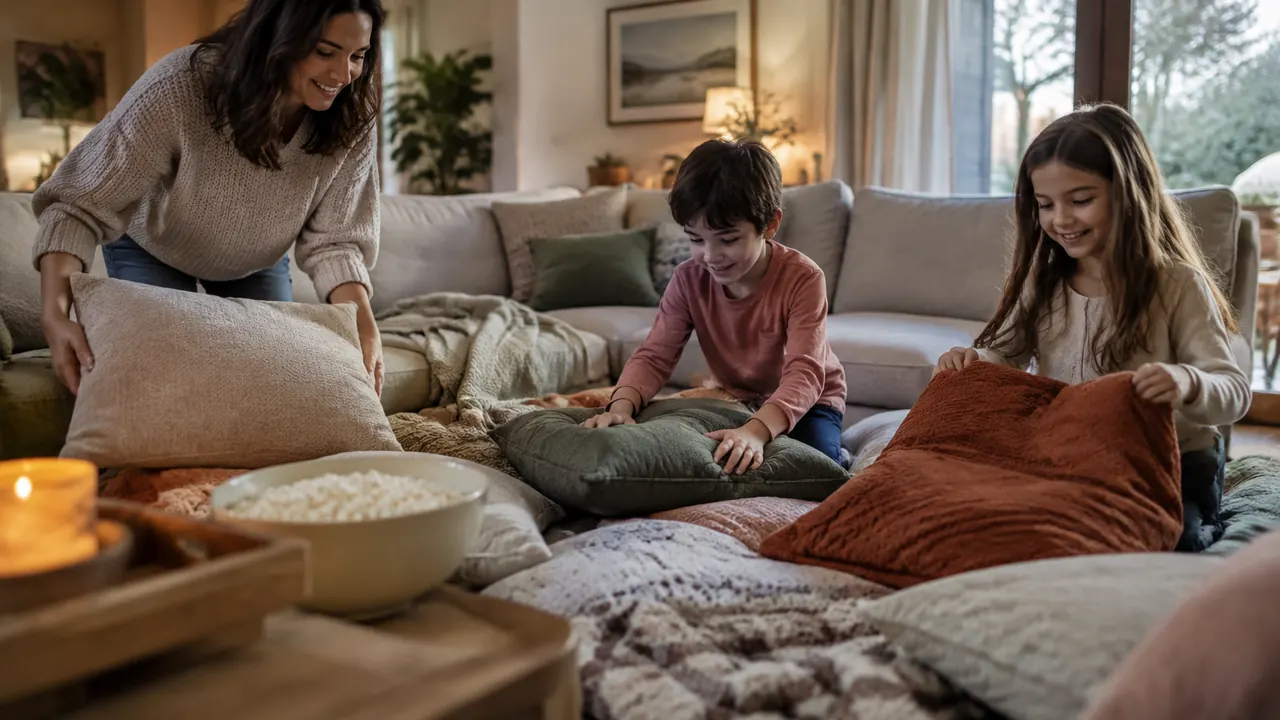
The movie is rated PG, the artwork looks cheerful, and everyone has finally agreed on something to watch. Then a parent disappears, a creature changes shape, or a chase keeps building long after your child stops enjoying it. The rating was not necessarily wrong. It simply answered a broader question than the one your family needed answered: Will this particular movie work for this particular child tonight?
In 2026, choosing a family movie can mean sorting through theatrical releases, streaming originals and older favorites whose labels come from different rating systems. A useful decision takes more than finding an acceptable letter or number. Look at how the movie delivers fear, violence, language and difficult themes, then consider its length and your child's recent experiences. You can do that without reading a plot summary or turning movie night into a research project. The goal is a comfortable fit, not a guarantee that nothing surprising will happen.
1. Treat the rating as a starting point
For US theatrical films, the Motion Picture Association's familiar categories provide broad guidance. G does not promise a movie without frightening moments, and PG signals that some material may not suit children. PG-13 urges stronger parental caution for children under 13; it is not a rule that every 13-year-old will be comfortable. R requires an accompanying parent or adult guardian for viewers under 17 at participating theaters, while NC-17 excludes viewers 17 and younger.
Read the accompanying rating descriptor, sometimes called the rating reason, whenever it is available. It can flag material such as strong language, violence, disturbing images or thematic content. Those few words are often more useful than the large badge. They still rarely explain whether a threat lasts ten seconds or dominates the final half-hour, whether an injury is shown closely, or whether a frightening character becomes reassuring.
Streaming menus may display a film rating, a television guideline such as TV-PG, or another maturity label. These are not interchangeable scales. Check which system is being used and confirm the exact title, release year and version. A remake, extended edition or similarly named movie may have different content. An unrated listing means there is no rating attached in that context, not that the material is mild.
| Information | Useful for | Does not reliably tell you |
|---|---|---|
| Overall rating | Broad content screening | Your child's likely reaction |
| Rating descriptor | Identifying major content categories | Scene length or emotional impact |
| Parent content guide | Checking specific concerns | How every child will respond |
| Trailer or preview | Sampling sound and visual style | The movie's full intensity |
2. Separate intensity from the amount of violence
Counting fights or weapons misses much of what makes a movie overwhelming. Intensity also comes from pacing, sound, helplessness and uncertainty. A bloodless sequence involving a trapped child can feel more upsetting than a cartoon battle with obvious jokes. Ask whether the danger feels realistic, whether someone vulnerable is targeted, and whether the audience gets regular chances to relax. Tension without recovery time matters even when individual scenes seem mild.
Consider the presentation as well as the event. Close-up injuries, screams, sudden loud sounds and shaky camerawork can change the experience. A distant explosion is not emotionally equivalent to watching a familiar character struggle to escape. Some children enjoy energetic action but dislike suspense because waiting for something bad is the hardest part. Others tolerate suspense but cover their ears during crashes. Distinguishing those reactions makes your screening much more precise.
- Ask how long the most intense sequence lasts and whether calmer scenes break it up.
- Check whether harm is implied, shown briefly or examined in detail; those are different experiences.
- Look for reassurance during danger, not just a happy ending that arrives much later.
- Consider the setting: a loud theater offers fewer adjustments than a living room with a remote.
3. Identify frightening images that might linger
A child may forget a complicated villain's plan but remember one face at bedtime. Frightening imagery deserves its own check, separate from violence. Masks, distorted bodies, possessed-looking eyes, swarms, deep water and characters transforming can unsettle children even in an otherwise playful story. Animation is a medium, not a promise of gentleness. Likewise, a talking animal can make peril feel more personal rather than less real.
Start with your child's actual history. Have they struggled with storms, insects, darkness or someone getting lost? Did an earlier movie cause immediate distress, or did questions emerge hours later? You do not need to predict every possibility. Choose two or three known sensitivities and search for those specifically. If death is the concern, clarify whose death matters: a pet, a parent or an unfamiliar background character can carry very different weight. A brief advance warning may help some children; others prefer choosing something else. Ask which approach they want.
| Sensitivity | Spoiler-light question | Possible adjustment |
|---|---|---|
| Sudden scares | Are there frequent jump scares? | Choose a gentler film or lower the volume |
| Animal peril | Are pets hurt or threatened? | Request a yes-or-no content check |
| Separation | Is a child alone or missing for long? | Offer a general warning or another choice |
| Disturbing faces | Are there graphic transformations? | Preview the imagery without the child |
4. Look beyond a profanity count
Language concerns are not limited to how many swear words appear. Context matters: an occasional exclamation lands differently from repeated insults directed at a child. Reviews that tally profanity may say less about humiliation, slurs, sexual jokes or cruel teasing. Decide what you want to avoid and what you are comfortable discussing. Your household's boundary may concern words children might repeat, the treatment of other people, or both.
Themes also need a closer look than a rating can provide. Divorce, grief, illness, discrimination, addiction and family conflict can be handled thoughtfully, but thoughtful does not always mean easy. A child living through a similar situation may appreciate the recognition or find it too close to home. You need not assume either response. Describe the broad subject neutrally and offer a genuine choice rather than presenting the movie as a lesson they should endure.
- Distinguish brief references from themes that shape the whole story, especially bereavement or family separation.
- For sexual content, check separately for dialogue, nudity, depicted activity and coercion; a broad label may obscure important differences.
- Notice whether bullying or prejudice is challenged, rewarded or mainly played for laughs.
- Choose one simple conversation opener, such as, "Did the way those friends treated each other seem fair?"
5. Build a short, spoiler-light research routine
Give yourself a repeatable process rather than browsing until you accidentally learn the ending. First, confirm the movie and read its official rating descriptor. Next, consult a parent-oriented content guide, such as Common Sense Media, or another review that separates content categories. Treat its suggested age as one editorial judgment, not a universal developmental threshold. Read the relevant content notes before the plot summary, and stop once your important questions are answered.
If a review is vague, ask someone who has seen the film for narrowly defined information. "Is a parent seriously threatened, and is that sequence brief or extended?" protects more of the story than "What happens?" Say explicitly that you do not want character names, outcomes or twists unless an outcome is essential to your decision. Trailers can help you sample tone, but they may omit troubling material, reveal surprises or make a tense film look mostly comic.
- Write down your child's two most important sensitivities before searching.
- Check one detailed guide, then a second source only if a crucial point remains unclear.
- Ask for the type, duration and intensity of concerning material rather than a scene-by-scene account.
- Keep a backup title ready so discovering a poor fit does not feel like canceling movie night.
6. Make runtime part of the content decision
A suitable story can still be the wrong choice at 7:30 on a school night. Check the listed runtime and allow for whatever surrounds the feature: theater trailers, bathroom trips, snack breaks or advertising on an ad-supported streaming plan. Do not assume the displayed length includes everything your family will sit through. Fatigue can make suspense harder to manage, and a late finish leaves less time to settle down.
Match the viewing plan to attention and comfort rather than treating completion as an achievement. A long movie can become two planned sessions at home, preferably split during a calm transition. For theater outings, consider sound levels, seating and how easily you can step outside. Check local listings for sensory-friendly screenings and confirm what adjustments that theater actually offers. At home, agree beforehand that pausing, lowering the volume or stopping is allowed. Avoid promising that the scary part is almost over unless you know that is true.
For siblings, do not default to the oldest child's tolerance. Choose something that works for the more sensitive viewer, or arrange separate viewing. A younger child should not have to prove bravery to keep a place on the couch.
7. Let your child's response update the plan
Before pressing play, offer a short preview of the experience: "There are some chase scenes and a sad family moment. We can pause whenever you want." Avoid promising that a movie is not scary; you cannot decide that feeling for someone else. Agree on a simple signal, especially in a theater, so your child can request a break without having to explain in front of siblings or friends.
During the movie, notice changes without hovering. Covering ears, repeatedly asking whether someone will be safe, going unusually quiet or moving closer may be reasons to check in. A neutral "Keep watching, pause or stop?" gives useful options. If your child wants to stop, resist bargaining for another ten minutes. You can look up the ending together, offer a brief reassuring explanation if accurate, or switch activities entirely.
Afterward, ask what felt exciting, boring or uncomfortable rather than simply whether the movie was good. Save a small note for next time: suspense was fine, realistic animal danger was not, or the length was the biggest problem. Preferences and tolerances change. The most useful family guide is the one you keep updating with your child.
If movie-related distress persists, disrupts sleep or interferes with daily life, consult your child's pediatrician or a qualified mental health professional.
AI Assistance Used — AI assistance was used in researching and drafting this article. It was reviewed, edited, and fact-checked by Lisa Barber before publication.