Litter Box Problems: Check the Setup Before Blaming the Cat
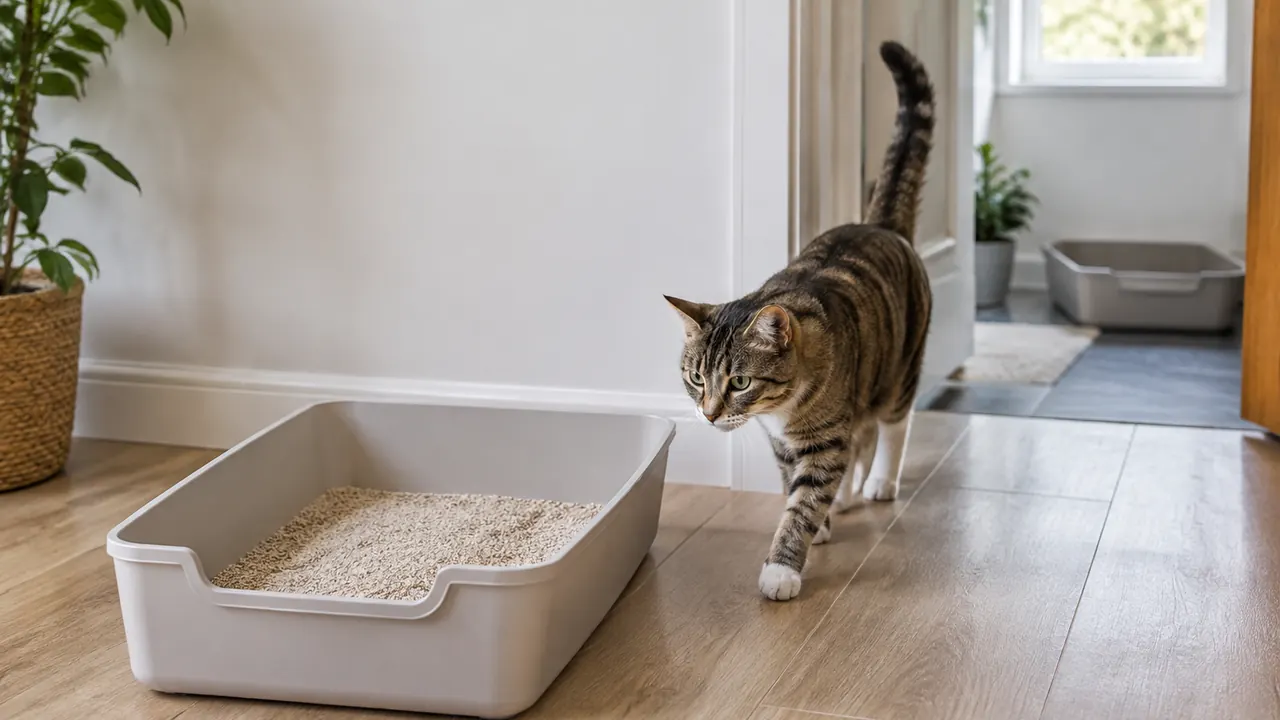
When a cat starts leaving urine or stool outside the litter box, the mess is obvious; the cause usually is not. A cramped pan, scented litter, a noisy laundry room or another cat guarding the doorway can make an otherwise tidy setup difficult to use. Pain, illness and reduced mobility can produce similar changes. Calling the cat stubborn skips the useful questions: Can the cat get there comfortably, feel safe and use the box without discomfort?
Start with health and safety, then examine the setup from the cat’s height. In 2026, automatic boxes, odor-control products and app alerts offer more choices, but none replaces adequate space, comfortable footing and observation. You do not need to replace everything at once. Keep a familiar option available, change one feature at a time when practical, and record what happens. The aim is comfortable, reliable access—not training a cat to tolerate an unsuitable toilet.
1. Rule out trouble that cannot wait
Repeated straining, frequent trips with little or no urine, or apparent difficulty urinating requires immediate veterinary attention. A urinary blockage can become life-threatening, especially in male cats. Do not wait overnight to see whether a cleaner box helps. If you cannot tell whether the cat is trying to urinate or pass stool, call a veterinarian or emergency clinic immediately and describe what you see.
A cat may still pass a few drops despite a serious urinary problem. Crying, genital licking, blood in urine, vomiting, weakness or a painful-looking abdomen adds concern; lack of crying does not establish safety. Do not press on the abdomen or give human pain medicines. Get professional instructions while arranging care.
Even without emergency signs, a new toileting change warrants a prompt veterinary call, particularly with increased thirst, larger urine volumes, diarrhea, constipation, appetite changes or difficulty climbing. Medical and environmental causes can coexist. A cat treated for painful urination may also need a better box and time to lose an association between that box and pain.
- Straining with little or no urine: seek emergency veterinary care now.
- Sudden accidents without obvious distress: contact your veterinarian promptly and begin a setup review.
- An app notification or a wet clump: useful information, not proof that a blockage is absent.
2. Give the cat room to turn around
Many boxes are selected to fit a bathroom corner rather than the animal using them. A useful starting guideline is a box about one and a half times the cat’s length from nose to the base of the tail. This is a guide, not a guarantee: the cat should be able to enter, turn, dig and squat without being pressed against the sides. Watch actual movement rather than relying on a package’s size label.
An uncovered box often provides more usable room and lets a cat watch its surroundings. Covered boxes suit some cats, but a hood can restrict turning space and hold odors. High sides may contain scattered litter or urine from a standing posture, yet the entrance still needs to be manageable. For an older cat or one with mobility limitations, provide a low entry and ask the veterinarian about pain.
Large storage containers can sometimes work, provided any cut entrance is smooth and safe. Automatic models need the same scrutiny: measure the usable interior, not the appliance’s footprint, and follow manufacturer safety instructions. Keep a conventional box available during any transition.
| Box feature | Possible drawback | What to check |
|---|---|---|
| Compact pan | Little turning space | Can the cat turn and squat freely? |
| Covered box | Restricted clearance or trapped odor | Try an uncovered option nearby. |
| High entrance | Difficult access | Offer a low-entry alternative. |
| Automatic box | Motion, noise or limited interior room | Retain a conventional box and compare use. |
3. Put boxes where access feels safe
A location that hides the box from people may make it unappealing to a cat. Basements, utility closets and laundry rooms can involve stairs, shutting doors, sudden machine noise or a single route that another animal can block. Choose quiet, consistently accessible areas away from food and water. Quiet should not mean isolated behind an obstacle course.
Look at approaches and exits. Can a dog bother the cat at the box? Can a child corner it? Does the cat have to pass a housemate resting in a narrow hallway? Privacy is useful, but a hiding place with no easy escape can feel risky. In multilevel homes, an accessible box on each regularly used level can help, especially for kittens and cats with limited mobility.
If the cat repeatedly chooses one spot, investigate what that spot offers: perhaps softer footing, fewer interruptions or easier access. After addressing medical concerns, placing an additional box there may help. Avoid abruptly removing the old box or carrying the cat repeatedly to the new one. Let the cat investigate; if relocation is necessary, move gradually when feasible and monitor use.
- Keep doors open or provide dependable access at all times.
- Avoid placing boxes beside appliances that start unexpectedly.
- Separate toileting areas from feeding stations and busy play spaces.
- Check the route at night, when doors and household routines may change.
4. Treat litter preference as a real variable
Cats experience litter through their paws and noses. Many accept fine-textured, unscented litter, but individual preferences and prior experience matter. Strong fragrances, deodorizing additives, coarse pellets or an abrupt material change can make a familiar box feel different. A product marketed as natural, premium or low-tracking is not automatically more comfortable for the cat.
Start with a modest, even layer; about two to three inches is a common starting point, then adjust to the cat’s behavior and the product’s instructions. Some cats dislike deep, shifting litter, while too little may leave them scratching the bare base. A liner that catches claws or moves underfoot can also be a problem. Avoid changing texture, scent, depth and box style together if you want to identify what helped.
For a preference test, offer two similar boxes in comparably safe locations, using the current litter in one and an unscented alternative in the other. Keep cleaning equally consistent and note use over several days. Location can influence the result, so treat it as a practical clue rather than a controlled experiment. Never withhold a usable box to force acceptance.
| Variable | Simple comparison | Keep consistent |
|---|---|---|
| Scent | Current litter versus unscented | Box style and cleaning |
| Texture | Current material versus a finer option | Comparable placement |
| Depth | Current depth versus a modest adjustment | Litter material |
| Liner | Lined versus unlined box | Litter and access |
5. Clean for the cat, not just the room
Scoop waste at least daily, and more often if boxes are heavily used. Automatic raking does not eliminate maintenance: waste drawers, sensors and interior surfaces still need attention according to the instructions. Odor that seems contained to a person may remain concentrated inside the box. Fragrance can mask that odor without removing its source.
Empty and wash conventional boxes regularly, with the interval guided by litter type, use and product directions. Mild, unscented soap and thorough rinsing are generally sensible; dry the box before refilling. Avoid ammonia-based cleaners, harsh residues and mixing cleaning chemicals. Replace damaged boxes when scratches or worn surfaces make cleaning difficult.
For accidents, remove solids or blot liquid, then use a pet urine enzymatic cleaner suitable for the surface. Follow contact-time directions and test an inconspicuous area first. Deep contamination in carpet padding may need more extensive treatment. Keep pets away until the area is safe under label instructions. Cleaning removes a repeat-use cue; it does not explain why the accident happened.
- Make scooping part of a predictable daily routine.
- Check hidden corners and the underside of hoods for residue.
- Do not punish, shout or rub a cat’s nose in waste; fear can worsen avoidance.
6. Count access points, not just boxes
For multiple cats, one box per cat plus one extra is a useful starting guideline, not a promise that competition will disappear. Distribution matters. Three pans lined up in one closet may function as one toileting station because a single cat can control the approach. Spread boxes across separate, accessible locations rather than concentrating them where cleanup is easiest.
Conflict is not always a fight. Staring, following, waiting outside a box or blocking a hallway may be enough to deter another cat. One cat may use the box only when a housemate sleeps; another may choose a rug rather than risk an ambush. Watch the whole route, not just what happens inside the pan.
Provide separated feeding, drinking, resting and scratching resources as well. More predictable access can reduce pressure throughout the home. In a small apartment, use distinct areas with clear approaches rather than squeezing every resource into one corner. If guarding or avoidance continues, ask your veterinarian about referral to a qualified feline behavior professional. Adding boxes helps only if the worried cat can actually reach them.
7. Track changes without delaying care
Keep a short log of accidents, box use, stool consistency, observed urine output and changes in appetite or thirst. Note which cat is involved when possible; a discreet camera may help in a multicat home. Urine on a vertical surface may suggest marking, but posture and location alone cannot rule out illness.
Choose the clearest setup problem first, such as a cramped box or blocked route, while retaining familiar options. Improvement supports keeping the change; it does not prove there was no medical cause. If accidents persist, recur or accompany discomfort, update the veterinarian rather than cycling endlessly through products. Seek emergency care immediately if straining or difficulty urinating appears.
This article provides general guidance, not a diagnosis; consult a veterinarian about toileting changes and seek immediate care for straining or difficulty urinating.
AI Assistance Used — AI assistance was used in researching and drafting this article. It was reviewed, edited, and fact-checked by Leah Fornier before publication.