Buying a Carry-On: Measure the Wheels, Not Just the Suitcase
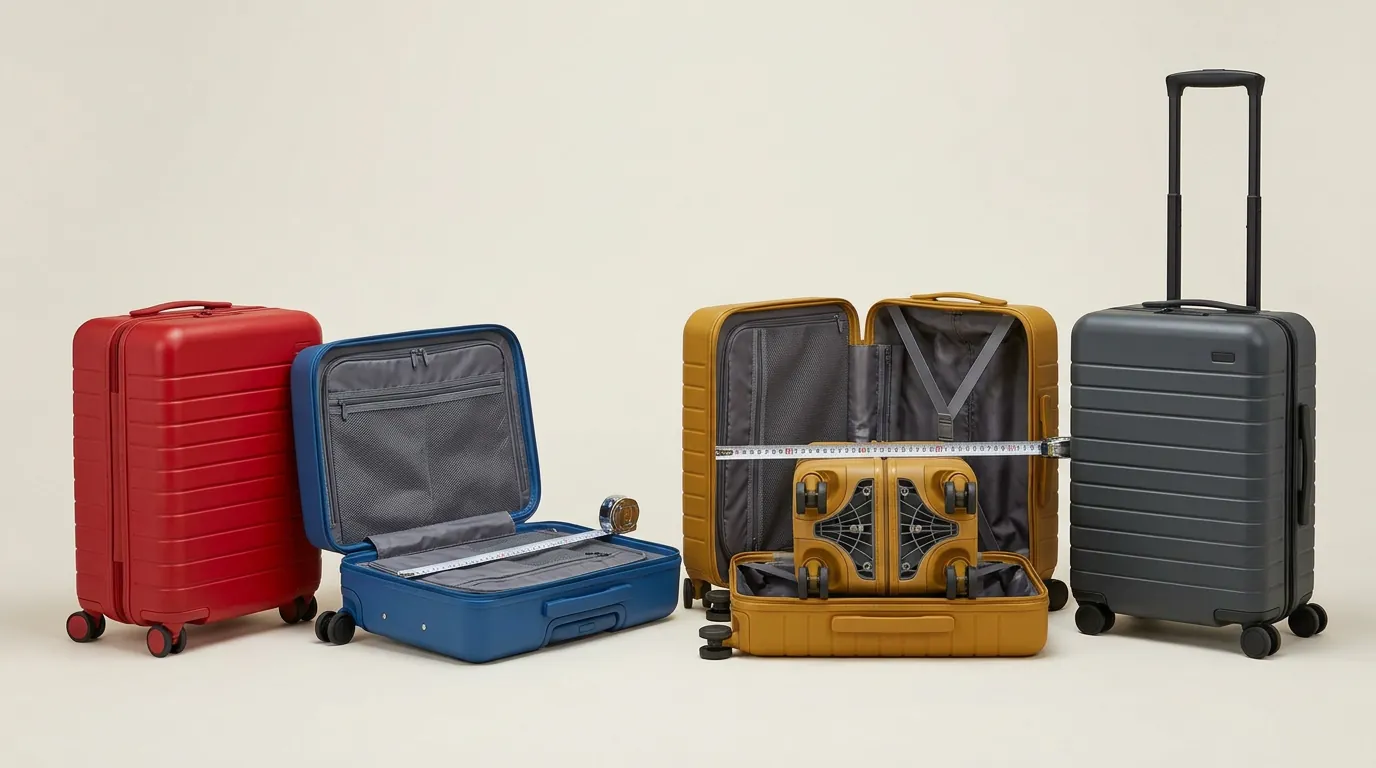
The suitcase looks compact on the store shelf. Its tag calls it a carry-on, and the product page promises overhead-bin convenience. None of that tells you whether the wheels, feet and handles fit within your airline’s allowance. A bag’s advertised size may describe its main compartment rather than its full exterior, leaving the traveler to discover the difference at check-in or the gate.
For travelers shopping in 2026, the useful question is not whether a suitcase is labeled domestic, international or airline approved. It is whether that particular bag, packed for your trip, meets the current rules for your flight. Start with measurements, then consider how much the empty case weighs, how its wheels and handle behave under load, and whether a broken part can be replaced. Those checks reveal more than a long list of features.
1. Measure the whole bag, including the awkward bits
Look for specifications labeled overall, exterior or external dimensions, then confirm what they include. Measure a suitcase upright on a hard, level floor, from the floor beneath its wheels to its highest fixed point with the telescoping handle fully retracted. Count the top carrying handle if it projects above the shell. Width and depth should include side handles, feet, wheel housings and other protrusions. Do not assume a listing’s measurement order matches the airline’s.
Two flat surfaces, such as a wall and a large book, can help locate the farthest points without bending a tape around the case. Measure each axis separately, keeping the tape straight. For a soft-sided bag, repeat the check when it is packed; pockets and rounded panels can gain depth. For an expandable bag, measure both settings. Expansion that is useful for the return trip may turn a compliant cabin bag into checked luggage. Leave some breathing room rather than planning around a perfectly exact fit.
- Ask whether the advertised height includes wheels and the fixed carrying handle.
- Record full exterior height, width and depth, not just the shell or packing compartment.
- Check that no individual dimension exceeds the limit; equal overall volume is not enough.
2. Build your airline checklist before you buy
Start with the airlines you actually fly, including those likely to operate connections. On each airline’s official website, find its cabin-baggage page and check the booking’s fare conditions. Separate the overhead carry-on allowance from the smaller underseat personal-item allowance. Some fares include both; others include only the smaller item unless you pay for more. Loyalty benefits, route exceptions and aircraft restrictions can change what applies. Save the relevant pages or screenshots for reference, but check again before departure.
A familiar example is 22 by 14 by 9 inches, used by several U.S. airlines for standard carry-ons, but it is not a universal standard. Other airlines publish different dimensions, weight limits or combined cabin-baggage allowances. Follow the units and rounding on the official page rather than a retailer’s conversion. On a codeshare or connecting itinerary, verify the requirements for each operating carrier and ask about unclear differences. A bag that fits the strictest allowance on your usual routes reduces surprises, although smaller aircraft can still require gate-checking.
- Confirm the allowed number of cabin items and whether your fare includes overhead storage.
- Check dimensions and weight, including whether the weight limit combines both cabin bags.
- Look for route or aircraft exceptions, and verify rules for every connecting flight.
- Check purchase deadlines and fees if cabin baggage must be added separately.
3. Treat empty weight as part of your packing budget
A lighter empty case leaves more room within a weight allowance for clothes, shoes and electronics. Compare the exact size and version you intend to buy, since listings sometimes group several models together. If an airline permits an 8-kilogram cabin bag and your case weighs 3 kilograms, that leaves 5 kilograms for contents. If the airline combines the suitcase and personal item under one limit, your backpack or handbag also uses that allowance.
Do not choose by weight alone. A slightly heavier case may offer better handles, protected wheels or accessible replacement parts. Conversely, extra dividers, charging hardware and heavy trim can consume allowance without helping your travel routine. Weigh a display bag if the store permits, or weigh yours at home during the return window. Then pack a realistic trip load and weigh it again. A bathroom scale can provide a rough check, but a suitable luggage scale is easier to use. Do not plan to land exactly on the limit; your scale and the airline’s may differ.
| Check | What it tells you | What to verify |
|---|---|---|
| Listed empty weight | Starting packing allowance | Correct model and size |
| Packed suitcase weight | Whether the case meets a limit | Current airline allowance |
| Combined cabin-bag weight | Whether both items qualify together | Whether the airline combines them |
| Loaded lifting test | Whether you can manage the bag | Comfort without strain |
4. Inspect wheel construction, not just wheel count
Four-wheel spinners are convenient in airport lines because they can roll beside you upright. Two-wheel cases usually travel tilted behind you and often have larger, more recessed wheels, which can be useful on uneven pavement. Neither layout is automatically more durable. Wheel diameter, tread, axle support, mounting hardware and exposure all matter. A spinner with paired wheels at each corner is sometimes marketed as having eight wheels; that count alone does not establish strength or smoothness.
Examine how far the assemblies project beyond the bag and whether the housings look protected from side impacts. Roll the case forward, backward and sideways if its design allows, then turn it through a tight corner. Listen for rattling and watch for wheels that hesitate or wobble. A smooth shop floor is forgiving, so use a floor seam or mat edge with permission. Ask whether the wheel material is identified and whether complete assemblies are replaceable. Avoid treating a quiet empty-bag demonstration as proof of performance when loaded.
- Spin each wheel and check for binding, uneven rotation or excessive side-to-side movement.
- Inspect housings for cracks, rough seams and exposed components vulnerable to knocks.
- Test with a representative load when possible; weight can expose poor tracking.
- Ask whether replacement wheels fit this exact model, not merely the same brand.
5. Check the handle under realistic pressure
Extend the telescoping handle through every stop. It should lock consistently, release without a struggle and retract without catching. Some movement is normal in sliding tubes; a little play does not by itself mean a defect. More concerning signs include uneven extension, a lock that slips, visible bending or a handle that twists dramatically when steering. Walk with the bag at your natural pace and check that the case does not repeatedly clip your heels.
Handle height is personal. If the grip makes you raise your shoulder or bend sideways, another model may be easier to manage. With permission, test the bag loaded and place your usual personal item over the handle if you plan to carry it that way. Check balance while standing and turning, not just while moving straight ahead. Also test the fixed top and side carrying handles: these are the lifting points, not the telescoping pull handle. You should have adequate finger clearance and a secure grip. Practice lifting only to a comfortable height; overhead handling should not require a risky trial.
6. Make repairability a buying criterion
The most useful durability question may be what happens after a wheel breaks. Ask whether wheels, telescoping handles and carrying handles can be replaced, who performs the work and how parts are obtained. Accessible screws can make a repair more practical, but they do not guarantee that compatible parts exist. Parts availability for the exact model matters more than a general promise that the company supports its products. Check whether ordering requires a model code or serial number.
Read the written warranty before paying. A lengthy warranty may cover manufacturing defects while excluding normal wear, airline damage or cosmetic scuffs. Find out who pays shipping, whether repairs require an approved service center and what happens if a part is discontinued. If you are considering a less expensive bag with no repair network, decide whether local repair is realistic before treating it as a bargain. Keep the receipt, model identification and warranty details together. Photograph identifying labels while they are readable; those details can be useful years after a retailer removes the listing.
- Request part numbers or a replacement-parts page for wheels and handles.
- Check labor charges, shipping costs and any requirement for proof of purchase.
- Distinguish warranty coverage from separately purchased accidental-damage protection.
7. Do a packed trial before the return window closes
At home, pack the case as you would for a real trip, including toiletries, shoes and items in exterior pockets. Close it without forcing the zipper, then remeasure its widest and deepest points. Test it unexpanded first. If your normal load requires expansion, the smaller listed dimensions are not a useful guide to how you will travel. Check the return policy before testing: some retailers require unused condition, original packaging or attached tags.
Roll the packed bag indoors, steer around furniture and carry it briefly using the fixed handles. Confirm that pockets remain accessible and the suitcase stays balanced with your personal item attached. Finally, plan for an involuntary gate-check. Keep medication, valuables and essential documents accessible, and be ready to remove power banks and spare lithium batteries, which must not go in checked baggage. Verify current battery rules and any requirements for removable luggage batteries. Meeting the airline’s measurements improves your odds of a straightforward boarding experience; it does not reserve overhead space. Buy the bag that fits your actual routes and load, not the broadest promise on its tag.
Airline allowances, baggage fees, battery restrictions and warranty terms can change; verify the current terms for your booking and suitcase before buying or traveling.
AI Assistance Used — AI assistance was used in researching and drafting this article. It was reviewed, edited, and fact-checked by Leah Fornier before publication.