Infant vs. Convertible Car Seats: What to Check Before Your Baby Arrives
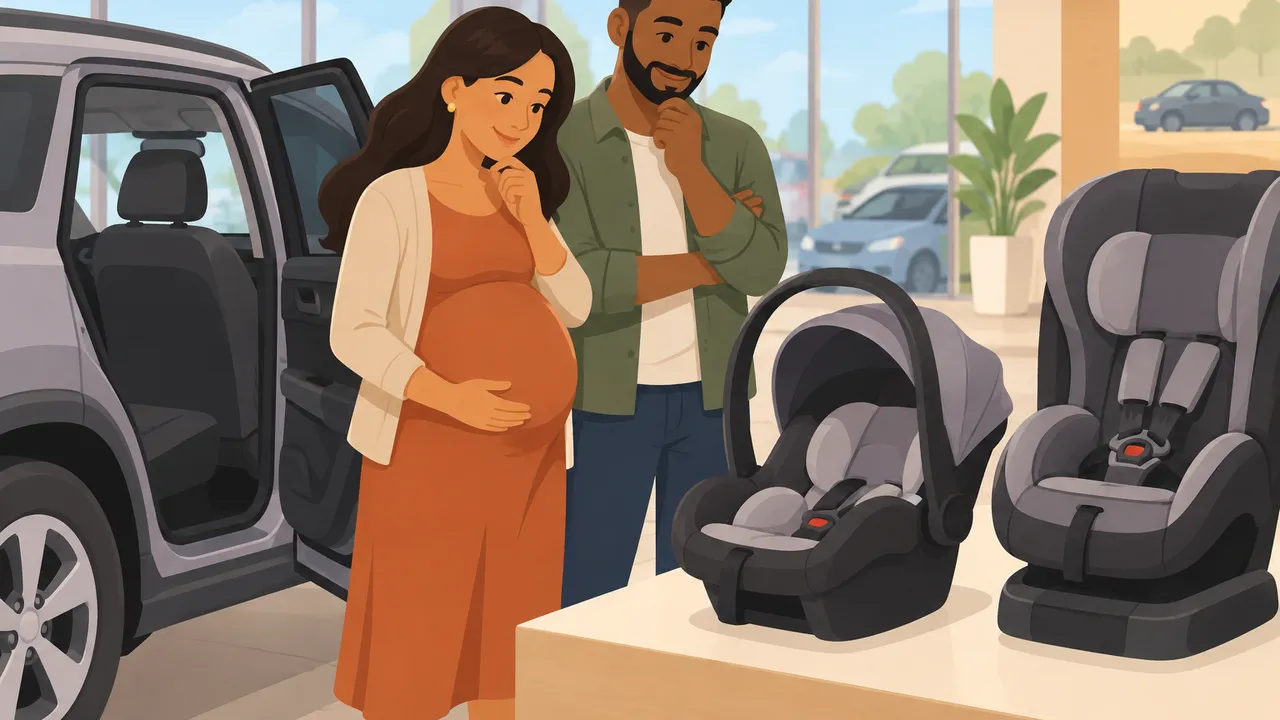
An infant car seat offers a removable carrier; a convertible typically stays installed and changes from rear-facing to forward-facing as a child grows. Either can be an appropriate first seat if it accommodates your newborn, fits your vehicle and can be installed and used correctly on every trip. Planning before delivery leaves time to practice installation and resolve fit problems without the pressure of hospital discharge.
For families shopping ahead of an October 2026 arrival, the decision is less about finding a premium model than avoiding a mismatch. Compare the exact seat’s instructions with your vehicle manual, then consider who will carry the baby, which vehicles you use and how much space passengers need.
1. Check newborn fit, not just minimum weight
A label saying a seat accepts newborns does not guarantee a good fit for every newborn. A baby can meet the minimum weight yet have a torso too short for the lowest permitted harness setting. Rear-facing harness straps generally must sit at or below the shoulders, following the seat’s instructions.
Infant seats often provide newborn-oriented adjustments, but some convertibles also fit small babies well. Check the required recline and use only inserts or positioning accessories approved by the manufacturer for that exact model. Premature or low-birth-weight babies may need additional guidance from their hospital team before discharge.
With the baby buckled, you should not be able to pinch excess harness webbing at the shoulder. Position the chest clip at armpit level and avoid bulky clothing underneath.
- Check minimum weight and height, lowest harness position and permitted buckle settings.
- Confirm whether a newborn insert is required and when it must be removed.
- After birth, check harness snugness; shopping measurements cannot substitute for fitting the baby.
2. Compare the limits that end rear-facing use
Infant seats are rear-facing only. Many have maximum weights around 30–35 pounds, although lower limits exist, and babies may outgrow them by height or required head clearance first. Convertible seats commonly allow rear-facing to about 40–50 pounds, depending on the model. These are shopping ranges, not permission to exceed instructions.
The American Academy of Pediatrics recommends keeping children rear-facing until they reach their seat’s rear-facing height or weight limit. Outgrowing an infant carrier usually means moving to a larger rear-facing seat—not turning forward-facing. State law is a minimum requirement, not necessarily the safest transition point.
Bent legs or feet touching the vehicle seat do not, by themselves, mean rear-facing use has ended. Follow the listed limits rather than judging by legroom.
- Compare rear-facing limits specifically; advertised maximums may describe forward-facing use.
- Read head-clearance rules, which can end use before the weight ceiling.
- Budget for the next seat if choosing an infant carrier.
3. Test the seat in your actual vehicle
Rear-facing seats can occupy substantial front-to-back space, especially at a newborn’s required recline. A compact-looking convertible is not automatically a better fit than an infant seat. When possible, arrange a trial installation before purchasing, or confirm the retailer’s return policy for an opened and test-fitted seat.
Check the front passenger’s usable seating position, the vehicle’s rules about contact with front seats and whether neighboring passengers can buckle safely. The center rear position is useful only when both manuals permit a secure installation there; never assume its lower anchors can be borrowed from the outboard positions.
If a seat has a support leg, check whether your vehicle permits it over underfloor storage compartments. Floor construction can rule out an otherwise convenient seating position.
| Vehicle check | What to verify |
|---|---|
| Front-to-back room | Correct newborn recline with safe front-seat positioning |
| Seating position | Seat and vehicle manuals permit installation |
| Multiple children | Each restraint installs securely and independently |
| Daily access | Doors open enough to load and harness the baby |
4. Choose an installation you can repeat correctly
A seat belt installation and an installation using lower anchors can both be safe when done correctly. Lower anchors are not inherently more protective, and they have weight restrictions. Use one installation method unless both manufacturers expressly allow otherwise. Follow the specified belt path and locking procedure rather than improvising.
For a standard rear-facing installation, check for no more than one inch of movement side-to-side or front-to-back at the belt path. Verify the recline indicator as instructed, usually on level ground. Many infant carriers permit installation without a base, but the exact routing and permissions vary by model.
Have every regular caregiver practice installing the seat and tightening the harness. For removable carriers, also practice confirming attachment to the base and setting the handle’s required travel position.
- Read both manuals before installing; quick-start labels may omit important conditions.
- Check lower-anchor limits before a growing child exceeds the permitted combination.
- Find a certified child passenger safety technician through NHTSA or Safe Kids resources.
5. Pay for useful features, not assumed crash protection
All new car seats legally sold in the United States must meet applicable federal safety standards. A higher price does not, by itself, establish better crash protection. Extra spending may buy easier adjustments, lighter materials, washable covers or convenience features that help caregivers use a seat correctly. NHTSA’s ease-of-use ratings evaluate usability, not comparative crash protection. Check manufacturer instructions, recalls and registration information before committing.
An infant carrier can simplify transfers, particularly with a compatible stroller or additional bases, but lifting the carrier plus a growing baby becomes tiring. A convertible avoids buying a separate infant seat, yet requires removing the baby at each stop. Try carrying and adjusting display models before choosing. Neither seat is a routine sleep space outside travel; move a sleeping baby to a firm, flat, approved sleep surface when the trip ends.
For a secondhand seat, verify its expiration date, complete parts and known crash history. Skip it if you cannot confirm whether the manufacturer’s crash-replacement requirements have been met.
Confirm current specifications, recalls and installation guidance with manufacturers and NHTSA; this overview does not replace individualized fitting assistance.
AI Assistance Used — AI assistance was used in researching and drafting this article. It was reviewed, edited, and fact-checked by Jordan Singh before publication.