How to Buy Running Shoes That Actually Fit
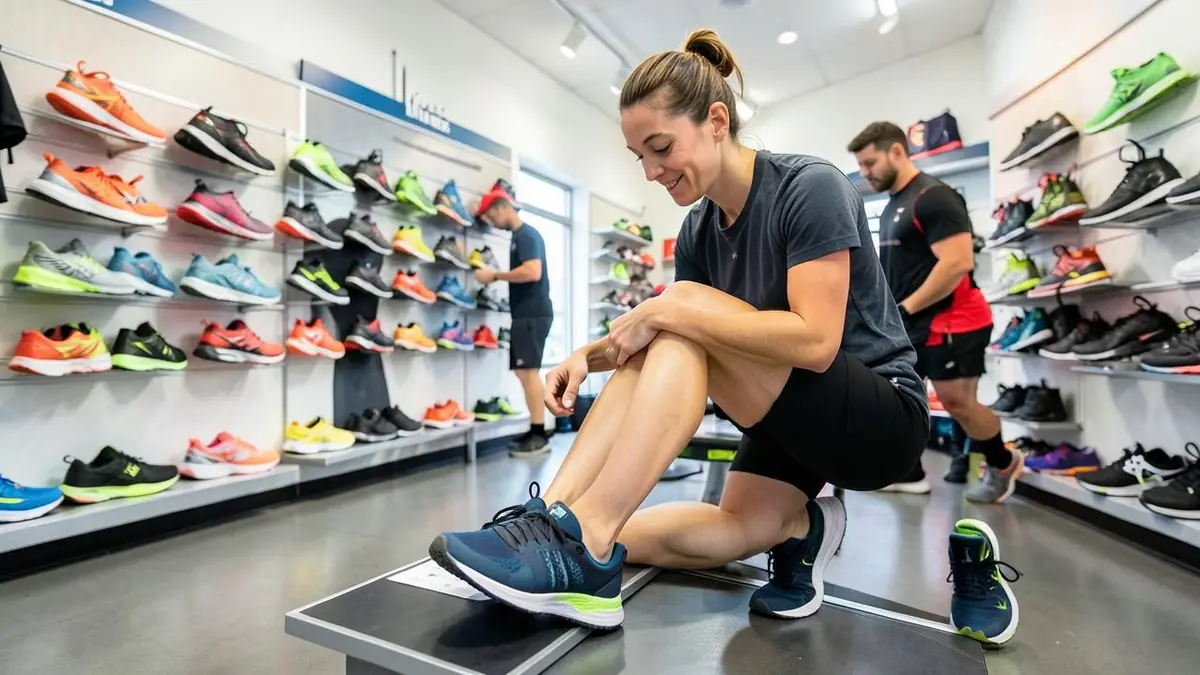
Running shoes are sold on technology: plates, foams, stack heights, and drop figures printed like engine specifications. Almost none of it matters if the shoe is the wrong shape for your foot, and shape is the part that is hardest to shop for online.
The good news is that fit can be tested in ten minutes with no expertise at all, as long as you know what to test for and are willing to ignore the number printed inside the shoe.
Your running size is not your street size
Feet swell during a run, often by a noticeable amount, and the foot slides forward on every downhill step. That is why most fitters recommend roughly a thumb's width of space in front of the longest toe, which usually means going up from your everyday size.
Sizing also varies between brands and between models within a brand. Treat the number as a starting point and the feel as the decision, and always try both shoes, because most people have feet of slightly different lengths.
Width and volume matter more than length
Length problems announce themselves as bruised toenails. Width and volume problems show up as blisters, numbness, and a nagging sense that the shoe is fighting you. If the upper bulges over the sole when you stand, the shoe is too narrow, and a longer size is the wrong fix.
Several brands publish wide fittings, and some are simply cut generously as standard. If you have struggled for years with hot spots on the little toe, this is usually the explanation.
Cushioning is a preference, not a ranking
Maximum-cushion shoes feel protective and can be a relief on long, slow runs. They also raise you further from the ground and can feel unstable to some runners, particularly on uneven surfaces.
Firmer shoes give more feedback and often feel faster, at the cost of comfort late in a long effort. Neither is inherently better; the useful question is what you plan to run in them and how your legs feel afterwards.
What gait analysis can and cannot tell you
A treadmill video in a shop is a snapshot of one minute of fresh running in unfamiliar shoes. It can highlight an obvious pattern and rule out a badly wrong category, and it is genuinely useful for that.
It cannot predict injury, and the older idea that shoes should be prescribed to correct pronation has been tempered by later research. Comfort at the point of trial has proved a surprisingly good guide in trials, so weight it heavily.
Test them properly in the shop
Shop late in the day when your feet are closer to their running size, and bring the socks you actually run in. Lace them the way you would for a run rather than the loose factory lacing.
Then move. Run on the shop treadmill or up the pavement outside, and pay attention to heel slip, pressure across the midfoot, and any point that rubs. A shoe that needs breaking in is telling you something now that it will keep telling you at mile six.
Replacement and rotation
Foams compress with use, and most shoes lose their character somewhere in a broad window of a few hundred miles. Rather than counting precisely, note when the shoe starts feeling flat and your legs feel more beaten up than usual after a familiar route.
Rotating two pairs, ideally slightly different in feel, spreads the load and lets foam recover between runs. It also means one pair drying out never costs you a session.
Fit, sizing, and model characteristics vary widely between brands and revisions. This is general guidance, not injury or medical advice.
AI Assistance Used — AI assistance was used in researching and drafting this article. It was reviewed, edited, and fact-checked by Leah Fornier before publication.