How to Buy Jewellery You Will Still Wear in Ten Years
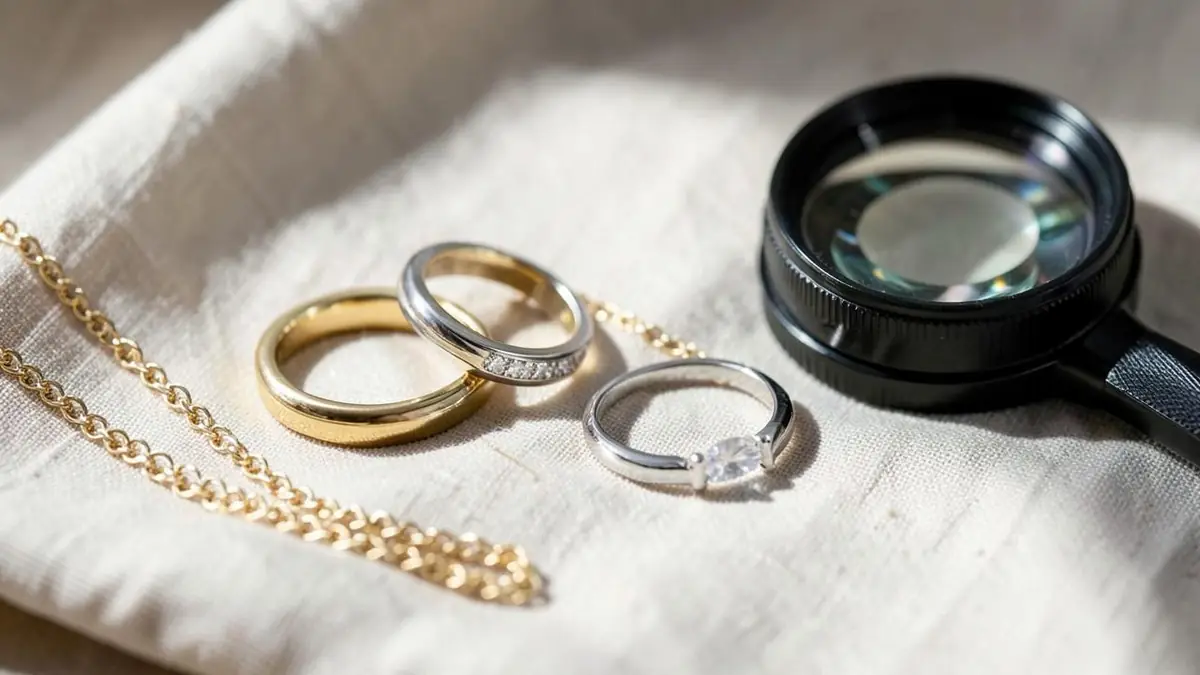
Jewellery is one of the few categories where the difference between a piece that lasts a lifetime and one that fails within two years is almost entirely invisible at the point of sale. Two rings can look identical under shop lighting and behave completely differently on a hand that washes dishes, opens doors, and gets cold in winter.
The good news is that the durability signals are standardised and legible once you know what to read. None of it requires a trained eye — just a habit of asking about material and construction before asking about price.
Solid metal versus plating
Gold-plated and gold-filled pieces have a thin layer of precious metal over a base alloy. Plating measured in microns wears through at contact points — the underside of a ring, the back of a clasp — usually within a year or two of regular wear.
Solid gold, even at lower purity, wears evenly and can be polished and repaired indefinitely. If a piece is intended for daily use, solid metal at a lower karat is almost always a better decision than heavy plating over brass.
Purity is a durability choice, not just a value one
Higher-karat gold contains more pure gold and is correspondingly softer. A twenty-two karat band scratches and deforms noticeably faster than a fourteen or eighteen karat one, which is why many everyday rings sit in the middle of the range.
Silver behaves similarly. Sterling is alloyed for strength and still tarnishes; the tarnish is cosmetic and reversible, but a piece worn constantly will need occasional cleaning that a plated equivalent cannot survive.
Look at how the stone is held
Prong settings show off a stone and expose it. Thin prongs bend, catch on fabric, and eventually release stones, which is why they need checking every year or two on a piece worn daily.
Bezel and channel settings enclose more of the stone and are markedly more secure for active hands. They show less of the stone's profile, which is a genuine aesthetic trade-off rather than a compromise in quality.
Check the hallmark and the clasp
In markets with hallmarking systems, a stamped mark records metal and purity and is a straightforward verification. Its absence on a piece sold as precious metal is worth a direct question.
On necklaces and bracelets, the clasp is the part that fails. A soldered jump ring and a substantial lobster clasp survive years; a small spring ring on a light open link is where a chain will eventually part company with its wearer.
Ask what alterations will cost
Ring sizing, chain shortening, and re-tipping worn prongs are routine, but some constructions make them expensive or impossible. Full eternity bands, tension settings, and pieces with intricate detailing around the whole shank often cannot be resized cleanly.
If body shape, arthritis, or simple time might change the fit, that question is worth asking before purchase rather than years later when the answer is a remake rather than an adjustment.
Care that actually changes lifespan
Remove rings for cleaning products, swimming pools, and heavy lifting. Chlorine attacks the alloys in white gold in particular, and hard knocks are what loosen settings long before the metal wears out.
Store pieces separately rather than in a single box where harder stones scratch softer metal. An annual check with a jeweller, which is usually free, catches loose stones and thinning prongs while they are a five-minute repair.
Hallmarking rules, metal standards, and repair costs differ by country and jeweller. Confirm details locally before purchase.
AI Assistance Used — AI assistance was used in researching and drafting this article. It was reviewed, edited, and fact-checked by Leah Fornier before publication.