Buying Car Parts Online Without Getting Burned
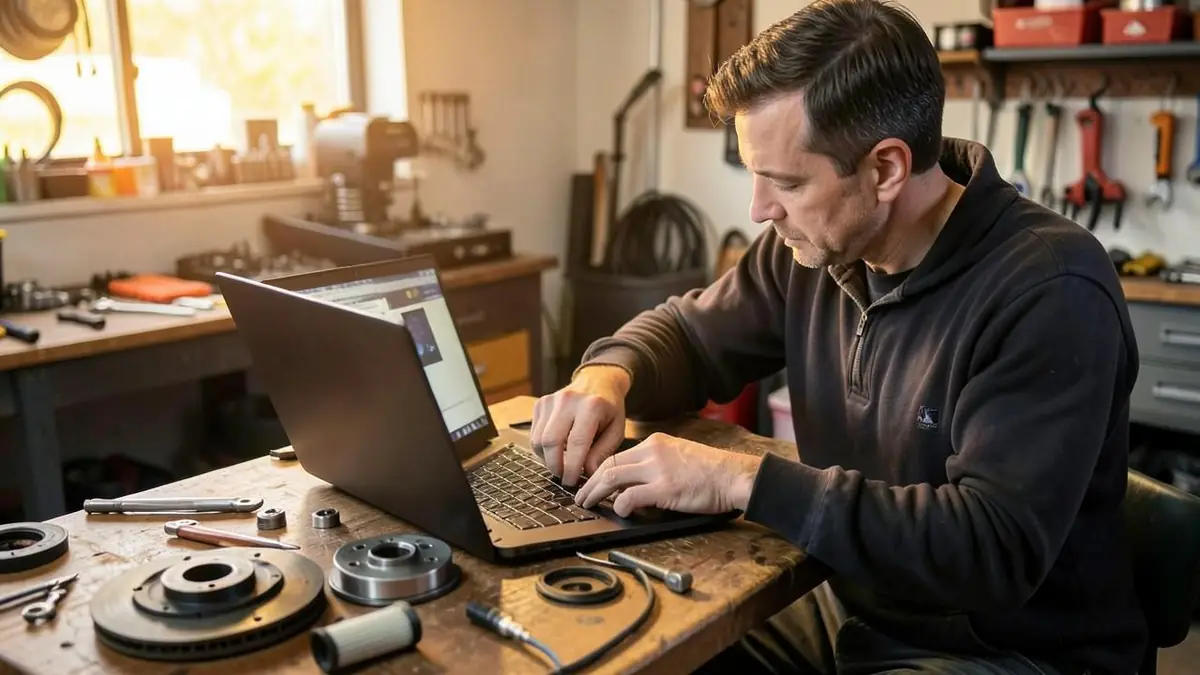
Ordering parts online has changed home car maintenance. A brake kit that costs a small fortune at a franchised dealer often costs a third as much from an online retailer, sometimes in the exact same box from the exact same manufacturer. For anyone keeping an older car on the road, that difference decides whether a repair is worth doing at all.
It also introduces failure modes that a parts counter absorbs for you. The wrong variant, a convincing counterfeit, or a returns policy that excludes anything installed can all turn a saving into a weekend lost.
Work from the part number, not the model
Manufacturers change components mid-production run, and two cars of the same model and year can take different parts depending on build date, engine variant, or market. Searching by model alone is the most common source of wrong deliveries.
The reliable method is to find the original part number, either stamped on the old component or through a parts catalogue keyed to your vehicle identification number. Cross-reference that number on the seller's listing before ordering.
Understand the quality tiers
Original equipment parts come from the manufacturer's own supplier, sometimes in unbranded packaging at a much lower price. Quality aftermarket brands make their own equivalents, often to a different but perfectly adequate standard.
Below that sits a tier of unbranded components whose consistency is unpredictable. For non-critical items that is a reasonable gamble. For brakes, steering, suspension, and anything carrying load, it is not.
Spot counterfeits before fitting
Counterfeit filters, brake pads, and electrical components circulate widely and are packaged convincingly. Warning signs include prices far below every other seller, misaligned printing, missing holograms or batch codes, and lighter-than-expected weight.
Buy through the manufacturer's authorised distributor list where one exists. For safety-critical parts, the modest premium from a known distributor is not really a premium at all.
Read the returns policy for fitted parts
Most sellers will not accept a return on an electrical part once it has been installed, and many exclude any part showing signs of fitting. That makes diagnosis before ordering more important than it is at a counter that will swap a part over.
Check who pays return shipping for heavy items and whether the seller charges a restocking fee. On a heavy component, return shipping can exceed the price difference that justified buying online.
Factor in the parts you forgot
Many jobs require single-use fasteners, gaskets, seals, or fluids that are not included with the main component. Stretch bolts in particular must be replaced rather than reused, and discovering that mid-job means the car stays immobile.
Read a workshop procedure for the job before ordering, and add the consumables to the same order. Shipping a five-pound bolt separately is where online savings quietly disappear.
Know when the dealer is the right choice
For components tied to vehicle software, safety systems, or ongoing warranty coverage, the dealer route is often the sensible one despite the price. Some modules require coding to the car, which an independent garage may or may not be able to perform.
For everything else — filters, brakes, suspension, wear items on an out-of-warranty car — online buying with a verified part number is straightforwardly cheaper and no less reliable.
Part compatibility, warranty terms, and return rights differ by seller and jurisdiction. Verify fitment against your vehicle identification number before ordering.
AI Assistance Used — AI assistance was used in researching and drafting this article. It was reviewed, edited, and fact-checked by Leah Fornier before publication.