Picking a Bike Storage Rack Your Garage Can Actually Take
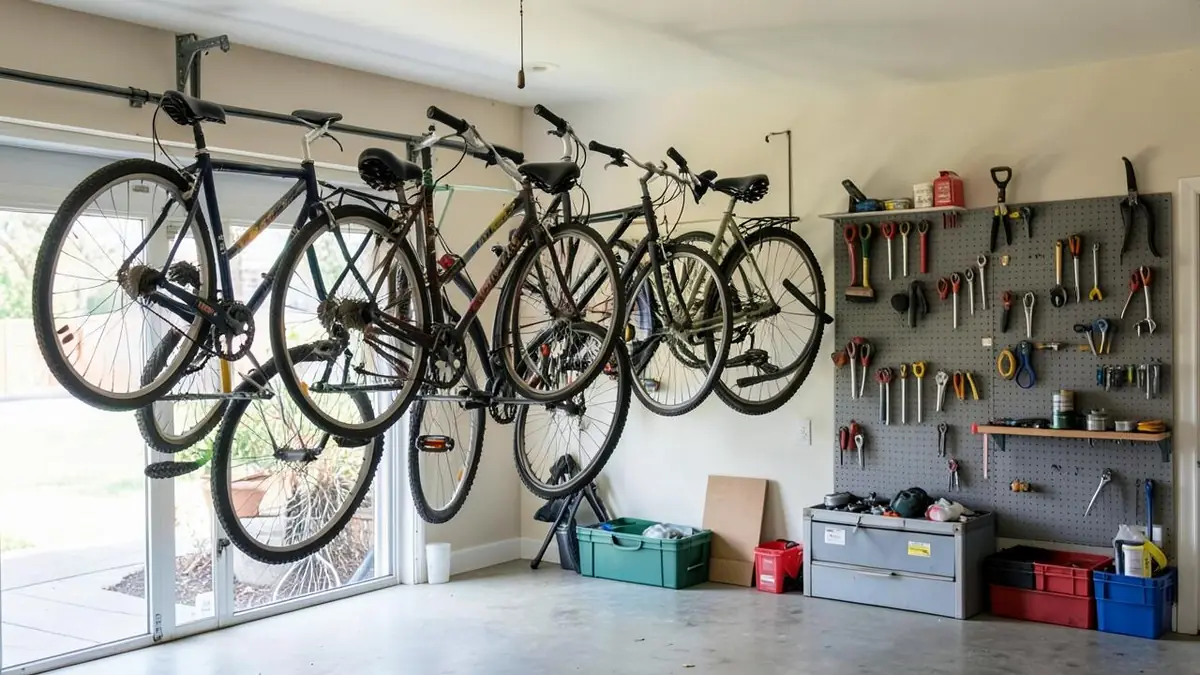
A bike rack is one of the few purchases where the product is the easy part. Racks are cheap, plentiful, and mostly competent. The variable that decides whether the installation is safe is the wall or ceiling it attaches to, and that is the part nobody checks in the shop.
Working through structure first, then layout, then the rack itself, produces a storage system that holds. Doing it in the reverse order produces a hole in the plasterboard and a bicycle on the floor.
Find out what the wall is made of
Solid masonry takes almost any fixing with the correct plug and will hold a heavy bike without complaint. Plasterboard on timber studs is fine if you locate and hit the studs, and unreliable if you do not.
Plasterboard with no stud behind it, dot-and-dab over masonry, and hollow blockwork all need specific anchors rated for the load. A cheap magnetic or electronic stud detector costs less than a wheel and answers this in a minute.
Choose the storage style for the space
Vertical hooks that hang a bike by the front wheel are the most space-efficient and the easiest to load, provided the ceiling is high enough for the bike's full length plus the hook.
Horizontal wall mounts hold the bike by the frame and take more wall width but less height, which suits garages with low ceilings. Floor stands need no fixing at all and are the right answer for rented spaces.
Ceiling hoists and their limits
Pulley hoists lift a bike into unused ceiling space and are excellent for bikes used seasonally. They are poor for a commuter bike you take out daily, because the routine becomes tedious within a fortnight.
Hoists must be fixed into joists, not into the ceiling board, and the direction of the joists dictates where the bike can hang. Check that before buying, since the hardware spacing is usually fixed.
Protect the frame and the wheels
Hanging a bike by one wheel is safe for the great majority of wheels, including modern carbon rims, because the load is well within design limits. What damages bikes is metal contact against paint and repeated rubbing.
Rubber or foam-coated contact points prevent that. For bikes with hydraulic disc brakes, some manufacturers advise against long-term storage upside down, so check the brake maker's guidance if you plan to hang by the rear wheel.
Plan clearance before drilling
Mark the full silhouette of the bike on the wall with tape before fixing anything. Handlebars and pedals project further than people expect, and a rack that fits the frame perfectly can still block a door or a car.
For multiple bikes, alternate them nose-up and nose-down to interleave the handlebars. That single trick usually saves enough width to fit an extra bike along the same wall.
Security and damp
A rack is not a lock. In a garage that opens to a shared drive, anchor a ground or wall anchor separately and lock the frame to it; racks are designed for tidiness, not resistance.
Unheated garages hold moisture, which rusts chains and cables regardless of the rack. A cheap dehumidifier or simply wiping the drivetrain after wet rides does more for the bike's condition than any storage hardware.
Fixing requirements depend on your specific wall or ceiling construction. If you are unsure, consult a qualified installer.
AI Assistance Used — AI assistance was used in researching and drafting this article. It was reviewed, edited, and fact-checked by Leah Fornier before publication.