Better Coffee at Home Without an Expensive Machine
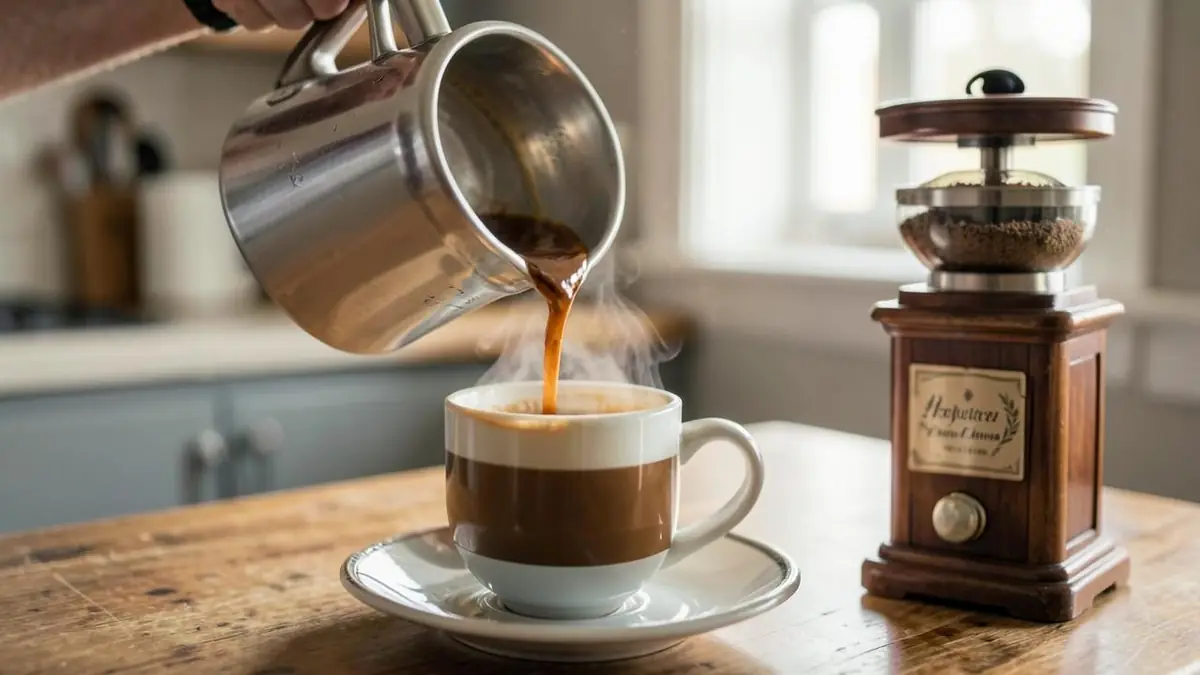
Home coffee improvement is usually approached as an equipment problem, and the equipment is genuinely enjoyable. It is also the part with the weakest relationship to what ends up in the cup.
Four unglamorous variables — how recently the coffee was roasted, how it is ground, how much you use, and the water — explain the bulk of the difference between a good cup and a disappointing one.
Freshness first
Coffee degrades after roasting, and most of the aromatic character fades within a few weeks. Bags with a roast date rather than only a best-before date are a good sign, and a few weeks past roast is a reasonable target.
Buy smaller quantities more often, and store beans in an airtight container at room temperature away from light. The freezer is a reasonable option for long-term storage of unopened portions, but not for a bag opened daily.
The grinder matters more than the brewer
Blade grinders produce a mixture of dust and chunks, which extract at different rates and give a cup that is simultaneously bitter and sour. A modest burr grinder is the single most effective upgrade for most people.
Grinding to order preserves aroma that is otherwise lost within minutes. Pre-ground coffee is convenient and consistent, and it starts at a disadvantage no brewing technique recovers.
Measure the ratio
A common starting point for filter coffee is around sixty grams of coffee per litre of water, which is roughly one to sixteen or seventeen by weight.
Cheap kitchen scales make this repeatable, and repeatability is what allows deliberate adjustment. Scooping by eye means every cup is a different experiment with no record.
Water is most of the drink
Brewed coffee is overwhelmingly water, so heavily chlorinated or very hard tap water shows in the cup. A simple filter jug is often enough to notice a difference.
Water just off the boil, roughly ninety to ninety-six degrees Celsius, is the usual recommendation. Fully boiling water tends to scorch, and water that is too cool under-extracts and tastes thin.
Pick a method that fits your morning
A cafetière is forgiving and requires no technique. Pour-over gives more control and rewards attention. An immersion brewer or moka pot suits different volumes and habits.
The best method is the one you will actually use on a weekday. An elaborate routine abandoned after a fortnight produces worse coffee than a simple one done consistently.
Clean the equipment
Coffee oils go rancid and coat every surface they touch. Stale residue in a brewer or grinder taints everything brewed afterwards, regardless of the beans.
Rinse and dry brewing gear after each use, descale kettles and machines periodically, and clean the grinder occasionally. It is the least interesting improvement available and among the most noticeable.
Brewing preferences are subjective and equipment guidance varies. Treat ratios and temperatures as starting points to adjust to taste.
AI Assistance Used — AI assistance was used in researching and drafting this article. It was reviewed, edited, and fact-checked by Leah Fornier before publication.