Babyproofing Changes When Children Crawl, Climb and Open Doors
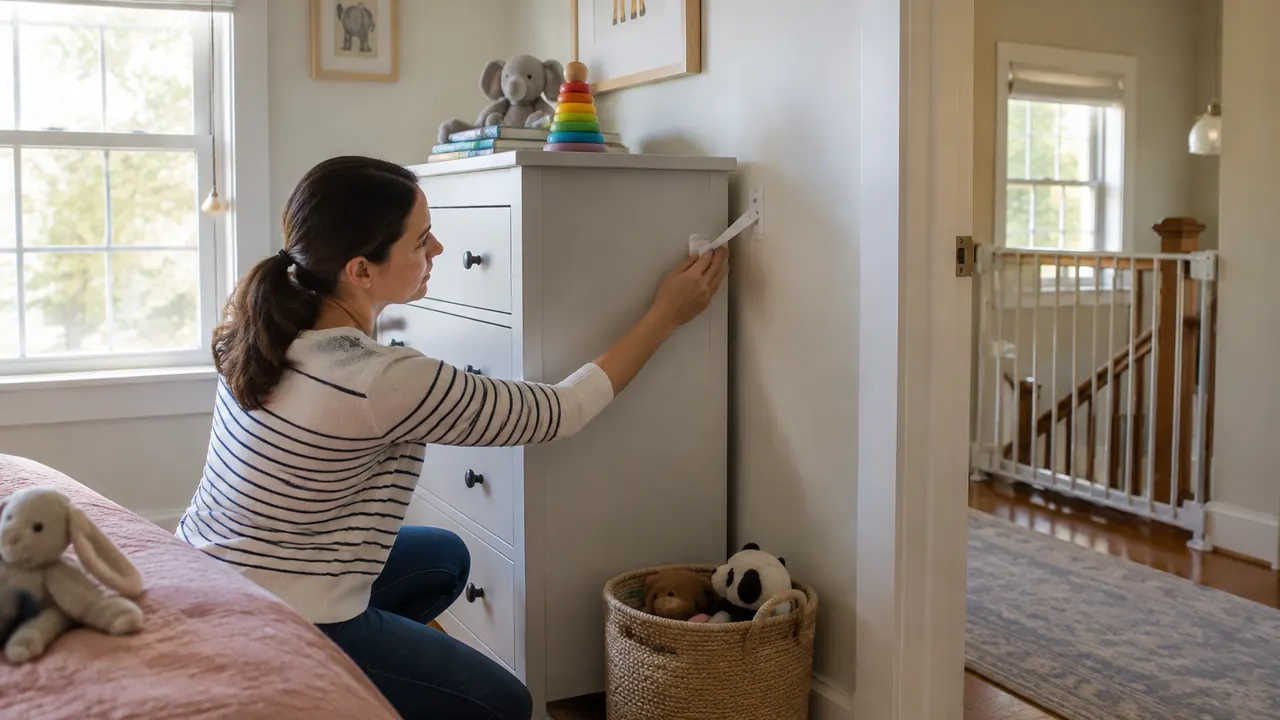
The first crawl changes what a baby can reach. Pulling up changes what can fall. Climbing and turning handles change which barriers still work. That makes babyproofing a repeating household task, not a shopping trip completed before a due date. A room that worked for a stationary baby may need a different setup months later, even when every safety product remains exactly where an adult installed it.
For families checking their homes in 2026, the useful question is not simply whether something has a childproof label. It is whether the current setup fits the child’s newest skills. Walk through rooms from floor level, then consider the route a determined climber could take. Repeat the check after rearranging furniture, welcoming visitors or noticing a new ability. Supervision matters, but physical protections should account for the moments when an adult looks away.
1. Start with the skill, then inspect every room
Use mobility milestones as prompts rather than waiting for a particular birthday. Children develop unevenly: a toddler who rarely climbs may suddenly copy an older sibling, while another learns a door handle before walking steadily. Watch what your child attempts, not just what they have already mastered. Treat a new reach, grip or escape attempt as a reason to reassess that day.
In each room, ask what can be swallowed, pulled down, entered or used as a step. Trace the consequences of opening one drawer or moving one chair. Then check whether a protection actually engages: a cabinet latch that misses its catch is not a barrier. Give priority to hazards with potentially severe outcomes, including water, falls, poisoning and tip-overs, before tidying ordinary bumps and scrapes. Keep a short shared list so every caregiver knows which changes are urgent. Check secondhand equipment and existing safety products for recalls through the Consumer Product Safety Commission; age alone does not reveal whether an item is safe.
| New skill | New exposure | Immediate check |
|---|---|---|
| Crawling | Floor-level objects and cords | Inspect under furniture and along walls |
| Pulling up | Unstable furniture and dangling items | Check anchors and remove pull-down hazards |
| Climbing | Windows, counters and barriers | Remove footholds and reassess gates |
| Opening doors | Storage areas and outdoor access | Review locks and caregiver routines |
2. Living rooms and bedrooms: anchor before the first climb
Anchor dressers, bookcases and other furniture that can tip, following the manufacturer’s instructions and using hardware appropriate for the wall construction. Secure televisions too, whether they sit on furniture or use an appropriate wall mount. Heavy furniture is not automatically stable, and a low dresser can tip when drawers become steps. Do not wait until a child has visibly climbed it.
An anchor needs a sound connection to both the furniture and the building structure. If the instructions do not match your wall, ask the manufacturer or a qualified installer rather than improvising with unsuitable fasteners. Recheck attachments after moving furniture and periodically for loosening or damage. Newer furniture subject to federal stability requirements still needs the anchoring specified by its manufacturer; compliance is not a reason to skip installation.
- Keep toys, remotes and other tempting objects off tall furniture so they do not become climbing destinations.
- Store heavier items low, close drawers after use and remember that drawer latches do not replace anchors.
- Remove loose cords and unstable lamps from pulling range, including anything reachable from a sofa or bed.
- Keep cribs away from windows and cords. Follow mattress-height instructions, and stop using the crib when the child can climb out or reaches its stated limit.
3. Hallways and stairs: check the gate and the escape route
Protect access at both ends of stairs while a child needs that barrier. At the top, use a hardware-mounted gate specifically intended for that location, installed as directed. A pressure-mounted gate can be dislodged and is not appropriate there. Check the mounting surface, spacing and swing direction; do not attach a gate to a loose railing or assume a doorway product suits a stair opening.
Open and close each gate yourself, checking that the latch fully engages. Older siblings and guests need the same routine. Gates have age, size and developmental limits: once a child can climb over or defeat one, it may create another fall hazard. Follow the product’s limits and reassess the arrangement rather than stacking gates. Stair teaching and adult help become increasingly important, but do not make independent stair use a test of obedience.
- Keep stairs clear of toys, laundry and loose rugs, and provide dependable lighting.
- Remove nearby chairs, boxes and stools that could help a child cross a gate.
- When handles become manageable, reassess access to basements, garages, balconies and exterior doors.
- Choose door protections that adults can operate promptly in an emergency; do not create an escape-route trap.
4. Windows: separate fall protection from cord protection
A window has at least two distinct risks: a child can fall through the opening or become entangled in a covering’s cords. An insect screen does not prevent a fall. Move beds, sofas and other climbable furniture away from windows, then consider whether a child could drag over a smaller object. A window that seemed inaccessible during crawling may become reachable as soon as climbing starts.
Use window guards or opening-control devices designed for fall prevention and appropriate to the window. CPSC guidance is to keep openings to 4 inches or less, but a device must be correctly installed and maintained to hold that limit. For windows needed for emergency escape, choose protections that meet applicable requirements and can be released by an adult. Ask a qualified installer or local fire official if you are unsure about emergency access.
- Choose cordless window coverings wherever possible. Simply tying up an accessible operating cord is not an equivalent solution.
- Check older shades and blinds for accessible inner cords and loops, not only dangling ends.
- Use required tension devices as instructed for continuous-loop systems, while keeping all cords inaccessible to children.
- Inspect window locks and guards after cleaning, maintenance or visitors opening windows; reset protections immediately.
5. Kitchens and bathrooms: move from high storage to locked storage
Crawling brings under-sink cabinets into play; climbing makes countertops and high shelves less protective. Keep medicines, cleaning products, dishwasher and laundry packets, alcohol and other hazardous substances locked away, out of sight and reach. Retain original containers and labels, and never decant chemicals into drink bottles. Child-resistant packaging slows some children down; it does not make contents safe to leave accessible.
Check the kitchen from the perspective of a child who can pull open a drawer and stand on it. Keep knives and small appliance blades secured, hot drinks away from edges, and appliance cords beyond reach. Use back burners when practical and turn pan handles inward. Verify that the range’s anti-tip bracket is installed and engaged according to the manufacturer’s directions. In bathrooms, restrict unsupervised access and keep electrical appliances unplugged and stored away from water.
- Relock medicines immediately after each dose, including vitamins, supplements and products used every day.
- Keep purses, backpacks and pill organizers in secure storage rather than on a chair or guest bed.
- Empty buckets and bathtubs immediately. Toilet locks are an added barrier, not a substitute for supervision.
- Stay within arm’s reach during bathing; take the child with you if you must leave.
6. Small electronics: treat button batteries as an urgent hazard
Check remotes, key fobs, thermometers, flameless candles, musical cards and toys for button or coin batteries. A swallowed battery can cause severe internal injury quickly, especially if lodged in the esophagus. Federal safety requirements cover many consumer products containing these batteries, but older items and some products outside those rules may still be present. Inspect the actual compartment rather than trusting the item’s age, appearance or online listing.
Battery compartments should close securely with the intended screw or child-resistant mechanism intact. Remove damaged products from use; tape is not a dependable replacement for a proper closure. Lock away spare and used batteries until disposal through an appropriate local program. A battery too weak to power a device can still injure a child. Include visiting adults’ devices in your check.
- For suspected swallowing, seek emergency medical care immediately and call Poison Control at 1-800-222-1222. Do not wait for symptoms or induce vomiting.
- If the child is at least 12 months old, can swallow and ingestion occurred within 12 hours, give 2 teaspoons of honey every 10 minutes, up to six doses, while heading for care.
- Do not delay care to obtain honey. Give no other food or drink unless directed by a medical professional.
7. Other homes: do a fresh check before putting the child down
A familiar grandparent’s house can become unfamiliar territory when your child gains a skill. Before a visit, ask about stairs, furniture anchors, windows, medicines, batteries, pets, pools and firearms. Explain the specific change: the child now opens doors or climbs chairs. That gives hosts something concrete to prepare for without suggesting that their entire home must look like yours.
On arrival, inspect the space before setting the child loose. Close off rooms you cannot make acceptably safe and create a supervised play area away from unanchored furniture. Bring suitable equipment, but do not assume a travel gate fits every opening or is approved for stair use. If essential protections are missing, change the plan: stay in another area, meet elsewhere or shorten the visit.
- Ask hosts to lock away medicines and chemicals, including bedside pills and supplies under sinks.
- Confirm firearms are unloaded and locked, with ammunition locked separately and keys or codes inaccessible to children.
- Check exterior doors and water access; assign a specific adult to supervise rather than assuming everyone is watching.
- Explain gate and lock routines to every caregiver, and repeat the walkthrough on later visits as your child’s abilities change.
Check current product instructions and recall notices, and consult a qualified professional when anchoring, stair-gate installation or emergency-exit requirements are uncertain.
AI Assistance Used — AI assistance was used in researching and drafting this article. It was reviewed, edited, and fact-checked by Lisa Barber before publication.