When an Autoship Discount Stops Saving You Money
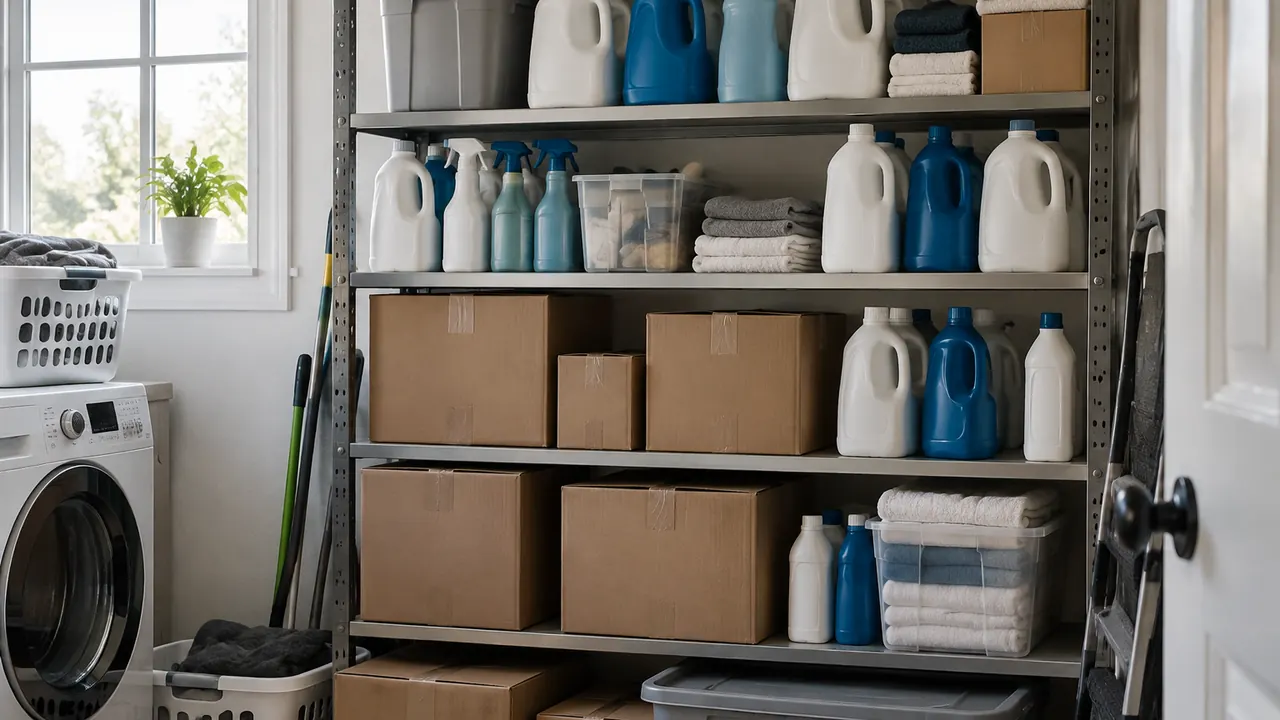
A discount is not the same as a saving. That becomes obvious when another box of detergent arrives while three unopened bottles sit on the shelf. Replenishment subscriptions can make household shopping easier, but their value depends on the price you actually pay, how quickly you use the product and what you would otherwise buy. An advertised percentage off answers only part of that question.
For a household budget in July 2026, the useful question is not whether autoship was a good deal when you enrolled. It is whether the next shipment deserves your money now. A short audit can expose rising prices, oversized orders and schedules that no longer match daily life. You do not need an elaborate spreadsheet: gather your upcoming renewals, count what you already have and compare each order with a realistic one-time alternative.
1. Build a renewal list, not just a subscription list
Start with every service that automatically sends physical goods: pet food, coffee, detergent, diapers, toiletries, supplements and other repeat purchases. Review retailer accounts, recent order emails and payment statements. A statement shows what shipped last month; the account’s upcoming-order page is where you should verify the next quantity, price and processing date.
Record the next order rather than relying on the original sign-up offer. Introductory coupons may have expired, your selected size may have changed or a higher discount may depend on meeting an order requirement. If a future price is not yet available, mark it for another check instead of treating the last charge as guaranteed.
- Item, package size, quantity and delivery interval.
- Next processing date, expected delivery and change deadline.
- Expected total, including shipping, fees and applicable tax.
- Unopened stock, partly used packages and estimated usage.
- Conditions attached to the discount, plus any membership requirement.
2. Compare every renewal with a buy-it-once price
Use one repeatable calculation: delivered order total divided by comparable units. Include mandatory charges and subtract discounts you can actually redeem. Compare the same product and size where possible, then check a suitable alternative if your household would genuinely use it. For detergent, ounces can help, but different concentrations also require checking the labeled dose for comparable loads.
The hypothetical example below compares identical 100-ounce bottles before tax, assuming free shipping or pickup and no other fees. The advertised subscription discount is real, yet the renewal still costs more than a one-time sale. Your decision should use checkout totals, including applicable tax, rather than assume these simplified conditions apply.
For each renewal, write one sentence: “I will pay $X for Y units, versus $Z buying once.” Then ask whether you need those units now. Compare only accessible offers: a distant store or an unavailable pickup slot is not a practical alternative.
| Purchase option | Price for 100 ounces | Cost per ounce |
|---|---|---|
| Retailer’s current regular price | $20.00 | $0.200 |
| Autoship at 10% off | $18.00 | $0.180 |
| One-time sale elsewhere | $16.50 | $0.165 |
| Earlier autoship order | $15.30 | $0.153 |
3. Check whether the discount is chasing a higher price
A percentage discount can stay unchanged while the amount charged climbs. In the example, a previous $17 base price with 10% off would produce a $15.30 order. The same discount on a $20 base price produces an $18 order. That is $2.70 more for the same bottle, even though the discount label looks reassuringly familiar.
Compare the next renewal with both your last paid price and today’s one-time options. Neither comparison works alone. Your old price may no longer be available anywhere, while a discount against today’s regular price may still lose to a sale. Check package size, too: an unchanged price for fewer ounces is a higher unit price.
Separate introductory benefits from repeatable ones. A first-order coupon is not an ongoing saving, and rewards with spending restrictions are not equivalent to cash off today. If autoship benefits require a paid membership, assess that fee separately. Count the full fee if you maintain membership solely for these orders; do not count it twice if it already serves other purposes.
4. Count inventory before deciding that more is cheaper
Put all copies of an item in one place, including supplies tucked under sinks or in garage cabinets. Estimate partly used containers conservatively. Then divide the usable amount on hand by average weekly use. Four bottles that each last five weeks represent about 20 weeks of supply, not a reason to accept another discounted shipment next week.
Excess inventory is not automatically waste: a stable, properly stored product may eventually get used. But it ties up cash and storage space, and preferences, sizes or household needs can change. Food, cosmetics and other products may also have expiration dates or storage instructions that limit how sensible stockpiling is. Use product-specific guidance rather than assuming everything lasts indefinitely.
- Keep: enough usable stock to cover normal consumption and a reasonable buffer.
- Delay: products already stacked well beyond the next delivery window.
- Reduce: quantities that repeatedly leave unopened packages behind.
- Reassess: items your household no longer uses or cannot finish in time.
5. Match delivery timing to use, not the default menu
Measure how long a package actually lasts. Write the opening date on it or add a phone note, then record when it runs out. Repeat if consumption varies. Coffee usage can change with work schedules; laundry needs can shift when children leave home. The interval you chose at enrollment may have been a guess, not a measurement.
Suppose one package lasts six weeks but arrives every four. Over 24 weeks, six packages would arrive while you use roughly four. Lengthening the interval, reducing the order quantity or buying manually can address that mismatch. Avoid using extra product merely to clear the shelf; that turns overdelivery into higher consumption.
Set a reorder point that allows for delivery time and a modest disruption buffer, then compare it with your stock. Do not stretch essential supplies to the point of running out. For specialized nutrition or health-related products, confirm suitable substitutions with the relevant professional rather than switching solely because another item costs less.
6. Read the rules before skipping or changing an order
A small adjustment can affect more than one shipment. Some programs tie larger discounts to qualifying items or quantities within a delivery cycle. Removing an unnecessary item could change the price of what remains. Recalculate the remaining order, but do not buy something unwanted simply to preserve a bigger percentage discount.
Find the actual processing cutoff. A reminder email, billing date and delivery date can refer to different stages, and an order may already be preparing before you expect it. Verify what a skip, pause or cancellation does in that particular account. Skipping one shipment may leave the following renewal active; canceling a subscription may not stop an order already processed.
Save the confirmation and check the updated schedule and total. If you are comparing a local purchase, include any unavoidable delivery or service fee, and recognize the inconvenience of a special trip. Conversely, do not add unrelated purchases just to reach free shipping without counting that extra spending in your decision.
7. Give each subscription a simple decision rule
Finish the audit by labeling each renewal keep, delay, reduce or cancel. Keep works when the product is needed, the quantity fits and the delivered price is competitive. Delay handles temporary excess stock. Reduce fixes a recurring quantity problem. Cancel makes sense when usage is unpredictable or checking the subscription takes more effort than buying as needed.
Choose a reminder before the retailer’s change deadline, not on delivery day. Review higher-cost or variable-use items at each renewal; revisit reliably matched items periodically and whenever household routines change. Keep the most recent unit price in your notes so an increase is easy to spot.
Convenience can justify paying somewhat more, but make that a conscious choice. Set your own acceptable premium and call it convenience spending, not savings. The strongest autoship arrangement is not the one with the largest advertised discount. It is the one that delivers a useful quantity at an acceptable total cost without creating a closet full of future chores.
Check current prices, eligibility requirements and order-change deadlines in your retailer’s account before relying on an autoship offer.
AI Assistance Used — AI assistance was used in researching and drafting this article. It was reviewed, edited, and fact-checked by Jordan Singh before publication.