Almond Butter: What It Does and Does Not Do
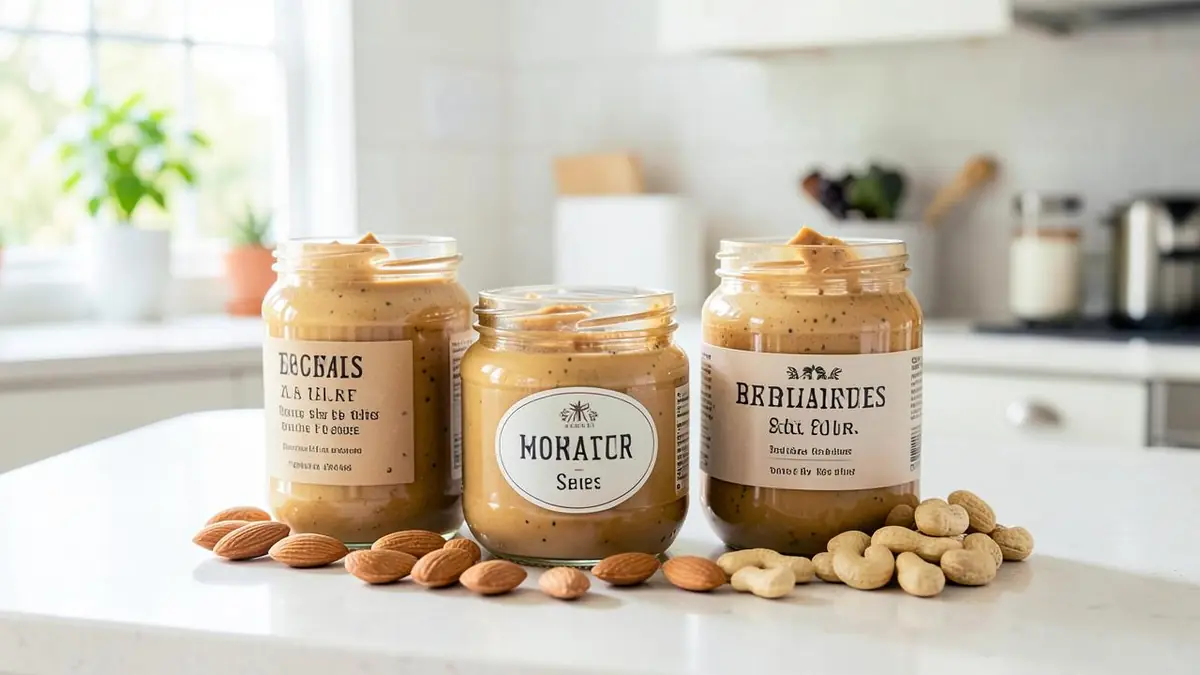
Almond butter occupies a comfortable position in the health food aisle: expensive enough to feel virtuous, familiar enough to use daily, and marketed with a vocabulary of superfood claims that its actual nutritional profile does not need.
Stripped of that, it is a dense source of unsaturated fat, a reasonable source of protein and fibre, and unusually rich in vitamin E and magnesium. That is a good food. It is not a supplement, and how it is used matters more than which nut it came from.
The nutritional profile
Two tablespoons supply roughly 190 to 200 calories, around seven grams of protein, three to four grams of fibre, and about eighteen grams of fat, the majority of it monounsaturated.
The same portion delivers a substantial share of daily vitamin E and a useful amount of magnesium, calcium, and manganese. Vitamin E content in particular is high relative to most other nut butters.
How it compares with peanut butter
Calories are near identical. Peanut butter contains slightly more protein; almond butter contains more fibre, considerably more vitamin E, and more magnesium and calcium. Peanut butter costs roughly half as much.
For most people the nutritional difference is small enough that preference and price are reasonable grounds for choosing. Both are fine foods when the ingredient list is short.
Reading the label
The ideal ingredient list is one item: almonds. Salt is unobjectionable. Added sugar, palm oil, and hydrogenated fats are the additions worth avoiding, and they are common in the smoother, cheaper products.
Oil separation at the top of the jar is a sign of a product without stabilisers. Stir it in and refrigerate afterwards, which slows the oils going rancid.
Where the evidence is real
Regular nut consumption is associated in large cohort studies with lower cardiovascular risk, and trials show modest improvements in LDL cholesterol when nuts replace other sources of fat.
The fibre, protein, and fat combination also increases satiety, which is why nut butter on wholegrain toast holds off hunger better than the same calories from a low-fat spread.
Where the claims outrun the data
Almond butter does not detoxify anything, does not meaningfully accelerate metabolism, and is not a weight-loss food in itself. The observational finding that nut eaters are not heavier reflects substitution, not a special property.
It is also not a low-calorie food. A generous knife-load can easily reach three hundred calories, which is where a healthy addition becomes a quiet source of weight gain.
Practical use
A level two-tablespoon portion is a sensible default. Measuring it a few times calibrates the eye, after which estimation is reasonably accurate.
It works well stirred into porridge, blended into a smoothie with fruit for fibre, or used in a satay-style sauce. Whole almonds are cheaper and just as good nutritionally; the butter's advantage is convenience and texture, not nutrition.
This article is general information and not medical or dietary advice. Nut allergies are serious; seek clinical guidance if relevant to you.
AI Assistance Used — AI assistance was used in researching and drafting this article. It was reviewed, edited, and fact-checked by Leah Fornier before publication.