All-Season, All-Weather, or Winter Tires: Which Fit Your Climate?
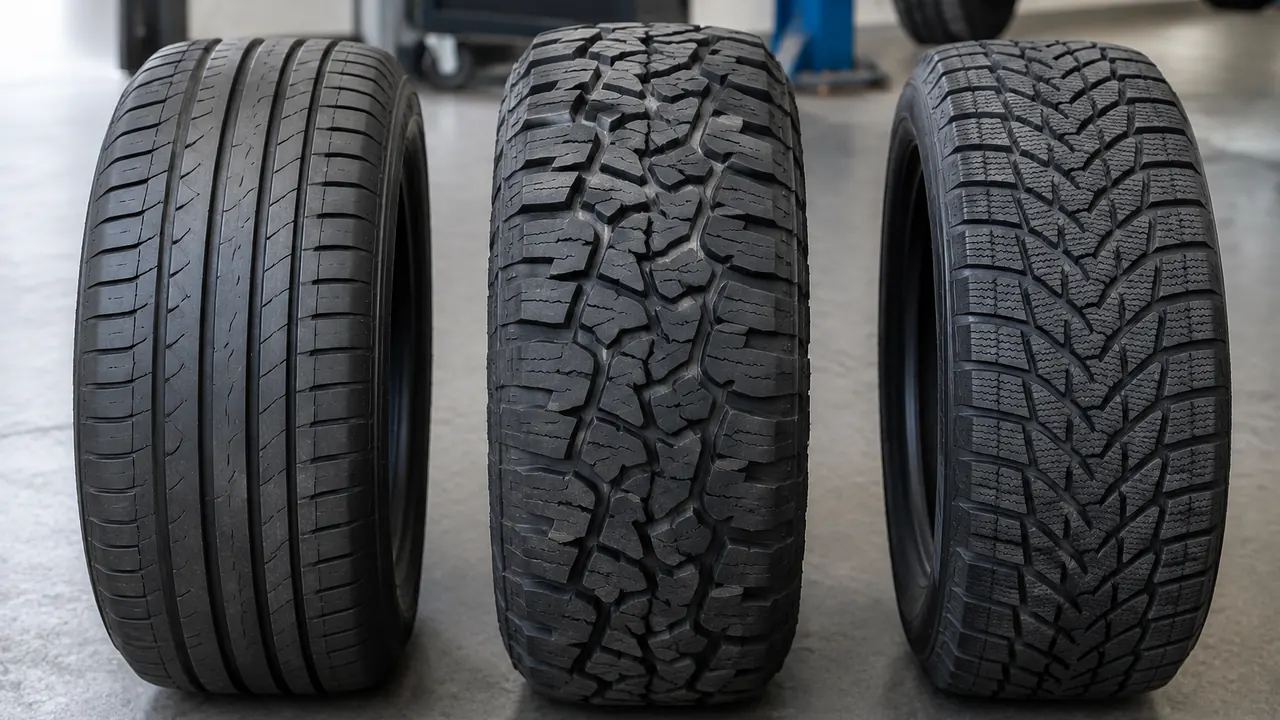
The right tire depends less on your state's reputation for winter than on the roads you actually drive. A coastal commuter who can wait out an occasional storm faces a different problem from a nurse leaving before snowplows arrive, even in the same ZIP code. Cold rain, packed snow and freezing rain also demand different kinds of grip. No category wins every test, and a tire that works well in one condition can be a compromise in another.
For drivers shopping in 2026, the choice increasingly includes all-weather tires alongside familiar all-season and dedicated winter options. All-weather tires aim to offer credible snow capability without seasonal swaps, but they are not simply winter tires you leave on all year. Start with your vehicle's required size and load specifications, then consider your worst unavoidable driving conditions. Finally, compare the cost and inconvenience of one year-round set with a two-set rotation, including installation and somewhere suitable to keep the unused tires.
1. Know what the three categories actually promise
All-season tires balance everyday handling, ride, wear and traction across a broad range of conditions. Many handle light snow, but the name does not guarantee dependable grip through a harsh winter. All-weather is a market category generally used for year-round tires carrying the three-peak mountain snowflake symbol. Check the actual tire and size rather than trusting a retailer's category filter. Dedicated winter tires prioritize cold-weather performance through their rubber compounds, tread design and numerous small tread cuts called sipes.
These labels provide a starting point, not a ranking of every product. A strong all-season tire can outperform an all-weather model in wet braking, while different winter tires can favor ice, deep snow or cleared-road handling. Performance winter tires, for example, can make different trade-offs from studless ice-and-snow models. Look for independent comparisons that include your intended conditions and a relevant vehicle or tire size. A category recommendation cannot establish how a particular tire will stop on your car.
| Category | Cold and snow | Rain | Year-round use |
|---|---|---|---|
| All-season | Light-snow ability varies; not the default for persistent winter | Often a priority, but model-dependent | Designed for year-round service |
| All-weather | Severe-snow certification; a compromise versus dedicated winter tires | Check wet-braking and hydroplaning tests | Designed to avoid seasonal swaps |
| Winter | Designed for winter conditions; ice and snow strengths vary | Not automatically best in cold rain | Seasonal use recommended |
2. Read the snowflake correctly, and know its limits
The three-peak mountain snowflake, often shortened to 3PMSF, means a tire meets a defined performance threshold for severe-snow service. For passenger tires, the familiar qualification evaluates acceleration traction on specified packed snow against a reference tire. That is more meaningful for snow performance than M+S, or mud and snow, which generally reflects tread-design criteria rather than passing that severe-snow traction test. Many ordinary all-season tires have M+S lettering without the mountain snowflake.
The snowflake is not a comprehensive winter report card. It does not, by itself, certify ice braking, snow cornering, wet-road braking or stopping distances in every temperature. Nor does it show how much a tire exceeded the qualifying threshold. Some tires outside the typical all-weather category, including certain all-terrain products, carry it too. When a mountain route has traction restrictions, check that jurisdiction's current rules: required tread depth, approved markings, vehicle configuration and chain requirements can all matter.
- Verify the symbol on the exact tire model and size being purchased.
- Treat M+S and 3PMSF as different markings, not interchangeable approvals.
- Do not assume certification exempts you from chains or temporary road restrictions.
3. Match the tire to your unavoidable winter
All-season tires usually make the most sense where winters are mild, snow is rare and staying home during unusual ice or snow is realistic. All-weather tires are worth considering where temperatures fluctuate and occasional or recurring snow interrupts otherwise cleared roads. Dedicated winter tires become more compelling with prolonged cold, frequent packed snow, repeated mountain travel or an inflexible schedule. Your exposure matters as much as seasonal snowfall totals: a shaded hill or untreated rural road can determine the choice.
The often-repeated 45-degree Fahrenheit guideline is a useful reminder to plan winter changeovers, not a universal temperature at which every all-season tire suddenly loses grip. Compounds, road conditions and individual models differ. Watch sustained weather patterns and your driving hours rather than a single afternoon reading. A morning commute can encounter frost when the daytime forecast looks mild. Even the best available tires cannot make freezing rain or a road closure safe to ignore.
- Mostly mild weather: prioritize strong wet-road performance and everyday suitability.
- Mixed winter with limited storage: compare snowflake-marked all-weather models closely.
- Persistent snow or unavoidable winter trips: budget for four dedicated winter tires.
4. Separate snow traction from rain and ice performance
Snow, water and ice ask different things of a tire. Tread channels help move water, edges can bite into snow, and rubber formulations influence how the tread conforms to cold pavement. None of those features guarantees superiority everywhere. More aggressive-looking tread is not proof of shorter wet stopping distances. For a rainy climate, seek model-specific wet-braking and hydroplaning results rather than assuming that a snowflake marking makes an all-weather tire the best rain tire.
Dedicated winter tires often offer a substantial advantage over conventional all-season tires on snow and ice, but ice remains exceptionally demanding. Studless ice-and-snow tires are engineered for those conditions; studded tires are another specialized option where legal. Studs can help in certain icy conditions, but bring noise, road-wear concerns and location-specific seasonal restrictions. Neither choice eliminates the need for lower speeds and longer following distances. All-wheel drive can help a vehicle accelerate; it does not replace tire grip when braking or turning.
Also consider summer driving. Winter compounds and tread designs are not intended as the default for hot-weather use. Leaving them on can accelerate wear and compromise handling or braking compared with suitable year-round tires.
5. Price the whole setup, not just four tires
A two-set strategy requires more money upfront, but the comparison is not simply eight tires versus four used at the same rate. Seasonal sets divide annual mileage, potentially extending the calendar time before either wears out. That does not guarantee savings: tires still age, and low-mileage drivers may replace them before using all their tread. An all-weather set avoids changeover appointments, but its actual value depends on purchase price, service life and performance in your climate.
Ask local shops for written quotes covering the same services. Winter tires mounted on a second set of compatible wheels usually make seasonal swaps simpler than repeatedly removing tires from the same wheels. However, additional wheels, compatible tire-pressure monitoring equipment where needed, and initial setup can materially increase the starting bill. Prices vary by vehicle, wheel diameter and market, so national averages are less useful than complete local estimates. Ask whether storage pricing includes pickup, inspection or installation.
- One-set budget: tires, installation, balancing, disposal, taxes and routine rotations.
- Two-set additions: wheels if chosen, sensors or service kits, and changeovers.
- Recurring extras: paid storage, transportation, appointment time and possible sensor relearning.
- Warranty checks: mileage coverage, winter-tire exclusions and required maintenance records.
6. Make storage and seasonal installation workable
Before buying a second set, measure your storage space and decide how you will transport the tires. Store clean, dry tires indoors in a cool location away from direct sunlight, heat, solvents and ozone-producing equipment. Follow the tire or wheel manufacturer's directions for positioning mounted assemblies versus unmounted tires; they are not necessarily stored the same way. Avoid treating an exposed balcony or a hot outdoor shed as equivalent to suitable indoor storage.
Book changeovers ahead of the first likely rush, allowing flexibility for local weather. Fit winter tires on all four wheels, including on front-wheel-drive vehicles; mixing seasonal grip levels can create an unstable handling balance. Use vehicle-approved sizes, load capacities and wheel fitments, and discuss any proposed winter downsizing with a qualified shop. Keep track of each set's condition before it goes away, not just when the next storm arrives. Check cold inflation pressure against the vehicle placard, not the maximum pressure molded into the sidewall, and follow any vehicle-specific seasonal guidance.
7. Choose for your real routes, then maintain the advantage
Before ordering, write down three things: the harshest weather you must drive through, whether you can postpone trips, and whether you can manage two sets. That exercise usually narrows the choice faster than marketing language. For a mild, rainy winter, a well-tested all-season tire may be the sensible answer. For mixed conditions and one-set convenience, an all-weather tire deserves a close look. For sustained winter exposure, a dedicated winter set is generally the stronger starting point.
Whichever category you choose, tread depth, inflation, damage and age affect the grip you actually get. A certification symbol remains on a worn tire even as snow and water performance deteriorate. Do not assume the legal minimum tread depth is a useful target for winter safety; check manufacturer recommendations and applicable road rules. Inspect both seasonal sets, rotate as directed and investigate uneven wear. Revisit the decision if you move, change work hours or add mountain trips: yesterday's convenient compromise may no longer fit your driving.
Check current local tire-service prices, traction laws and manufacturer guidance, and consult a qualified tire professional about fitment and condition.
AI Assistance Used — AI assistance was used in researching and drafting this article. It was reviewed, edited, and fact-checked by Leah Fornier before publication.