The Cheap Air Purifier with Expensive Replacement Filters
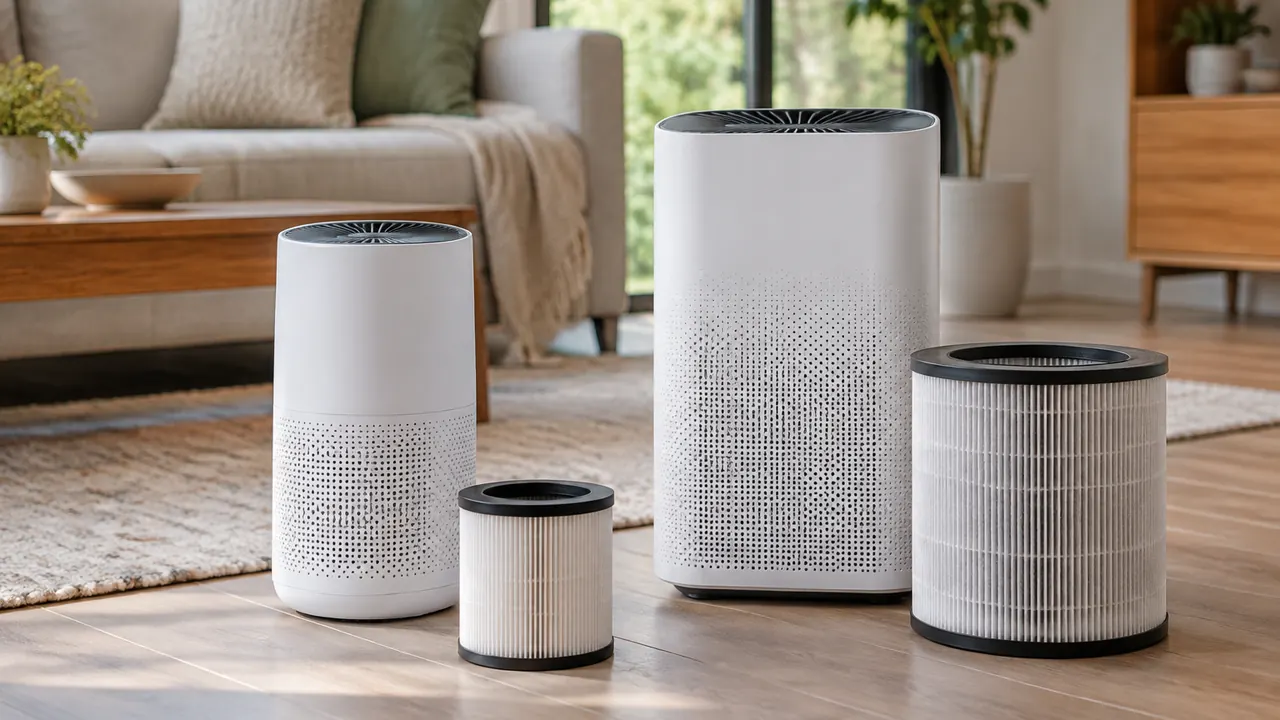
The cheapest air purifier on the shelf may not be the cheapest one to own. A low purchase price can hide a proprietary filter that costs almost as much as the machine, needs frequent replacement or becomes difficult to find. A more expensive purifier can have the opposite problem: affordable filters but far more capacity, noise and electricity use than your room requires. Neither bargain pricing nor a premium label settles the value question.
For shoppers in April 2026, the useful comparison is the cost of delivering enough clean air to a specific room over several years. That means checking purchase price, credible room coverage, replacement-filter availability, realistic replacement intervals and power consumption together. Start with the room and the conditions you want to address, then compare ownership costs among machines that can do the job. A discounted unit that barely moves enough air is not equivalent to a properly sized one, even if both advertise HEPA filtration.
1. Decide what you need the purifier to handle
A portable air purifier is generally a room appliance, not a substitute for a whole-home ventilation strategy. Particle filtration can reduce airborne dust, pollen, pet dander and smoke particles that pass through the device. It does not remove settled dust from furniture, solve a moisture problem or eliminate the need to control pollution at its source. Those distinctions matter because buying a machine for the wrong task makes even a modest price wasteful.
Odors and gases require another layer of scrutiny. A thin carbon sheet may offer limited odor reduction, while substantial gas-removal media can add purchase and replacement costs. HEPA describes particle filtration, not comprehensive gas removal. For wildfire smoke, particle performance is important, but a particle filter does not capture every harmful component. Avoid treating an inexpensive purifier as protection against carbon monoxide; working alarms and appropriate emergency action remain essential.
- Identify the primary room, its dimensions and whether doors usually stay open.
- Name the main concern: seasonal pollen, pets, smoke particles or recurring odors.
- Plan source control too, including exhaust ventilation when appropriate and fixing leaks.
- Favor mechanical filtration; avoid ozone generators marketed as air cleaners for occupied spaces.
2. Translate room-coverage claims into comparable numbers
A large square-foot claim can make a small purifier look capable. The missing detail is often how many times per hour it cleans an equivalent volume of room air. A coverage claim based on one air change per hour is not comparable with one based on roughly five. Look for clean air delivery rate, or CADR, which expresses particle-cleaning output in cubic feet per minute. For particle concerns, compare the relevant reported CADR rather than filter efficiency alone.
The examples below use 4.8 equivalent air changes per hour and an eight-foot ceiling, a useful comparison basis reflected in AHAM room-size ratings. Approximate floor area equals CADR multiplied by 60, divided by ceiling height and the desired air-change rate. Higher ceilings reduce the area served. These figures are sizing illustrations, not promises that every corner receives equal cleaning, and they do not represent particular products.
Check the fan setting behind the number. Advertised CADR commonly reflects the highest speed, which may be too loud for sleeping. A machine that delivers sufficient air only on an intolerable setting can disappoint. If lower-speed output is unavailable, examine credible testing and the return policy rather than assuming quiet mode matches the headline coverage.
| Particle CADR | Approximate room area | Sizing assumptions |
|---|---|---|
| 100 cfm | 156 sq. ft. | 8-foot ceiling; 4.8 air changes/hour |
| 200 cfm | 313 sq. ft. | 8-foot ceiling; 4.8 air changes/hour |
| 300 cfm | 469 sq. ft. | 8-foot ceiling; 4.8 air changes/hour |
3. Shop for the replacement filter before the machine
Open the replacement-filter listing before checking out with the purifier. Record the exact part number and confirm that the price covers the complete replacement set. Some devices combine particle and carbon media in one cartridge; others require separate purchases. A seemingly affordable listing may contain only a prefilter, one component or a smaller cartridge intended for another model. Shipping charges can also erase the apparent savings.
Availability matters as much as today's price. Check the manufacturer's store and established retailers, noting whether the filter is routinely stocked or merely listed. An obscure bargain model with one seller and no clear parts information deserves caution. A familiar brand is not a guarantee either, particularly for discontinued designs. Ask whether the manufacturer provides any stated period of replacement-filter support, and do not mistake a subscription offer for a supply guarantee.
Third-party filters can lower costs, but dimensional compatibility alone does not establish equivalent performance. Poor seals or different airflow resistance can change the machine's cleaning output. Look for evidence supporting filtration and fit claims, and check warranty language concerning damage attributed to nonoriginal parts. A washable prefilter should not be confused with a washable HEPA cartridge; follow the manual before putting any filter under water.
4. Treat replacement intervals as planning estimates
A filter advertised to last 12 months may not last that long in every home. Service life depends on operating hours, particle loading, filter size and household conditions. Heavy smoke exposure, renovation dust or multiple shedding pets can change the picture. Conversely, occasional seasonal use differs from running a purifier around the clock. Use the manufacturer's recommended interval as a starting assumption, not an individualized guarantee.
Read how the replacement indicator works. Some lights are essentially timers; others incorporate operating information or sensing. Neither should override the manual or obvious signs of damage and restricted airflow. Carbon's useful life for odors may also differ from the particle filter's life. If the media share a cartridge, replacing it for one function means paying for both.
Build a normal-use estimate and a higher-cost scenario with more frequent changes. This shows whether the bargain remains affordable when conditions worsen. Do not simply extend intervals to make the arithmetic attractive.
- Check whether the stated interval assumes continuous use or limited daily operation.
- Include separately replaced carbon media and any other required consumable parts.
- Clean reusable prefilters as directed, without assuming cleaning restores the main filter.
- Keep purchase dates and replacement dates so later budgets reflect your actual household.
5. Count electricity at the speed you will actually use
Electricity usually looks small beside the purchase price because it arrives incrementally on a utility bill. Over years, it becomes worth counting. Calculate annual kilowatt-hours by multiplying average watts by daily operating hours and 365, then dividing by 1,000. Multiply that result by your applicable electricity rate. Use your own bill: rates vary, and fixed monthly service charges generally do not increase because you added a purifier.
For example, a machine averaging 30 watts continuously uses 262.8 kilowatt-hours per year. At an illustrative 15 cents per kilowatt-hour, that costs $39.42 annually. At 12 hours daily, the modeled energy cost halves, but so does operating time. Turning the machine off whenever pollution persists is not an equivalent cleaning strategy just because it lowers the bill.
Nameplate wattage may describe maximum draw rather than typical use. Seek power measurements at a useful fan speed, or use a suitable plug-in electricity meter. Automatic mode complicates forecasts because fan speed changes with sensor readings, and sensors do not detect every pollutant equally. ENERGY STAR certification can help identify efficient choices, but still compare capacity, settings and expected hours.
6. Put comparable machines into a five-year worksheet
Use a defined ownership period rather than adding miscellaneous annual figures. Five-year cost equals purchase price, plus replacement filters actually bought during those five years, plus electricity, plus other required consumables. Add taxes and shipping consistently. If the first filter is included, do not count it twice. At six-month intervals, replacements at months six through 54 mean nine purchases; at annual intervals, months 12 through 48 mean four.
The hypothetical machines below are assumed to provide comparable useful particle-cleaning output at the listed average power draw. They are not current product offers or market averages. Each includes one initial filter, operates continuously and uses electricity priced at 15 cents per kilowatt-hour. Filter changes occur at the stated intervals, and the calculation stops immediately before a replacement at month 60.
- Repeat the calculation using regular filter prices, not just an introductory discount.
- Test a shorter replacement interval and a higher electricity rate.
- Keep expected cleaning output comparable; an undersized machine is not an equal alternative.
- Treat these totals as scenarios, excluding tax, shipping, repairs and purchase-price financing.
| Illustrative unit | Purchase | Filter price / interval | Average power | Five-year filter spending | Five-year total |
|---|---|---|---|---|---|
| A: low sticker price | $70 | $45 / 6 months | 25 watts | $405 | $639.25 |
| B: midpriced | $130 | $35 / 12 months | 30 watts | $140 | $467.10 |
| C: higher-priced | $200 | $60 / 12 months | 45 watts | $240 | $735.65 |
7. Choose the affordable machine you can keep using
The worksheet shows why the cheapest purchase can lose: Unit A's lower electricity use does not offset its filter spending. It also shows why paying more is no guarantee of value. Unit C costs more under these assumptions without delivering additional credited cleaning output. Real products may offer worthwhile advantages, but name those benefits rather than letting a higher price stand in for evidence.
Before buying, verify the exact model, included filter, replacement part number, useful room rating and return terms. Consider noise, controls and maintenance access because a purifier that stays switched off delivers no ongoing cleaning. Budget for the next filter when purchasing the machine. The best value is adequate, usable performance with manageable recurring costs, not necessarily the smallest number on the shelf.
Illustrative costs are not product quotes; verify current prices, filter availability, specifications and warranty terms before buying.
AI Assistance Used — AI assistance was used in researching and drafting this article. It was reviewed, edited, and fact-checked by Leah Fornier before publication.