The Most Sensible Affordable Cars for Older Drivers
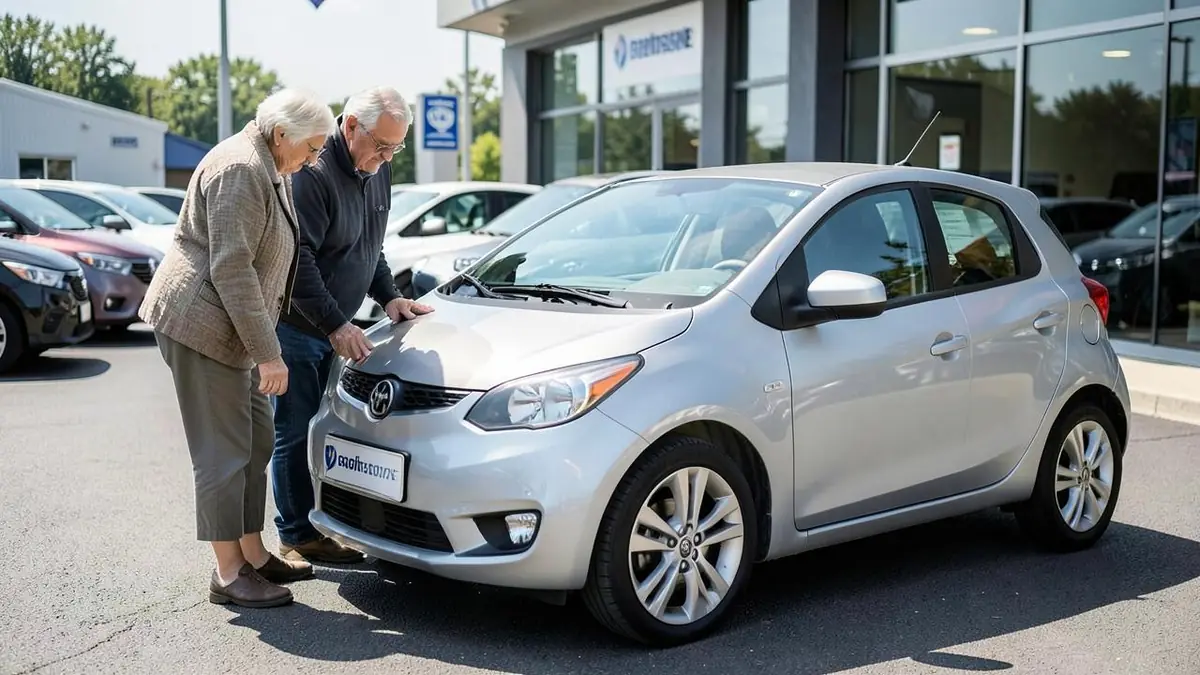
Car reviews are written around acceleration, handling, and infotainment. For a driver in their seventies choosing a car they intend to keep for a decade, almost none of that is decisive. The car that works is the one that is easy to get into, easy to see out of, easy to park, and cheap to keep on the road.
Those qualities are measurable, and they vary far more between models than the specification sheets suggest. A structured test drive, focused on the right things, tells you more in twenty minutes than a month of reading.
Seat height and door aperture come first
The easiest cars to enter place the seat cushion at roughly hip height, so you sit down and swing your legs rather than dropping into a low seat or climbing up into a high one. Many small crossovers land in this range naturally.
Door opening angle matters as much as height. A door that opens wide, with a low sill and no intrusive B-pillar, makes a large difference for stiff hips and shoulders. Test this in a normal parking space, not the showroom's open floor.
Visibility over technology
Thick pillars, high window lines, and shallow rear glass have made many modern cars difficult to see out of. Sitting in the driver's seat and checking over both shoulders is the single most useful thing you can do at a dealership.
Cameras and sensors help enormously with parking, but they supplement direct vision rather than replacing it. A car with genuinely good sightlines and a reversing camera beats a car with poor sightlines and every sensor available.
Physical controls beat touchscreens
Heating, volume, and demist functions buried inside a touchscreen menu require looking away from the road and precise finger placement. Physical dials can be operated by feel, with gloves, and without reading glasses.
Check that the instrument display is legible in daylight and that its font size is adequate. Some manufacturers allow the layout to be simplified, which is worth setting up before you drive away.
The safety features worth paying for
Autonomous emergency braking and blind-spot monitoring have the strongest evidence behind them for reducing collisions, and both are now common on modest cars a few years old.
Adaptive cruise control reduces fatigue on longer trips. Lane-keeping systems are more divisive; some are smooth, others tug at the wheel in a way many drivers find intrusive. Try it on a real road before deciding it is a benefit.
Running costs over purchase price
For a car driven modest annual distances, insurance, servicing, and depreciation usually outweigh fuel. A common, widely serviced model with cheap parts costs far less over ten years than a less common car bought for the same money.
Automatic transmissions cost more upfront and are worth it for most drivers later in life, particularly in traffic and for anyone with knee or hip problems. Resale demand for automatics is also stronger.
How to test drive properly
Bring whatever you normally carry: a walking stick, a folding chair, shopping bags, a grandchild's seat. Load them in the boot, and check the boot lip height and whether the parcel shelf is manageable.
Then drive a route with a tight car park, a junction requiring a shoulder check, and a stretch of dual carriageway. If any of the three feels awkward, that feeling will not improve with familiarity.
Model availability, safety equipment, and running costs vary by market and model year. Confirm specifications for the exact car you are considering.
AI Assistance Used — AI assistance was used in researching and drafting this article. It was reviewed, edited, and fact-checked by Leah Fornier before publication.