Are Adjustable Dumbbells Worth It for a Small Home Gym?
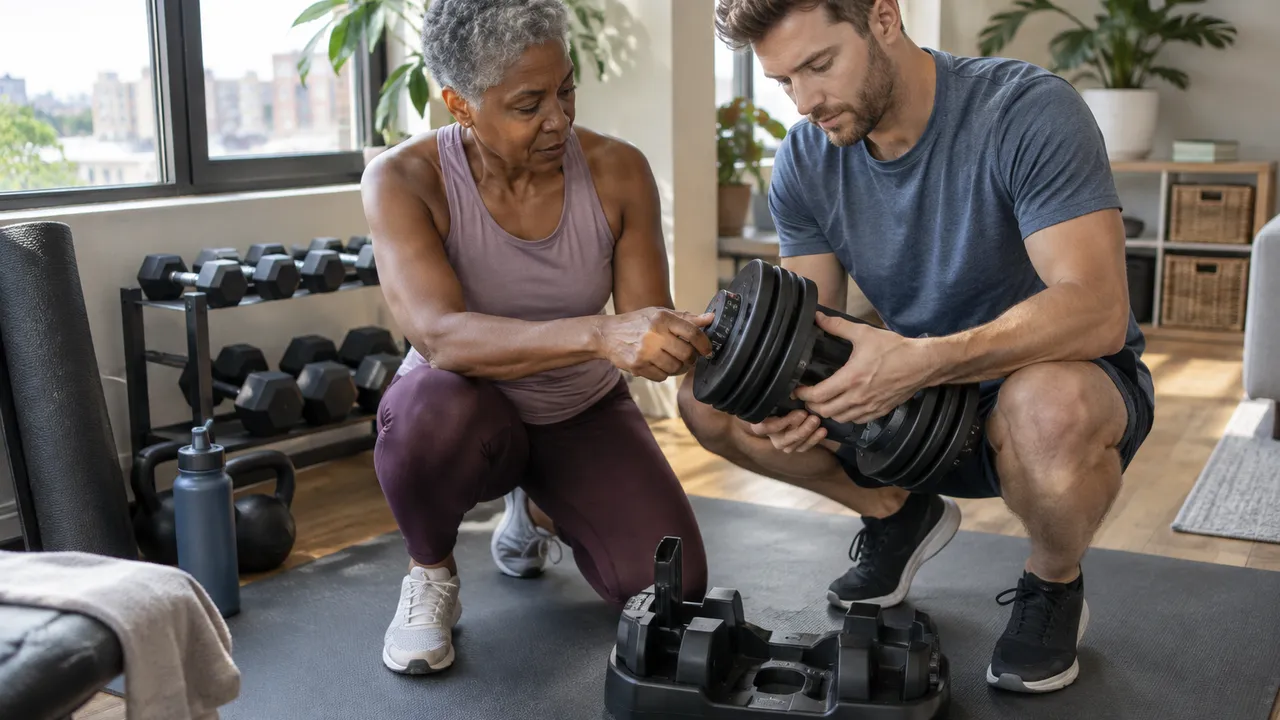
Adjustable dumbbells can make a small home gym practical, but saving floor space is only part of the decision. A compact set is worthwhile when its starting weight, adjustment steps and handling suit the exercises actually being performed. A bargain that feels awkward or cannot be repaired is less compelling.
Fixed dumbbells remain the simpler alternative: pick them up and lift. They require more room as a collection grows, yet a few carefully chosen pairs may cover a modest routine. For an October 2026 purchase, compare the details below and check current recall records before buying, whether new or used.
1. Match the starting weight and jumps to your workouts
Check the minimum and maximum weight per dumbbell, not just the pair’s advertised total. Many adjustable models begin around 5 pounds, while some start closer to 10 or more. Fixed dumbbells are available below those levels, which can matter for beginners, shoulder exercises or a clinician-directed return to training.
Increment size matters as much as capacity. Adjustable systems commonly move in roughly 2.5- to 5-pound steps, although some use smaller jumps or different steps across the range. A 5-pound increase can be manageable for a squat but excessive for a lateral raise. Read the official weight chart before ordering. Make sure the smallest jump is suitable for the weakest movement, not just the strongest.
- List the lightest weight needed for each planned exercise.
- Confirm every selectable weight, rather than assuming uniform increments.
- Check whether the price covers one dumbbell or two.
2. Compare the grip, balance and usable space
A small footprint does not guarantee comfortable lifting. Some adjustable dumbbells stay long even at lighter settings; others shorten as plates are removed. Long ends or bulky housings may interfere with curls, close presses or resting the weights on thighs. Compare dimensions at working weights, not only at maximum capacity.
If possible, handle a display model. Check handle diameter, knurling, wrist clearance and balance with both hands. Fixed dumbbells often feel less bulky, but head shape and grip finish vary. Include the tray, a stable support surface and room to lift weights out safely when measuring the workout corner. A tray also needs its own clearance.
| Buying factor | Adjustable dumbbells | Fixed dumbbells |
|---|---|---|
| Storage | Several weights in one footprint | More space as pairs accumulate |
| Grip | Mechanism may limit clearance | Usually fewer surrounding components |
| Changeover | Requires selecting and checking | Grab the next pair |
| Maintenance | More moving parts to inspect | Usually simpler construction |
3. Test changeover speed and locking reliability
Selectorized dials, levers and rotating handles can make weight changes quick, but usually require correct seating in a matching tray. Spin-lock designs take longer because collars and plates must be handled individually. Fixed pairs are fastest for circuits when the next weight is already within reach and safely positioned.
Speed should never outrank secure engagement. Follow the manual’s selection and pre-use checks; do not force a jammed selector or improvise repairs. Look for positive settings, consistent operation and plates that remain secured during the prescribed check. A dial that moves smoothly is not, by itself, proof of reliable locking.
- Try several settings, including low, middle and high weights.
- Reject cracked housings, bent hardware or incomplete engagement.
- Stop using equipment if plates shift unexpectedly or the mechanism misbehaves.
- Never change a selector while holding the dumbbell aloft.
4. Treat drop limits and recalls as dealbreakers
Many adjustable dumbbells are not designed to be dropped. Impact can damage internal retention parts even when the exterior looks intact. Lower them under control and follow the manufacturer’s specific restrictions. Rubber-coated fixed dumbbells are not automatically drop-proof either; permitted use depends on construction, flooring and the instructions, not the coating alone.
For either type, search the US Consumer Product Safety Commission’s recall database and the manufacturer’s recall page before purchasing. Match model numbers, identifying markings and any affected serial ranges. Do not assume a current retail listing or a seller’s assurance means clearance. Recall status can change, so repeat the check before completing a used purchase.
- Request clear identification photos before meeting a used seller.
- Check the recall notice’s remedy and required next steps.
- Do not buy a recalled unit without documented remedy completion.
- Follow stop-use instructions immediately if equipment is covered.
5. Price the complete setup and its repair options
Compare total costs for the weights needed now and for realistic progression. Include shipping, a stand if necessary, tax and any expansion kits. Adjustable pairs can replace numerous fixed pairs, but they may cost more than a small starter selection. Fixed weights also let two people train simultaneously without sharing one mechanism, provided enough suitable pairs are available. An inexpensive discontinued set can become unusable if one essential part fails and neither replacements nor qualified service are available.
Ask the manufacturer whether replacement handles, selectors, trays and retention components are available for the exact model, and whether repairs require authorized service. Confirm warranty transfer rules for used purchases. Choose adjustable dumbbells when space is scarce, changes are manageable and support is credible. Choose fixed pairs when simplicity, shared workouts or avoiding complex mechanisms matters more than compact storage.
Verify specifications, recall remedies and warranty terms with official sources.
AI Assistance Used — AI assistance was used in researching and drafting this article. It was reviewed, edited, and fact-checked by Lisa Barber before publication.